
Here’s something that surprises many property managers and HOA boards: not every sidewalk repair in Florida requires a permit — but getting that determination wrong can cost far more than the repair itself. Whether you’re managing a condominium complex in Boca Raton, overseeing municipal infrastructure in Broward County, or running a commercial property in Palm Beach County, understanding Florida’s permitting landscape for concrete sidewalk repair is one of the smartest risk-management steps you can take.
This guide breaks down what triggers permit requirements, what exemptions typically apply, and how the repair method you choose can directly affect how quickly — and affordably — you get compliant, safe walkways back in service.
Why Permitting Matters for Sidewalk Repairs
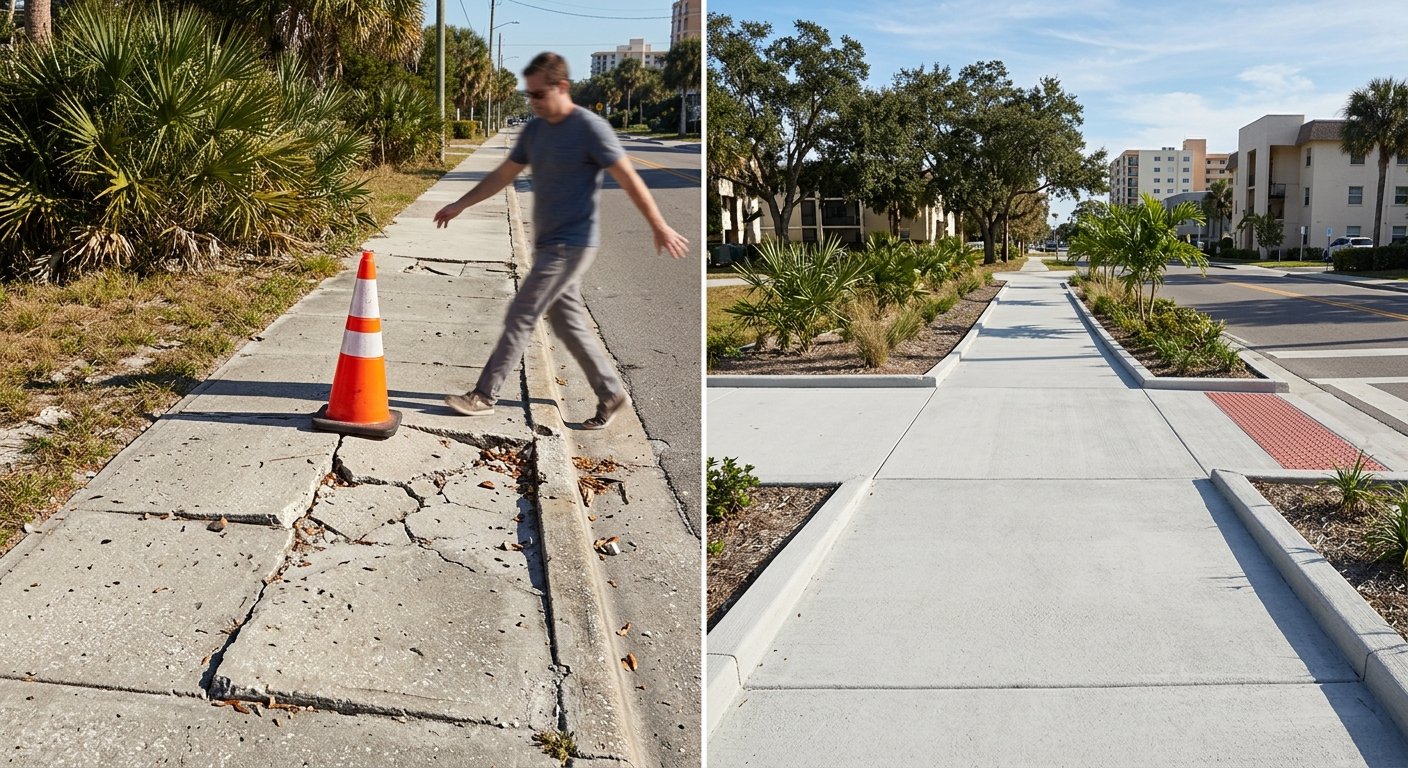
Permits aren’t just bureaucratic formality. They exist to ensure repairs meet local safety codes, ADA standards, and structural requirements. When a trip hazard on your property causes an injury and litigation follows, one of the first things opposing counsel examines is whether permitted work was performed correctly — and whether unpermitted work created a liability gap.
Florida property owners face a layered permitting environment. Requirements come from:
- Florida Building Code (FBC) — the statewide baseline for construction standards
- Local municipal or county amendments — Palm Beach and Broward counties both have local amendments that can modify state defaults
- HOA governing documents — some associations have internal approval requirements on top of municipal ones
- ADA federal requirements — applicable to any public accommodation or area open to public use
The Florida Building Commission publishes the current edition of the Florida Building Code, which governs construction and repair standards statewide. Local jurisdictions may adopt stricter requirements but cannot fall below FBC minimums.
When Is a Permit Required for Sidewalk Repair?
This is where property managers often get tripped up — pun intended. Florida’s permitting threshold generally depends on the scope and method of the repair, not just the fact that work is being done.
Repairs That Typically Require a Permit
- Full slab removal and replacement of concrete sidewalk sections
- New sidewalk installation or significant structural modifications
- Any work affecting drainage, utilities, or public right-of-way infrastructure
- Repairs that alter the grade or structural footprint of existing concrete
Replacement projects almost always trigger permitting requirements in Palm Beach and Broward counties because they involve demolition, disposal, and new construction — activities that fall squarely within Florida Building Code jurisdiction.
Repairs That Are Often Permit-Exempt
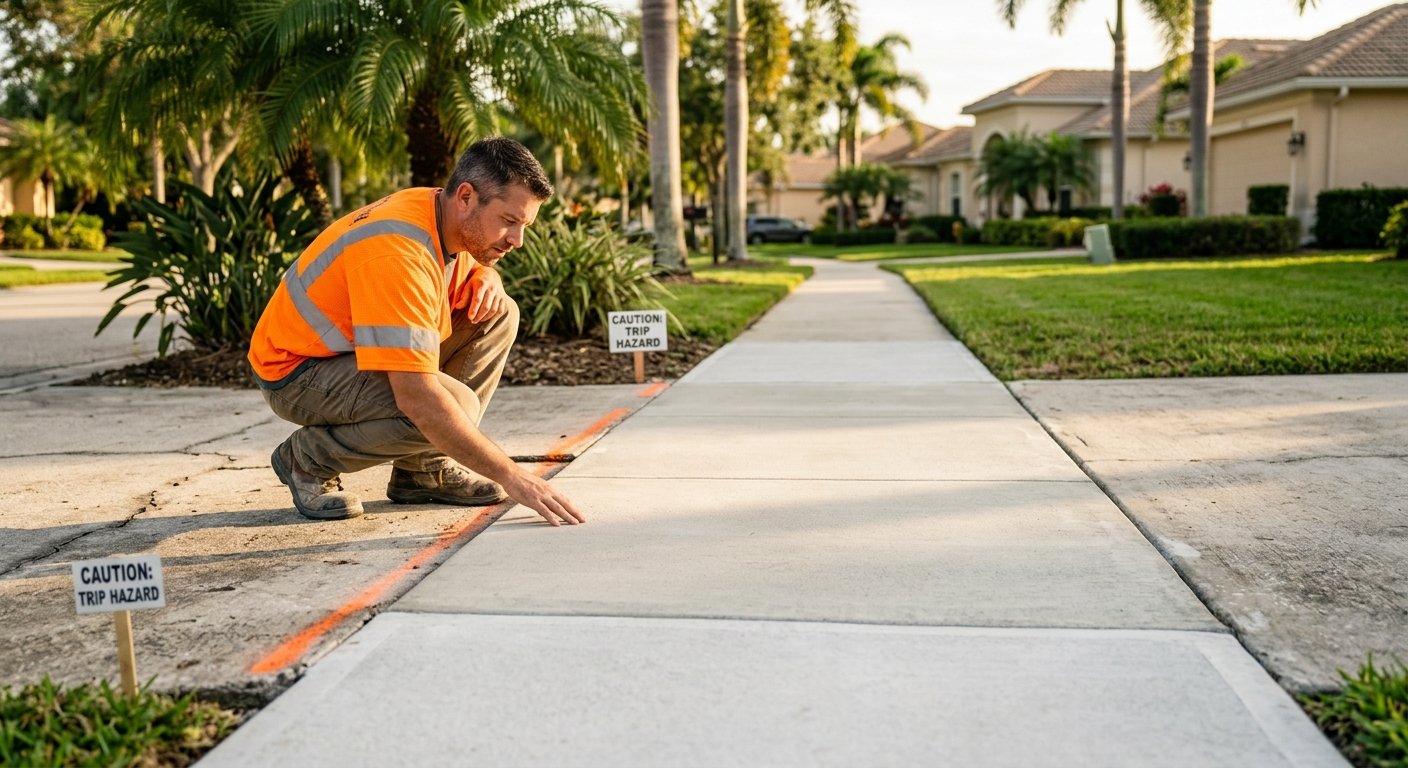
- Surface-level trip hazard repairs that do not alter structural integrity
- Concrete grinding or cutting to correct elevation differentials
- Minor patching that does not involve removal of slabs
- Maintenance repairs as defined by local ordinance
This is a critical distinction. When Florida Sidewalk Solutions uses patented precision concrete cutting technology to correct a raised slab or trip hazard, the repair is surface-level and restorative — not structural replacement. This approach frequently falls within permit-exempt maintenance categories, allowing work to begin immediately without waiting weeks for permit approval.
That said, always verify with your local municipality before proceeding. Requirements vary by jurisdiction, and what’s exempt in one Palm Beach County city may require a simple notification in another.
How Repair Method Affects Your Permitting Path
This is one of the most underappreciated factors in planning sidewalk repairs. Property managers focused on budget often overlook that the how of the repair determines not just the cost, but the regulatory process and timeline.
Replacement vs. Surface Repair: A Permitting Perspective
Full concrete sidewalk replacement involves demolition and new construction. This means:
- Permit applications filed with the local building department
- Plan review periods — often two to six weeks in South Florida municipalities
- Inspections at various stages of work
- Permit fees, which can add hundreds to thousands of dollars depending on scope
- Permit records attached to your property
Surface-level concrete cutting and leveling — the method employed by Florida Sidewalk Solutions — typically bypasses this entire process for qualifying repairs. Work can often be scheduled within days rather than weeks, and the property is returned to normal use the same day. There’s no demolition waste, no concrete disposal logistics, and no permit timeline standing between your property and a safe, compliant sidewalk.
For budget-conscious property managers and municipal public works directors, this difference is significant. Our repairs cost 70 to 90 percent less than full replacement — and the elimination of permit delays compounds those savings further.
ADA Compliance and Florida Sidewalk Permits
ADA compliance introduces a federal layer that operates independently of state and local permitting. Under the ADA Title II requirements that apply to state and local governments, and Title III requirements for public accommodations, accessible routes must be maintained in a condition that does not obstruct or impede access.
A raised sidewalk panel that creates a lip greater than half an inch is both a trip hazard and a potential ADA violation. If that hazard is in an accessible route — which most exterior walkways are — the obligation to correct it is immediate, regardless of budget cycles or permit timelines.
This is why the speed of permit-exempt surface repair matters so much for ADA-compliant sidewalks. When Florida Sidewalk Solutions corrects an elevation differential using precision cutting technology, we’re simultaneously eliminating the trip hazard and restoring ADA compliance in a single, fast, cost-effective repair. There’s no waiting for permits to close a compliance gap that carries federal exposure.
For a deeper look at what ADA standards require for Florida sidewalks, visit our ADA sidewalk compliance guide for South Florida.
Right-of-Way Repairs: Municipal Responsibilities
For municipalities and public works directors in Palm Beach and Broward counties, sidewalk repairs in the public right-of-way involve an additional layer of coordination. Work in the right-of-way typically requires:
- Right-of-way use permits or encroachment permits
- Traffic control plans for work near roadways
- Compliance with Florida Department of Transportation (FDOT) standards where applicable
- Coordination with utility companies for any work near buried infrastructure
The Florida Department of Transportation provides guidance on maintenance standards for transportation facilities, including sidewalk infrastructure connected to state roads. With over 20 years serving South Florida municipalities, Florida Sidewalk Solutions is experienced in navigating these requirements and coordinating with local public works departments to keep projects moving.
Practical Steps Before Starting Any Sidewalk Repair
Whether you’re managing a condominium in Deerfield Beach or a school campus in West Palm Beach, a straightforward pre-repair checklist reduces risk and keeps projects compliant:
- Identify the repair scope. Is this a surface-level elevation correction or a structural issue requiring slab replacement? An assessment from a qualified sidewalk repair contractor clarifies this quickly.
- Contact the local building department. Confirm whether the proposed repair method requires a permit, notification, or neither. This call takes minutes and prevents costly surprises.
- Verify right-of-way requirements. If the sidewalk is in a public right-of-way, check with your municipality’s engineering or public works department.
- Document existing conditions. Photograph all damage before repair. This protects you in any liability scenario and demonstrates proactive risk management.
- Select a licensed and insured contractor. In Florida, sidewalk repair work should always be performed by a contractor who is properly licensed and insured. This protects your property and ensures the work meets applicable standards.
For a thorough comparison of your repair options, our sidewalk repair vs. replacement guide walks through the cost, timeline, and regulatory differences in plain language.
Frequently Asked Questions
Does concrete sidewalk repair in Florida always require a permit?
Not always. Surface-level repairs such as precision concrete cutting to correct trip hazards are frequently classified as maintenance and may be permit-exempt under local ordinances. Full slab replacement almost always requires a permit. The repair method and local jurisdiction determine the requirement, so confirm with your building department before starting work.
How long does it take to get a sidewalk repair permit in Palm Beach or Broward County?
Permit review timelines vary by municipality and project complexity. Simple residential permits may be issued in days; larger commercial or municipal projects can take several weeks. This is one reason surface-level cutting repairs — which often avoid the permit process entirely — offer a significant time advantage over replacement projects.
Can a trip hazard on my sidewalk create an ADA violation even if I have a permit?
Yes. Permits address building code compliance; ADA compliance is a separate federal requirement. A permitted sidewalk that develops a raised edge greater than half an inch can still constitute an ADA violation and create liability. Regular inspections and prompt trip hazard repair are essential regardless of your permit history.
Who is responsible for sidewalk repairs — the city or the property owner?
Responsibility varies by jurisdiction and location. In many Florida municipalities, property owners are responsible for sidewalks adjacent to their property even within the public right-of-way. In others, the municipality bears that responsibility. Confirm with your local public works department, and review your HOA documents if applicable.
Is sidewalk leveling or cutting considered a structural repair in Florida?
Generally, no. Precision concrete cutting that corrects surface elevation is considered a surface repair and does not alter the structural integrity of the slab. This distinction is important both for permitting purposes and for ADA compliance, as it allows for faster, more cost-effective corrections without the regulatory burden of full replacement.
Get the Right Repair Done Right
Navigating Florida’s sidewalk repair permitting requirements doesn’t have to be complicated — especially when you choose a repair method that minimizes regulatory friction while delivering a durable, ADA-compliant result. Florida Sidewalk Solutions has spent more than 20 years helping property managers, municipalities, HOAs, and commercial property owners in Palm Beach and Broward counties resolve trip hazards quickly, cost-effectively, and in full compliance with applicable standards.
Our patented precision concrete cutting technology delivers repairs that typically cost 70 to 90 percent less than replacement, require no demolition or waste disposal, and can often begin without the delays of full permit review. We handle the assessment, the repair, and the documentation — so you can focus on running your property with confidence.
Ready to schedule a professional sidewalk safety assessment or discuss your repair options? Contact Florida Sidewalk Solutions today to speak with a specialist who knows South Florida sidewalks inside and out. Learn more about our trip hazard repair services and how we can help protect your property and the people who use it.