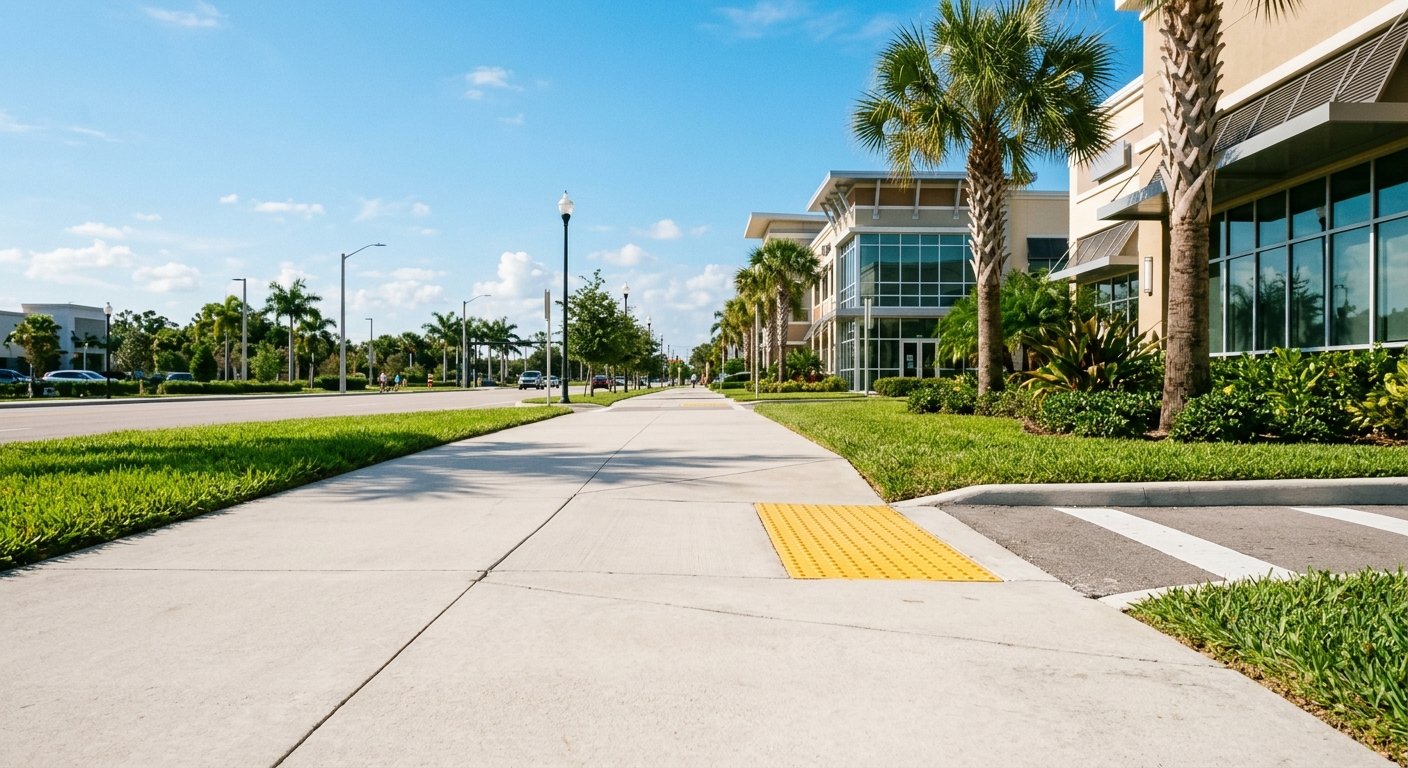
ADA sidewalk slope requirements in Florida set a maximum running slope of 1:20 (5%) for accessible routes and a maximum cross slope of 1:48 (approximately 2%). Any vertical surface change greater than 1/4 inch is a trip hazard under ADA standards. These rules apply to all public accommodations, commercial properties, municipalities, and multifamily housing across Palm Beach County and Broward County.
- Running slope on an accessible walkway must not exceed 1:20 (5%); steeper grades become ramps with their own requirements.
- Cross slope — the side-to-side tilt — must not exceed 1:48 (about 2%).
- Any vertical displacement greater than 1/4 inch is a trip hazard under ADA; changes between 1/4 inch and 1/2 inch must be beveled at a 1:2 slope or less.
- Non-compliant sidewalks expose Florida property owners to slip-and-fall liability and federal ADA enforcement actions.
- Precision concrete cutting can correct slope and trip hazards at 70–90% less cost than full sidewalk replacement, according to Florida Sidewalk Solutions’ service documentation.
What the ADA Actually Requires for Sidewalk Slopes
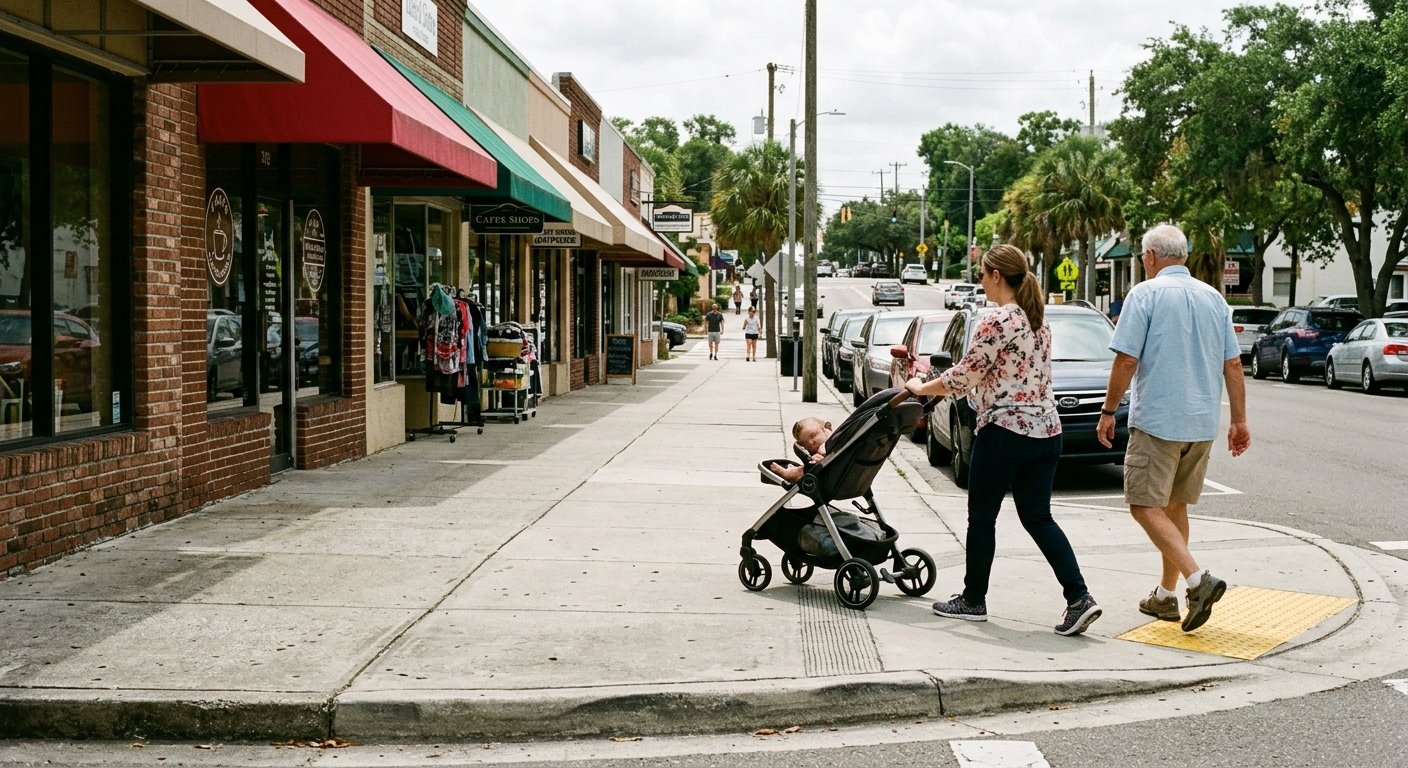
The ADA Standards for Accessible Design, published by the U.S. Access Board, are the authoritative federal framework governing accessible routes at most commercial, municipal, and public properties. For walking surfaces, the standards define two distinct slope directions — and both must be within tolerance for a path to be considered accessible.
Running slope follows the direction of travel. A running slope steeper than 1:20 (5%) classifies the surface as a ramp, which then triggers additional requirements: handrails, edge protection, level landings, and a maximum slope of 1:12. Most sidewalks are designed flat enough to avoid ramp classification, but tree root upheaval, soil settlement, and Florida’s expansive clay soils frequently push sections out of compliance over time.
Cross slope is the tilt perpendicular to travel. The ADA caps cross slope at 1:48 — roughly 2%. Surfaces that drain too aggressively or were poured at the wrong angle can exceed this limit, creating conditions that make wheelchair navigation difficult and increase fall risk for pedestrians using walkers or canes.
A vertical change of more than 1/4 inch between two surfaces — such as an uplifted sidewalk panel — is a trip hazard under ADA. Vertical changes between 1/4 inch and 1/2 inch must be beveled at no more than a 1:2 slope. Anything above 1/2 inch is non-compliant regardless of beveling.
Handicap Ramp Requirements in Florida
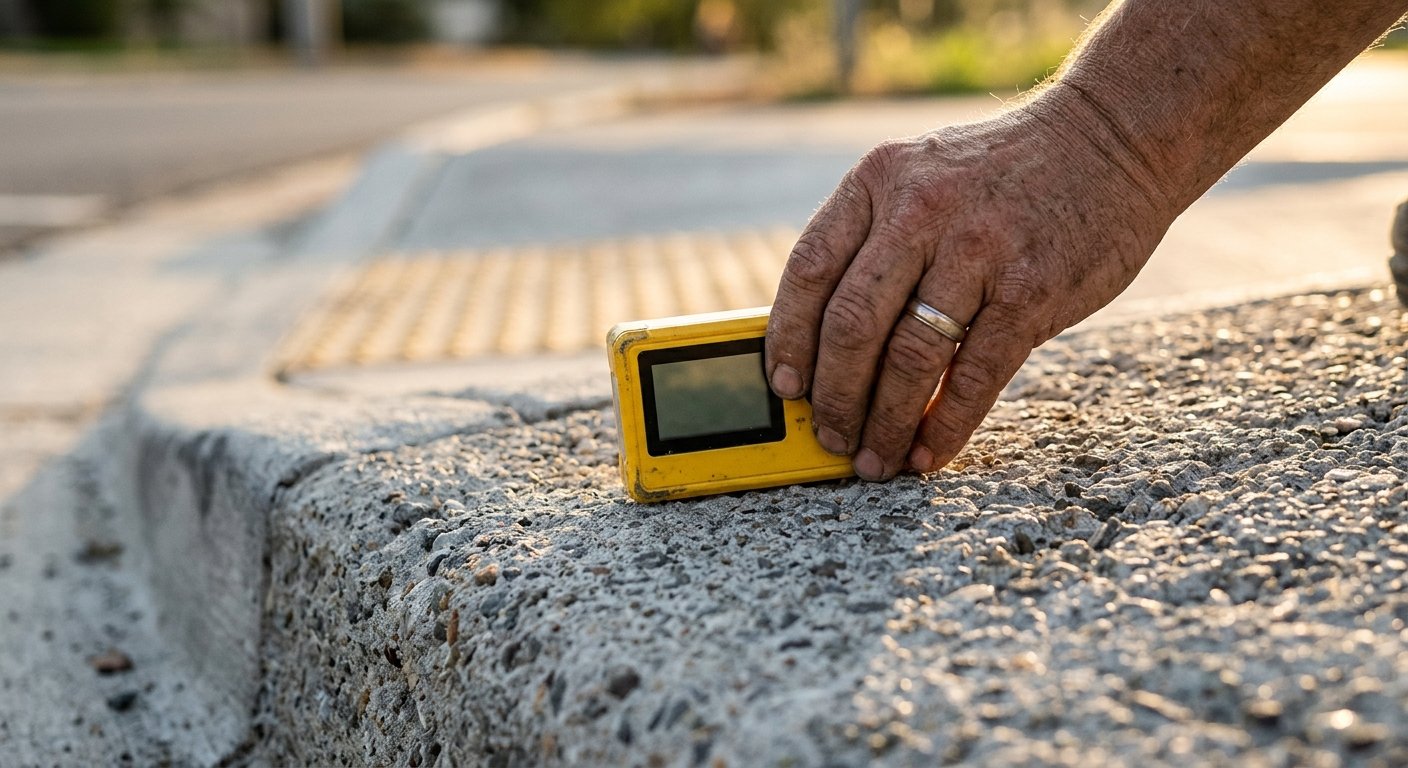
Curb ramps are where sidewalk slope rules become most visible — and most frequently cited in ADA enforcement. ADA.gov’s guidance on curb ramps specifies that curb ramp running slopes must not exceed 1:12 (8.33%) and that the flared sides of a curb ramp must not exceed 1:10. The gutter or road surface at the bottom must meet the walkway with no abrupt change.
Florida properties must also comply with the Florida Accessibility Code, which mirrors and in some cases expands on federal ADA requirements. For municipalities in Palm Beach County and Broward County, the practical implication is that every curb ramp, driveway apron crossing a pedestrian path, and accessible parking space access route must meet these combined federal and state standards.
Curb ramps that have heaved, settled, or were originally poured incorrectly are among the most common ADA violations found during property inspections. Because the ramp itself may be only a few square feet of concrete, full replacement can feel like an overreaction — and often is. Precision cutting technology allows technicians to restore proper slope geometry without demolition.
Site Assessment
A trained technician measures running slope, cross slope, and vertical displacements across the accessible route to identify every non-compliant surface.
Repair Specification
Each defect is categorized: trip hazard, slope violation, or both. The appropriate correction method — cutting, grinding, or ramp adjustment — is specified for each location.
Precision Cutting
Patented concrete cutting equipment removes material to precise tolerances, correcting vertical displacement and slope without breaking out the slab.
Verification & Documentation
Final measurements confirm ADA compliance. Documentation is provided for your records, supporting your defense in the event of a future liability claim.
Why Slope Violations Are a Legal Liability in Florida
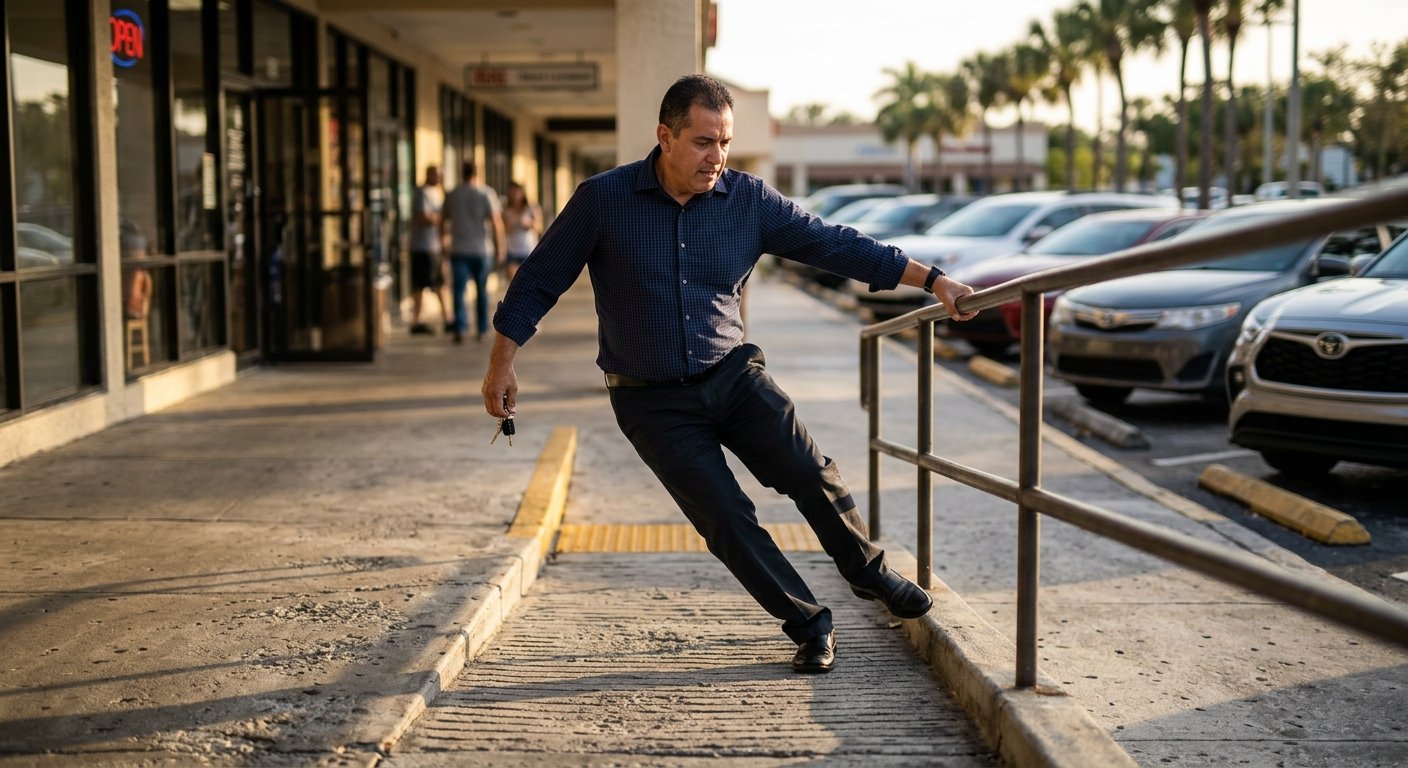
Florida’s legal environment makes ADA sidewalk compliance a financial issue, not just a regulatory one. Property owners — whether an HOA, a commercial landlord, or a municipality — can face federal ADA complaints filed with the Department of Justice, private lawsuits under Title II or Title III of the ADA, and state negligence claims from injured pedestrians.
The ADA’s Title III provisions require places of public accommodation to remove barriers when doing so is “readily achievable.” Courts have consistently held that correcting a raised sidewalk panel or a non-compliant curb ramp qualifies as readily achievable — meaning there is little defense for leaving known hazards unaddressed. For municipalities subject to Title II, transition plans and grievance procedures are required, but they do not eliminate the obligation to make physical corrections.
Correcting a raised panel or non-compliant curb ramp qualifies as “readily achievable” under ADA — leaving known hazards unaddressed offers little legal protection.
For property managers and HOA boards in South Florida, the practical risk is compounded by high foot traffic, a large population of older adults, and active plaintiffs’ attorneys who specialize in ADA claims. Addressing slope violations and trip hazards proactively is the most cost-effective form of risk management available.
Cutting vs. Replacement: What Makes Sense for Slope Corrections
Many property managers assume that a slope violation means the entire sidewalk section must be replaced. In most cases, that assumption is incorrect — and expensive. Full concrete replacement involves saw-cutting, demolition, haul-away, forming, pouring, finishing, and curing. It disrupts pedestrian access for days, generates construction debris, and typically costs significantly more than a repair-based approach.
Precision concrete cutting technology corrects slope and displacement issues by removing material with surgical accuracy. The slab stays in place. Pedestrian access is typically restored the same day. There is no demolition waste. And the finished surface blends cleanly with the surrounding concrete — a result that grinding alone cannot match, because grinding follows the existing surface profile rather than cutting to a target grade.
| Consideration | Concrete Cutting (Repair) | Full Replacement |
|---|---|---|
| Slab remains in place | Yes | No |
| Demolition waste | None | Significant |
| Pedestrian access disruption | Hours | Days to weeks |
| Addresses slope & displacement | Yes | Yes |
| ADA compliance documentation | Provided | Provided |
| Relative cost | Lower | Higher |
Florida Sidewalk Solutions has applied this approach across Palm Beach County and Broward County for more than 20 years. The patented cutting method is purpose-built for the Florida environment, where root intrusion and soil movement create recurring slope problems that reward precision repair over wholesale demolition.
ADA Compliance for Walkways: What Properties Are Responsible
ADA walkway requirements in Florida apply to a broader set of properties than many owners realize. If any part of a property is open to the public or used by employees, the accessible route connecting parking, entrances, and amenities must meet ADA standards. That includes:
- Retail centers, office parks, and medical facilities
- Multifamily communities with common areas
- HOA sidewalk networks and pool access paths
- School campuses and university walkways
- Municipal parks, government buildings, and transit stops
Municipalities face an additional obligation under ADA Title II: they must have a transition plan that identifies barriers in the public right-of-way and schedules their removal. Sidewalks that exceed slope tolerances or have trip hazards qualify as barriers. Reviewing your ADA compliance exposure is a necessary first step before a complaint or injury forces the issue.
Schedule a documented walkway inspection before the end of your fiscal year. Written evidence that you identified and addressed slope and displacement issues is your strongest defense against negligence claims — and supports ADA transition plan requirements for municipalities.
Frequently Asked Questions
What is the maximum allowable slope for an ADA sidewalk in Florida?
The maximum running slope for an accessible walkway is 1:20, or 5%. The maximum cross slope is 1:48, approximately 2%. Slopes steeper than 1:20 in the direction of travel classify the surface as a ramp, which carries additional ADA requirements including handrails and maximum 1:12 grade.
How much vertical change is a trip hazard under ADA?
Any vertical displacement greater than 1/4 inch is considered a trip hazard under ADA standards. Vertical changes between 1/4 inch and 1/2 inch must be beveled at a slope no steeper than 1:2. Displacements greater than 1/2 inch are non-compliant regardless of beveling.
Can a concrete cutting repair fix a slope violation, or does the slab need to be replaced?
In most cases, precision concrete cutting can correct slope and displacement violations without removing the slab. The cutting process removes material to precise tolerances, restoring ADA-compliant geometry. Full replacement is rarely necessary for slope corrections and is significantly more disruptive and costly.
Are HOAs in Florida required to maintain ADA-compliant sidewalks?
HOAs that maintain common areas accessible to residents and guests generally have ADA obligations for those shared pathways, particularly in communities with amenities like pools, clubhouses, or fitness facilities. Consulting a Florida-licensed attorney about your specific obligations is advisable, but addressing documented slope and trip hazard issues is sound risk management regardless of legal classification.
How long does a precision cutting repair take compared to replacement?
Most precision cutting repairs restore pedestrian access the same day. Full concrete replacement typically requires days of curing time before the surface can be used, in addition to the demolition and forming process. For active commercial properties or busy municipal walkways, the difference in downtime is significant.
Get a Professional ADA Slope Assessment
Florida Sidewalk Solutions serves Palm Beach County and Broward County — contact us to schedule a site evaluation and find out exactly where your property stands on ADA sidewalk compliance.
About Florida Sidewalk Solutions
Florida Sidewalk Solutions specializes in sidewalk safety, ADA compliance, and trip hazard prevention for Florida property managers, municipalities, and commercial property owners. Using patented concrete cutting technology, they deliver cost-effective repairs that are 70-90% less expensive than replacement, with minimal disruption and no demolition waste. With 20 years of Florida-specific experience, they provide the expert solution for eliminating liability risks while meeting ADA standards and legal requirements. Visit floridasidewalksolutions.com →