
When a sidewalk panel is damaged, repair is usually the right choice — and often the only cost-effective one. Full replacement is warranted when concrete is structurally compromised beyond surface level, but most trip hazards, uneven joints, and raised edges in Palm Beach County and Broward County properties qualify for precision repair methods that restore safety and ADA compliance at a fraction of the cost.
- Most sidewalk defects — raised joints, surface cracks, and uneven panels — can be repaired rather than replaced.
- Precision concrete cutting removes trip hazards cleanly without demolition waste or extended closures.
- Full replacement makes sense only when concrete is structurally failed, not merely uneven or aged on the surface.
- Choosing repair over replacement typically produces significant cost savings while meeting ADA standards.
- Delaying either repair or replacement creates measurable liability exposure for Florida property owners.
The Decision That Costs Property Owners the Most
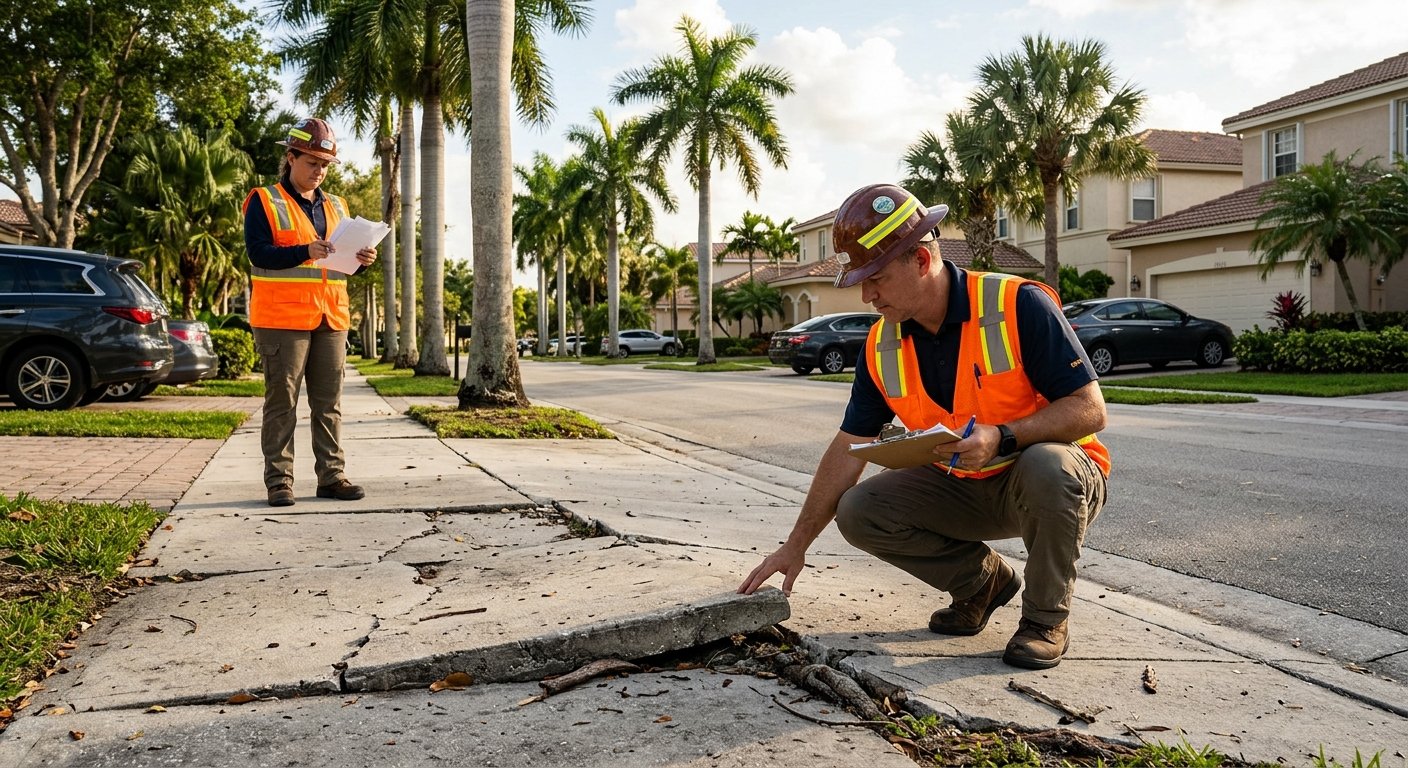
The most expensive mistake in sidewalk management is not always choosing the wrong method — it is delaying the decision entirely. A raised concrete edge that begins as a nuisance becomes a legitimate trip hazard, then a documented liability, then a lawsuit. For HOA boards, municipal public works directors, and commercial property managers in South Florida, the repair-versus-replacement question comes up constantly, and the answer is rarely as complicated as it seems once you understand what each method actually addresses.
The Americans with Disabilities Act sets clear standards for accessible routes, including maximum slope tolerances and surface continuity requirements. When a sidewalk falls out of compliance — whether from tree root uplift, soil settlement, or freeze-thaw cycles in higher elevations — property owners face both a safety obligation and a legal one. The question is which remedy fits the actual condition of the concrete.
What “Repair” Actually Means for Concrete Sidewalks
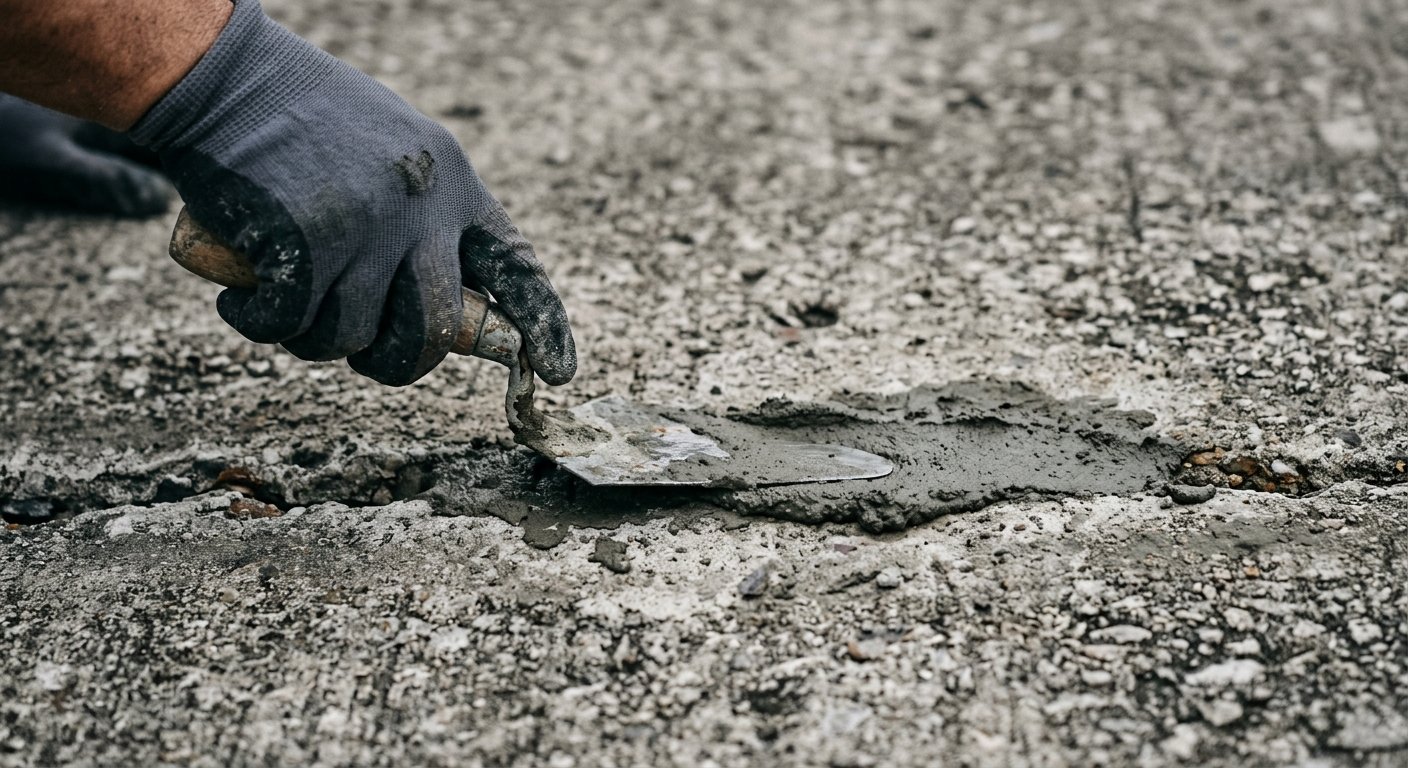
Sidewalk repair covers a range of methods, and not all of them are equal. The term is sometimes applied loosely to grinding, patching, or mudjacking — approaches that vary significantly in durability, appearance, and long-term effectiveness. Understanding the differences helps property managers make informed decisions rather than defaulting to the highest bid or the most familiar contractor.
Concrete Grinding
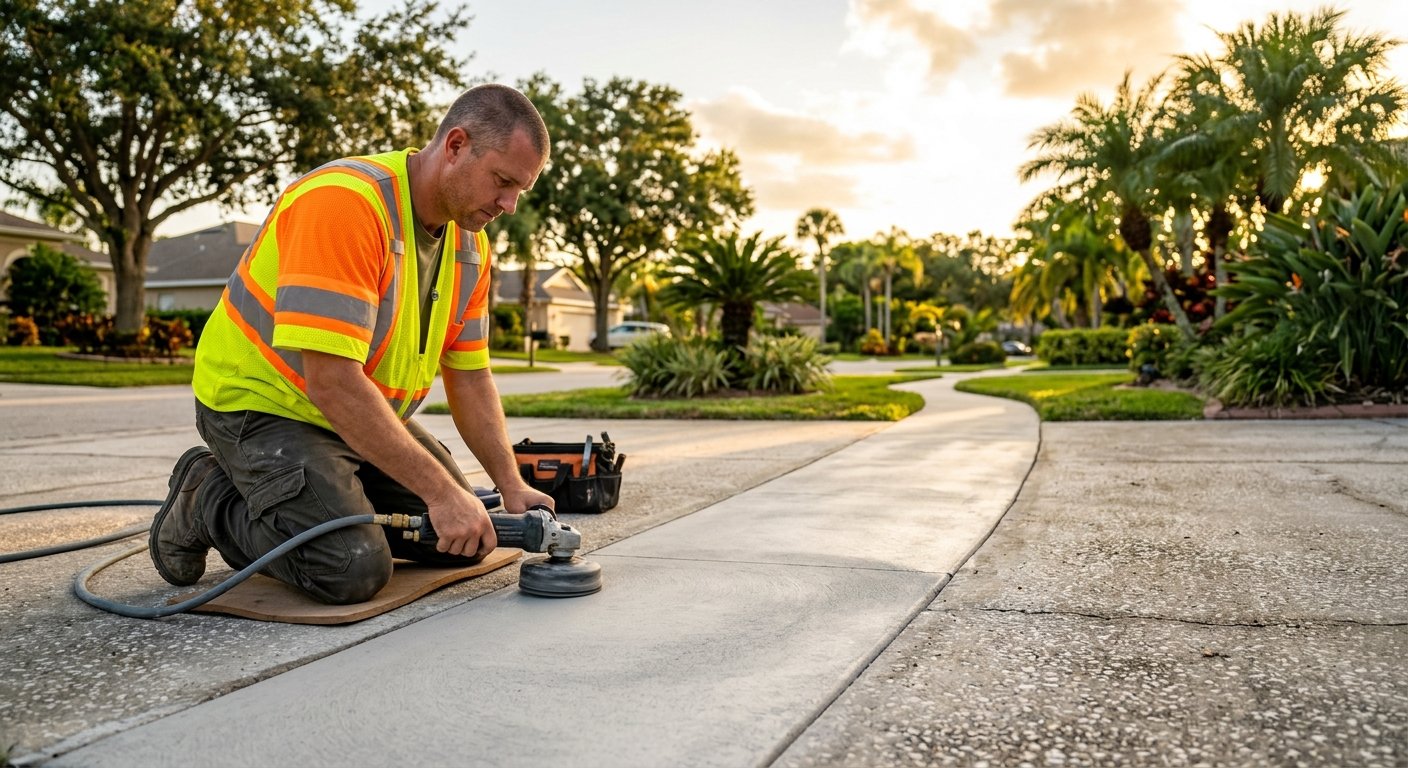
Grinding removes material from the higher side of a trip hazard using a rotating abrasive wheel. It is fast and inexpensive, but it produces a beveled, rough edge that is visibly different from the surrounding concrete. For ADA compliance purposes, grinding can be effective for smaller vertical differentials, but it leaves a sloped transition that must still meet U.S. Access Board guidelines for surface treatment. The results tend to degrade faster in areas with ongoing root pressure.
Precision Concrete Cutting
Precision cutting uses a different approach entirely. Rather than abrading the surface, a controlled saw cut creates a clean, flush edge that resolves the vertical displacement without changing the panel’s structural profile. Florida Sidewalk Solutions uses patented concrete cutting technology to achieve this result — the finish is level, clean, and visually consistent with the surrounding sidewalk. There is no demolition, no debris hauling, and no extended closure. For commercial properties and municipalities managing pedestrian traffic, that minimal disruption matters as much as the repair itself.
For a detailed breakdown of trip hazard methods and how they compare, see the trip hazard repair guide on this site.
A clean cut resolves the hazard at the source — no bevel, no patch, no temporary fix waiting to fail again.
When Full Replacement Is the Right Call
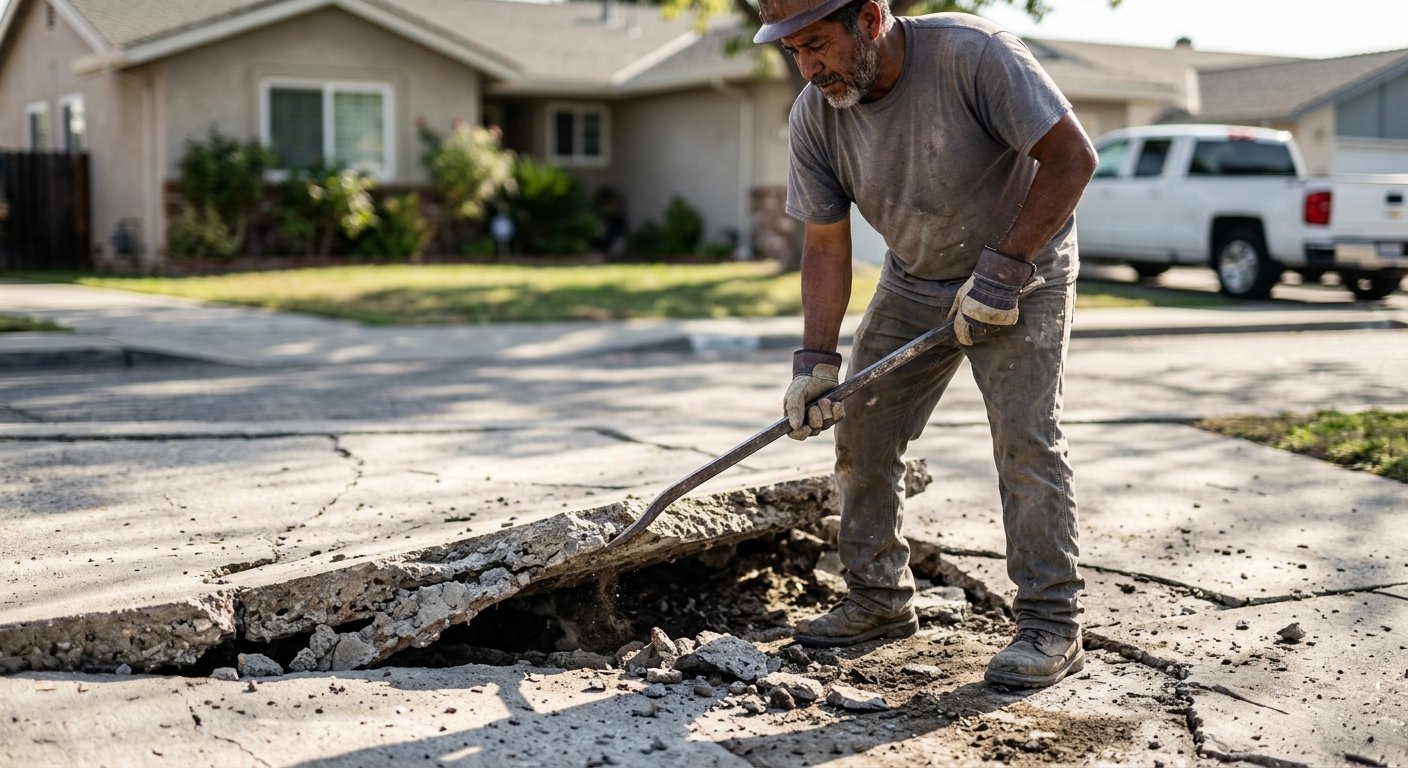
Replacement is appropriate when concrete is structurally compromised in ways that surface-level repair cannot address. Indicators include:
- Deep, through-panel cracking that has allowed panel separation or significant vertical displacement beyond what cutting can safely address
- Spalling or deterioration that extends through more than the surface layer of the slab
- Subsurface voids or soil failure beneath the panel that will cause re-settling regardless of surface treatment
- Panels that have been previously patched multiple times and have lost structural continuity
In these cases, attempting to repair is counterproductive. A patched panel over a failed subbase will fail again, often faster than the original concrete. Replacement, while more disruptive and costly, addresses the root cause rather than the symptom.
Patching over structurally compromised concrete without addressing subsurface conditions is one of the most common sources of repeat repairs. If a panel has been patched twice in three years, the subbase — not the surface — is likely the issue.
That said, outright replacement is genuinely necessary in fewer situations than many contractors suggest. The concrete sidewalk repair industry has historically defaulted toward replacement because it generates more revenue, not because the panel required it. An independent assessment from a specialist who offers both options is worth the time.
| Factor | Repair (Precision Cutting) | Full Replacement |
|---|---|---|
| Best for | Raised joints, uneven panels, surface-level trip hazards | Structurally failed, deeply cracked, or subsidence-affected panels |
| Disruption | Minimal — area usable same day | Significant — curing time required, area closed |
| Demolition waste | None | Yes — concrete debris removal required |
| ADA compliance result | Yes, when properly executed | Yes, when properly designed and installed |
| Environmental impact | Low — no material removal | Higher — demolition and new material production |
| Appropriate lifespan | Long-term when root cause is addressed | Long-term when subbase is corrected |
ADA Compliance: The Standard Both Methods Must Meet
Whether a property manager chooses repair or replacement, the outcome must meet ADA standards for accessible routes. For sidewalks, this includes surface stability, firmness, and continuity — and specifically, vertical level changes no greater than one-quarter inch without a bevel, or one-half inch maximum with a compliant bevel. Any repair method that leaves a surface outside those tolerances does not resolve the compliance issue; it may simply change the nature of it.
Florida Sidewalk Solutions has spent more than 20 years working specifically on ADA compliance issues for South Florida municipalities, HOAs, and commercial properties. That experience matters when the work is being done adjacent to accessible parking, building entrances, or public routes where enforcement risk is highest. For a comprehensive overview of what compliance requires and how to achieve it, the ADA compliance resource provides detailed guidance on Florida-specific requirements.
Schedule a compliance walkthrough before a complaint is filed rather than after. Proactive assessment gives property managers documentation of good-faith efforts — and identifies hazards before they become incidents.
The Cost Case for Repair-First Decision Making
The financial argument for choosing repair when conditions support it is straightforward. Replacement involves demolition, hauling, forming, pouring, and curing — each a separate cost and scheduling dependency. Precision cutting requires none of those steps. The result is a substantially lower project cost for the same compliance outcome when the concrete itself is sound.
For property managers weighing proposals, the relevant question is not “what is the cheapest option?” but “what is the most cost-effective resolution to this specific defect?” A repair that lasts is far better value than a replacement that costs three to four times as much. For a direct comparison of the long-term economics, the repair vs. replacement guide walks through the full cost analysis.
Assess the Concrete Condition
Determine whether the defect is surface-level displacement or structural failure. This single distinction drives every subsequent decision.
Evaluate ADA Thresholds
Measure vertical displacement and surface continuity against applicable standards before selecting a repair method.
Choose the Right Method
For sound concrete with surface hazards, precision cutting is typically the appropriate and most efficient solution. Reserve replacement for panels with subsurface or structural failure.
Document the Work
Maintain records of assessment findings, the method selected, and post-repair measurements for liability and compliance purposes.
Frequently Asked Questions
How do I know if a sidewalk panel needs repair or full replacement?
If the concrete is structurally sound but has raised edges, uneven joints, or surface-level trip hazards, repair is generally the right choice. Replacement becomes necessary when a panel has deep through-cracks, significant subsidence, or repeated failure after prior repairs — indicating a subbase problem rather than a surface one.
Does precision concrete cutting meet ADA compliance standards?
Yes, when performed correctly. Precision cutting can eliminate vertical level changes and restore surface continuity within ADA tolerances. The method must be applied by experienced technicians who measure against the specific thresholds that govern accessible routes.
How long does precision cutting repair take compared to replacement?
Precision cutting is typically completed in a single visit with no curing time required, meaning the area is accessible the same day. Replacement involves demolition, forming, pouring, and a multi-day curing period before the surface is usable — a significantly longer disruption timeline for active properties.
Is concrete grinding the same as precision cutting?
No. Grinding abrades the surface to reduce the higher side of a trip hazard, leaving a beveled, roughened edge. Precision cutting makes a controlled saw cut to create a clean, flush resolution. The finish, durability, and ADA compliance results differ — cutting generally produces a more durable and aesthetically consistent outcome.
Do Florida property owners have a legal obligation to repair trip hazards?
Florida property owners and municipalities have duty-of-care obligations under state premises liability law, and commercial properties and public entities face additional ADA obligations for accessible routes. Documented hazards that go unaddressed create clear liability exposure. Neither repair nor replacement guarantees immunity from legal claims, but prompt, documented remediation demonstrates reasonable care.
Get a Professional Assessment for Your Property
Florida Sidewalk Solutions serves Palm Beach County and Broward County — contact us to schedule an on-site evaluation and find out which approach is right for your sidewalk conditions.

About Florida Sidewalk Solutions
Florida Sidewalk Solutions specializes in sidewalk safety, ADA compliance, and trip hazard prevention for Florida property managers, municipalities, and commercial property owners. Using patented concrete cutting technology, they deliver cost-effective repairs that are 70-90% less expensive than replacement, with minimal disruption and no demolition waste. With 20 years of Florida-specific experience, they provide the expert solution for eliminating liability risks while meeting ADA standards and legal requirements. Visit floridasidewalksolutions.com →