
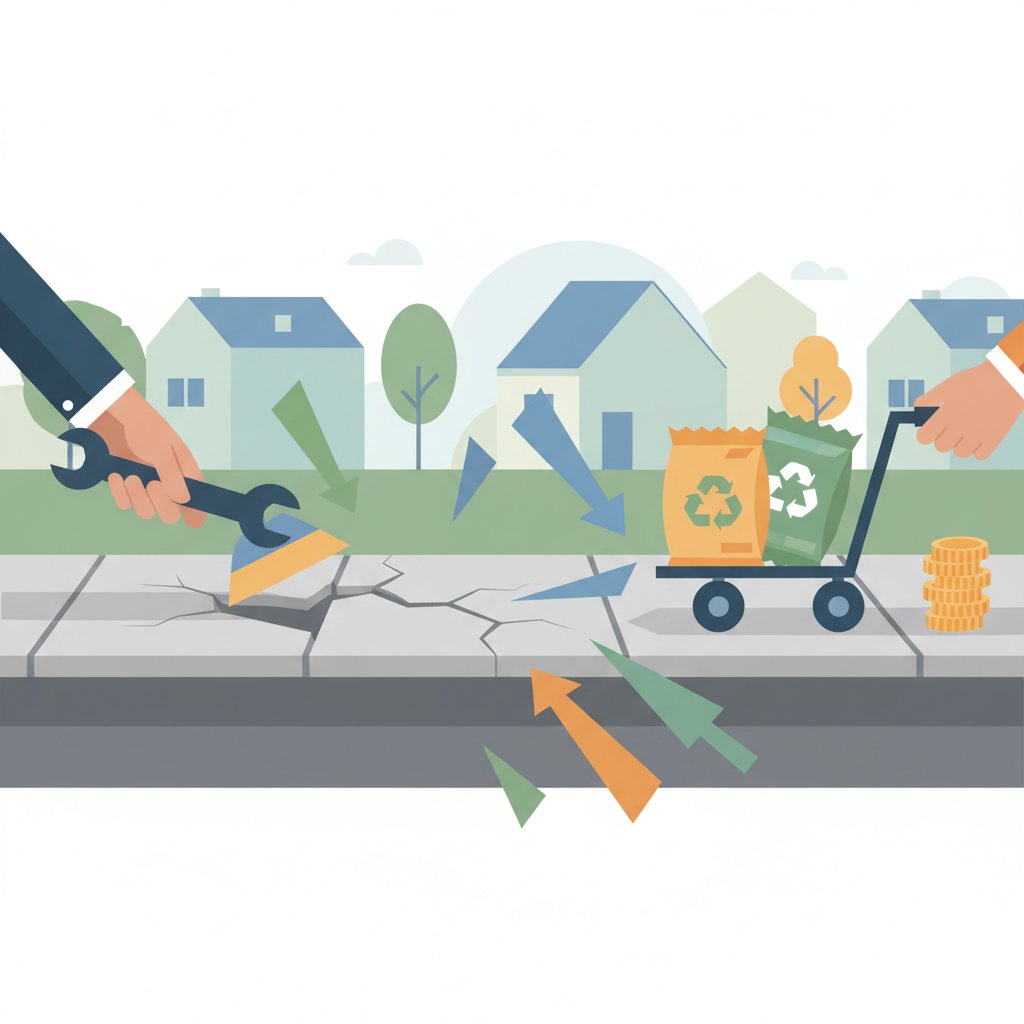
Florida HOAs face mounting pressure from residents, legal liability, and compliance requirements when sidewalks develop trip hazards. A single uneven concrete slab can cost your community tens of thousands in lawsuit settlements, yet many boards delay repairs due to budget concerns and fear of lengthy construction disruptions. The good news: modern concrete cutting technology offers HOAs a faster, more affordable path to safety and compliance.
The Growing Crisis: Trip Hazards and HOA Liability
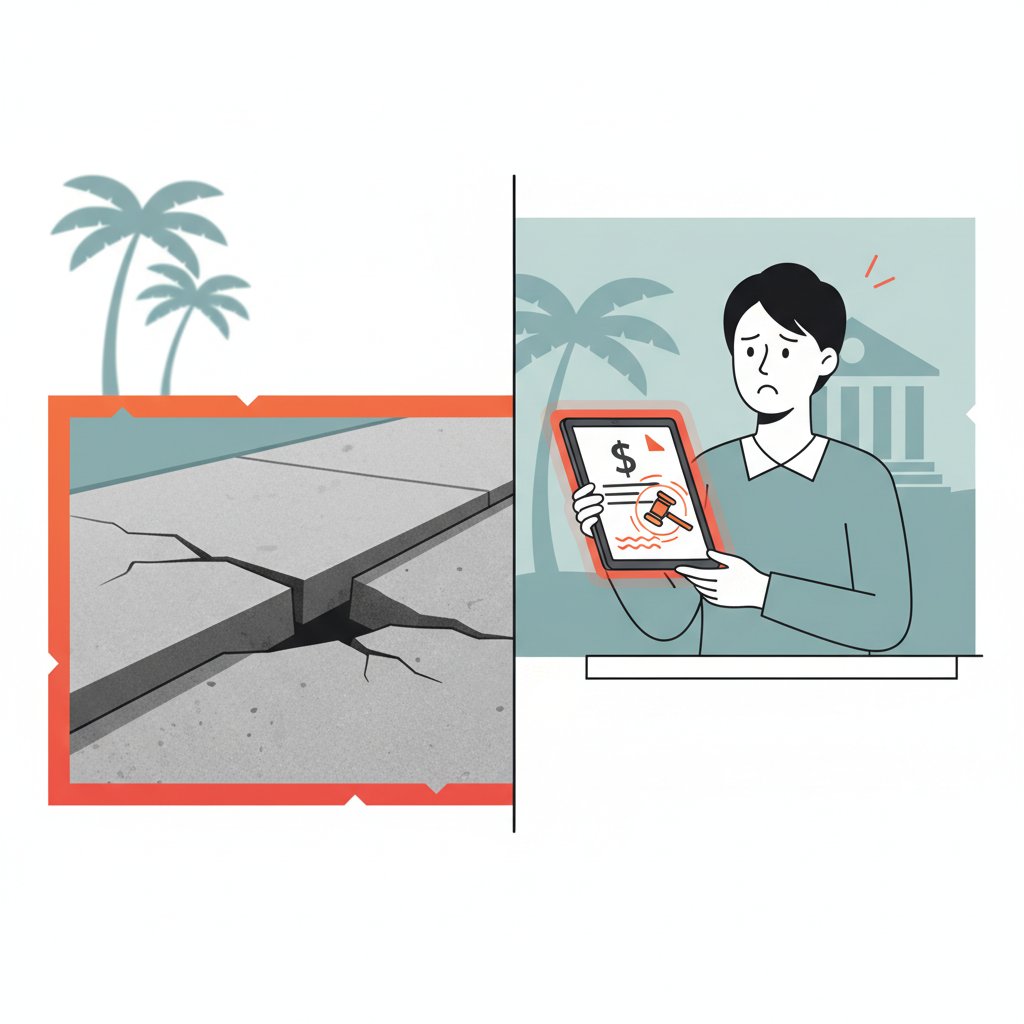
Trip and fall claims represent one of the most common lawsuits filed against homeowner associations in Florida. When residents or guests suffer injuries from uneven sidewalks, HOAs typically bear responsibility for both medical expenses and legal costs. Recent settlements in Florida have ranged from $50,000 to over $300,000 for serious injuries caused by sidewalk trip hazards.
The legal standard is clear: HOAs have a duty to maintain common areas in reasonably safe condition. Courts consistently rule that raised concrete sections exceeding half an inch create foreseeable dangers. This means even minor sidewalk displacement can expose your community to substantial financial risk.
Beyond immediate liability concerns, HOAs must also address Americans with Disabilities Act compliance. ADA standards require vertical displacement of walkways to remain below one-half inch, with beveled transitions for differences up to one-quarter inch. Non-compliance can trigger federal complaints and costly remediation orders.
Why Traditional Sidewalk Repair Fails HOA Budgets
When board members receive bids for traditional concrete replacement, the sticker shock often leads to paralysis. Demolishing and replacing concrete sections typically costs $8 to $15 per square foot in Florida, with additional expenses for:
- Debris removal and disposal fees
- Extended cure times requiring barricades and restricted access
- Potential irrigation or landscape restoration
- Higher insurance premiums due to construction activity
- Resident complaints about noise, dust, and inconvenience
A typical HOA sidewalk replacement project might require 28 days from demolition to final opening, during which residents navigate detours and construction zones. For communities with extensive walkway networks, phased replacement can drag on for months.
Concrete grinding presents another common approach, but this method creates its own problems. Grinding machines remove material from high sections, leaving rough, pitted surfaces that discolor quickly and collect debris. The aggressive abrasion weakens the concrete surface and creates an obvious patchwork appearance that detracts from property values. Many HOAs report that ground sections require rework within just a few years as the weakened surface deteriorates.
Precision Concrete Cutting: The Superior Alternative
Patented precision concrete cutting technology transforms HOA sidewalk repair from a dreaded capital expense into a manageable maintenance item. Rather than demolishing concrete or grinding away surfaces, specialized diamond-blade saws make strategic cuts that remove thin vertical strips from raised sections.
This surgical approach eliminates the trip hazard while preserving the structural integrity of both slabs. The raised section is carefully lowered to match adjacent concrete, creating a smooth, ADA-compliant transition. The cut edge is then finished to match surrounding concrete texture and color.
The advantages for HOA budgets are substantial. Precision cutting typically costs 70-90% less than concrete replacement, allowing boards to address safety hazards across entire communities rather than delaying repairs or tackling problems piecemeal. This cost efficiency means better resource allocation for other community needs.
Speed and Minimal Disruption: Critical for Communities
HOA board members know that construction projects generate resident complaints. Precision concrete cutting addresses this concern directly through rapid completion times and minimal impact.
Most HOA sidewalk trip hazard removal projects are completed in one to three days, depending on the number of locations requiring attention. The cutting equipment operates relatively quietly compared to jackhammers and concrete saws used in replacement work. There’s no debris hauling, no concrete trucks, and no extended cure times requiring barricades.
Repaired sections are ready for foot traffic immediately after completion. This means no angry emails about blocked pathways or restricted access to amenities. Residents often don’t even realize work has been performed until they notice the smooth, safe walkways.
The minimal disruption factor becomes especially important for communities with active lifestyles, where residents depend on walking paths for exercise and daily activities. Precision cutting allows HOAs to maintain safety without interrupting the community’s routine.
ADA Compliant Sidewalks: Meeting Federal Standards
The Americans with Disabilities Act establishes specific requirements for walkway surfaces in areas of public accommodation. While some HOAs question whether their private sidewalks fall under ADA jurisdiction, courts have increasingly applied accessibility standards to common areas in residential communities, particularly those with commercial elements or public access points.
ADA guidelines specify that vertical changes in level up to one-quarter inch are permitted without treatment. Changes between one-quarter and one-half inch must be beveled with a slope no greater than 1:2. Any vertical displacement exceeding one-half inch requires a ramp to meet code.
Precision concrete cutting reliably achieves ADA-compliant results by reducing vertical displacement below the half-inch threshold and creating appropriate beveled transitions. This documented compliance provides HOA boards with legal protection and demonstrates responsible stewardship of community resources.
Property managers appreciate the detailed documentation that accompanies precision cutting services. Before and after measurements, photographs, and compliance certifications create a paper trail showing the board took appropriate action to address safety hazards according to applicable standards.
Environmental Advantages: Green Solutions for Forward-Thinking Communities
Florida HOAs increasingly prioritize environmental responsibility in maintenance decisions. Residents want communities that demonstrate sustainability values, and board members recognize that green practices can enhance property values and community reputation.
Concrete replacement generates enormous waste. Demolished sidewalks must be hauled to landfills, while new concrete production contributes significantly to carbon emissions. A single cubic yard of concrete produces approximately 400 pounds of CO2 during manufacturing.
Precision cutting eliminates this waste stream entirely. The existing concrete remains in place, requiring no disposal and no new material production. The only byproduct is a small amount of concrete dust, which is typically collected during the cutting process.
Communities pursuing green certifications or sustainability initiatives find that precision concrete cutting aligns perfectly with environmental goals while simultaneously delivering budget benefits.
Real Results: Case Studies from Florida Communities
A 300-home community in Central Florida faced replacement quotes exceeding $85,000 for sidewalk repairs throughout their property. The board was preparing to phase the work over three years due to budget constraints. After learning about precision concrete cutting, they completed the entire project for $12,000 in less than a week, freeing up capital for other deferred maintenance needs.
A Gulf Coast HOA dealt with repeated resident complaints about uneven sidewalk sections near their clubhouse. Previous grinding attempts had created rough, discolored patches that residents found unsightly. Precision cutting eliminated the trip hazards while delivering a clean, professional appearance that matched the original concrete finish.
These results reflect the consistent experience of Florida HOAs that choose cutting over traditional repair methods. Boards report high resident satisfaction with both the results and the minimal disruption during the repair process.
Making the Decision: What HOA Boards Should Know
When evaluating sidewalk repair options, HOA boards should request detailed proposals that address several key factors:
- Per-location pricing rather than vague estimates
- Projected completion timeline with specific milestones
- ADA compliance documentation and warranties
- Evidence of insurance coverage and licensing
- References from similar communities
- Before and after photos from previous projects
The lowest bid isn’t always the best value. Concrete grinding might appear economical initially, but the shortened lifespan and poor aesthetics often require rework within a few years. True cost analysis should consider long-term durability and appearance.
Board members should also consider the liability implications of delay. Every month that trip hazards remain unaddressed increases the risk of injuries and lawsuits. Insurance companies take note of documented hazards, and coverage can be jeopardized when boards demonstrate awareness of dangers but fail to take timely action.
Florida-Specific Considerations for HOA Sidewalk Repair
Florida’s unique conditions create specific challenges for concrete walkways. Root growth from mature trees frequently causes sidewalk displacement as landscapes mature. Soil conditions and settlement patterns contribute to uneven sections developing over time.
With over 20 years of experience addressing these Florida-specific challenges, precision concrete cutting services understand the particular patterns of sidewalk damage common in the state. This expertise ensures appropriate solutions that address root causes while eliminating immediate trip hazards.
Florida’s year-round activity in residential communities means there’s never a perfect time for disruptive construction. The speed advantage of precision cutting becomes especially valuable in the state’s active lifestyle communities where residents use walkways daily for exercise and recreation.
Taking Action: Protecting Your Community
HOA boards carry significant responsibility for resident safety and community finances. Sidewalk trip hazards represent one of the most manageable risks facing communities, yet delayed action due to cost concerns creates unnecessary exposure to lawsuits and injuries.
Precision concrete cutting technology removes the traditional barriers that caused boards to defer sidewalk repairs. Budget-friendly pricing makes comprehensive repairs feasible within annual maintenance allocations. Rapid completion and minimal disruption eliminate resident complaints. ADA-compliant results provide legal protection and demonstrate responsible governance.
Forward-thinking boards recognize that addressing safety hazards proactively costs far less than reactive responses to injuries and lawsuits. Modern repair technology makes the right choice also the affordable choice.
Don’t let outdated assumptions about concrete repair costs leave your community vulnerable to trip and fall liability. Florida Sidewalk Solutions brings proven precision concrete cutting technology and over two decades of Florida experience to HOA communities throughout the state. Contact us today for a free assessment of your community’s sidewalks and a detailed proposal showing exactly how much you can save while eliminating trip hazards and achieving full ADA compliance. Protect your residents, your budget, and your community’s future with solutions designed specifically for Florida HOAs.