
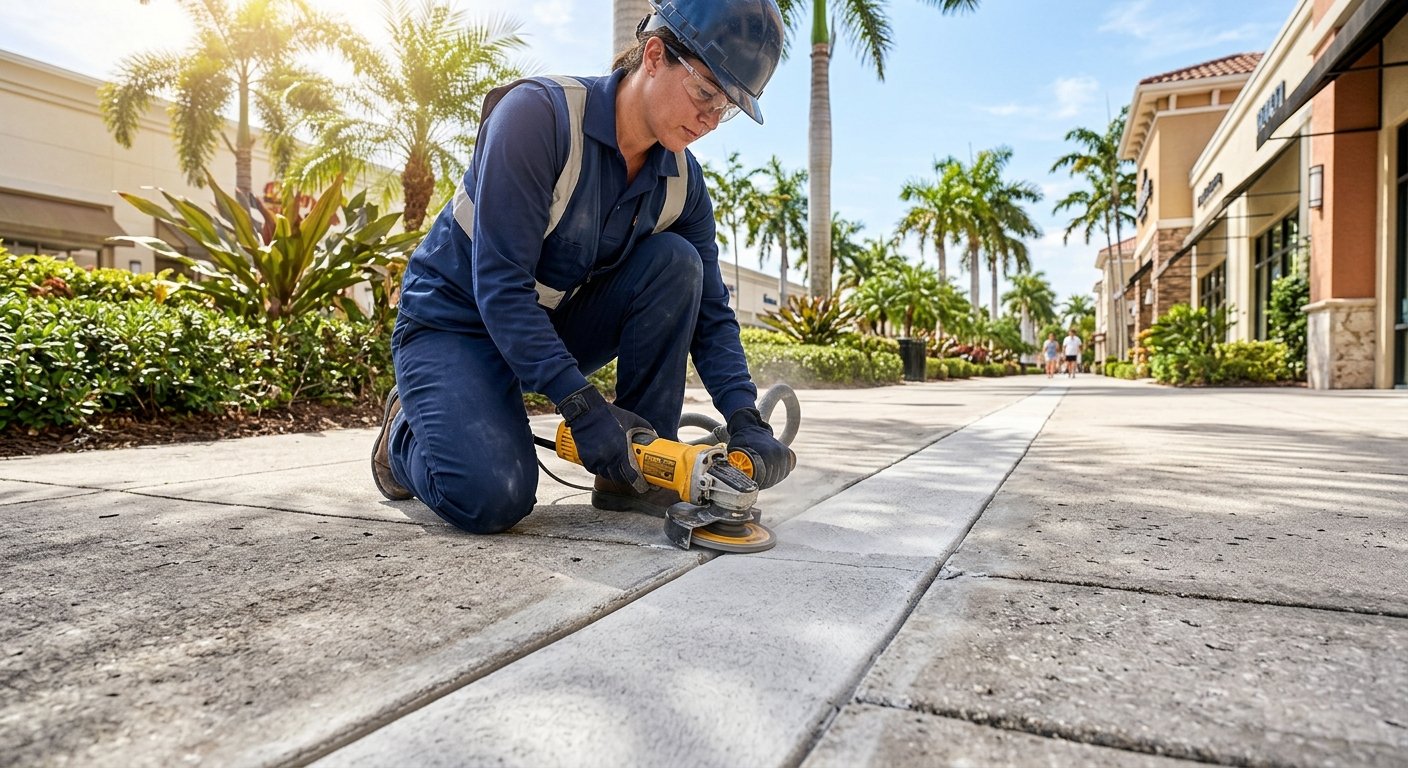
A single raised sidewalk panel costs more than you might expect—not in concrete, but in liability. In Florida, property owners and municipalities can be held financially responsible when a pedestrian trips on a raised or cracked sidewalk slab. In Broward County, where heavy foot traffic spans retail corridors, HOA communities, school campuses, and municipal walkways, unaddressed trip hazards translate directly into legal exposure and ADA compliance violations.
The good news: professional trip hazard repair in Broward County is faster, less disruptive, and far more affordable than most property managers realize. This guide walks through the entire process—from identifying a hazard to completing a compliant, long-lasting repair—so you know exactly what to expect.
What Qualifies as a Trip Hazard?
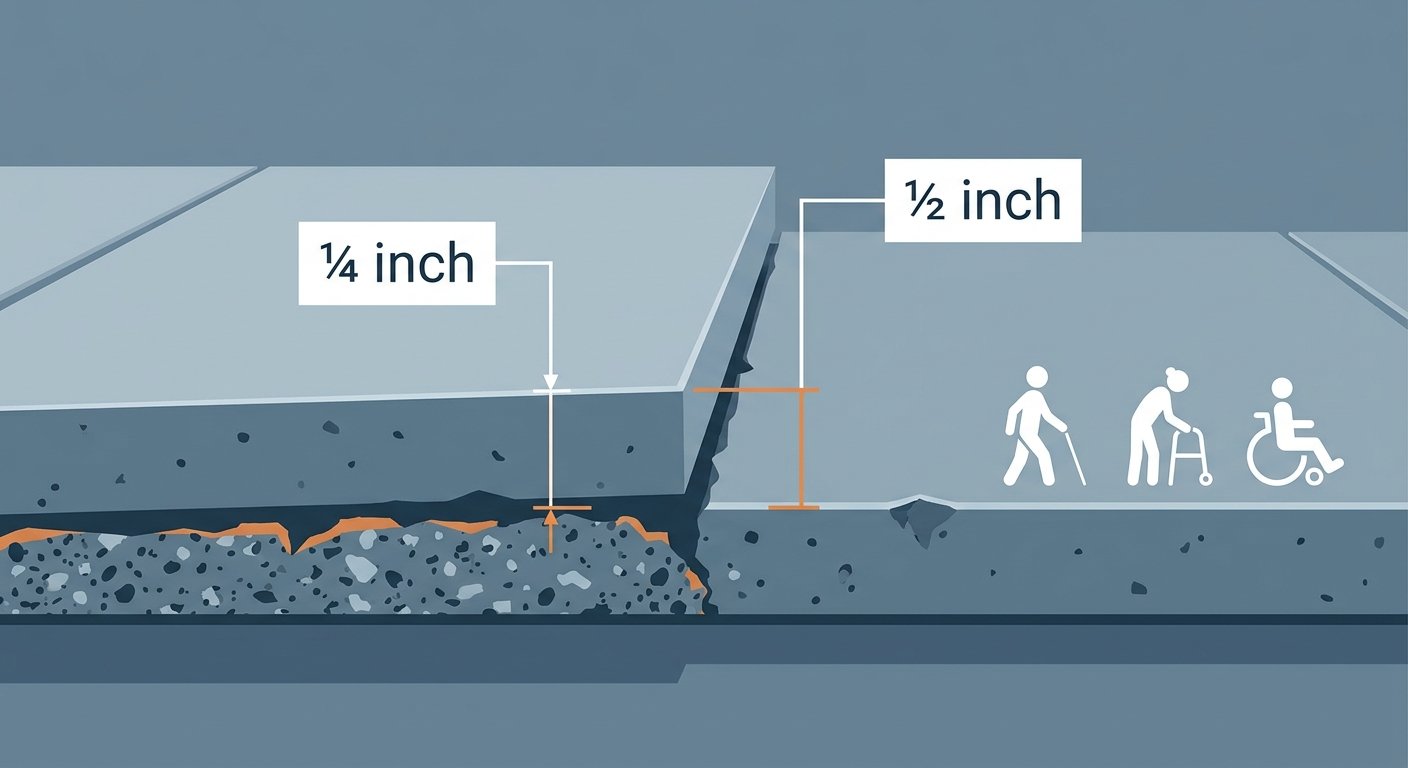
Under ADA standards established by the U.S. Access Board, a vertical change in sidewalk elevation of ½ inch or more is considered a trip hazard and an accessibility barrier. In practice, even a ¼-inch displacement can create a dangerous condition for elderly pedestrians, individuals with disabilities, or anyone carrying a load.
Common causes of sidewalk trip hazards in Broward County include:
- Tree root intrusion lifting concrete panels
- Soil erosion or settlement beneath slabs
- Thermal expansion and contraction cracking joints
- Heavy vehicle traffic crossing pedestrian paths
- Age-related concrete deterioration
Left unrepaired, these hazards don’t stabilize on their own—they worsen with every rain event, every passing vehicle, and every month of Florida sun.
Step 1: Professional Site Inspection and Documentation
The repair process begins with a thorough on-site inspection. A qualified trip hazard contractor in Broward County should document each hazard with precise measurements, photographs, and location mapping. This documentation serves two critical purposes: it forms the basis of an accurate repair scope, and it creates a record showing the property owner acted promptly—an important factor in liability risk management.
During inspection, the contractor assesses:
- The vertical displacement height at each joint or crack
- The horizontal extent of the hazard
- Underlying causes (root systems, drainage, soil conditions)
- Whether the surrounding concrete is structurally sound
- ADA compliance requirements for the specific walkway type
At Florida Sidewalk Solutions, our licensed and insured team has conducted thousands of these assessments across Palm Beach County and Broward County over more than 20 years. We approach every inspection with the same precision whether it’s a three-panel HOA walkway or a mile-long municipal corridor.
Step 2: Determining the Right Repair Method
Not all sidewalk trip hazards require the same fix. The inspection results guide the repair method selection. There are three primary approaches:
Concrete Cutting (Precision Beveling)
For raised edges where the concrete itself is structurally sound, precision concrete cutting is the most effective and cost-efficient solution. Using patented cutting technology, the raised edge is carefully sliced to create a gradual bevel—typically a 1:2 slope—that meets ADA requirements and eliminates the trip hazard entirely. The result is a smooth, clean transition that looks professional and performs long-term.
This method costs 70–90% less than full panel replacement and creates no demolition debris. There’s no jackhammering, no concrete haul-away, and no extended sidewalk closure. Learn more about how this approach works on our concrete cutting sidewalk repair page.
Grinding
Concrete grinding is a surface-level abrasion technique that can reduce minor height differences. However, it creates a rough, visually inconsistent patch, generates concrete dust, and is less precise than cutting. For hazards exceeding ¾ inch of displacement, grinding typically fails to achieve a proper ADA-compliant bevel without removing excessive material. Cutting delivers a cleaner result with tighter tolerances.
Full Panel Replacement
When concrete is structurally compromised—deep cracking, spalling, or significant subsidence—replacement may be necessary. However, most trip hazards in Broward County involve panels that are displaced but otherwise intact. Recommending replacement for a problem that cutting can resolve costs property owners significantly more for no additional safety benefit. Our sidewalk repair vs. replacement guide walks through when each option is appropriate.
Step 3: Preparing the Work Area
Before repair begins, the work zone is properly cordoned off to protect pedestrians and workers. For most concrete cutting repairs, this preparation is minimal—typically traffic cones and caution tape around the specific hazard location. Unlike full replacement, there’s no need to set up extended barriers or excavate surrounding areas.
Property managers appreciate this efficiency. A strip mall, apartment complex, or school campus can remain fully operational during repairs. Pedestrian detours, when needed, are brief and localized.
Step 4: Executing the Repair
The actual concrete cutting repair is precise and efficient. The patented equipment used by Florida Sidewalk Solutions creates a controlled, angled cut along the raised edge. Key technical elements include:
- Bevel angle: Cut to ADA-compliant specifications, typically no steeper than 1:2 slope
- Cut depth: Calibrated to remove only what’s necessary, preserving concrete integrity
- Edge smoothing: Final passes ensure a clean, professional finish with no sharp edges
- Zero demolition waste: The removed concrete material is minimal and collected on-site
Most individual hazard repairs are completed in under an hour. Large-scale municipal or commercial projects covering multiple panels can often be completed in a single day, depending on scope. Compare that to replacement, which requires concrete curing time of 24–72 hours before an area can safely reopen.
Step 5: Post-Repair Inspection and Compliance Documentation
After the repair, a final inspection confirms that the bevel meets ADA standards and that no secondary hazards were created in the process. The repaired area is photographed and documented. This post-repair record is provided to the property manager or municipality and serves as compliance documentation.
For Broward County municipalities and commercial property owners subject to ADA Title II or Title III requirements, this documentation can be critical in demonstrating due diligence if a liability question ever arises.
Why Broward County Properties Can’t Afford to Wait
Florida’s legal environment treats premises liability seriously. Property owners—whether HOAs, commercial landlords, or municipal entities—have a duty of care to maintain safe walking surfaces. When a trip hazard exists and the property owner was aware of it (or reasonably should have been), the basis for a negligence claim is established.
The cost of a single slip-and-fall settlement in Florida routinely exceeds the cost of repairing dozens of sidewalk panels. That math makes prompt trip hazard repair one of the most straightforward risk management decisions a property owner can make.
Beyond litigation risk, unresolved ADA violations can trigger complaints to the U.S. Department of Justice, which can result in mandatory remediation orders and civil penalties. For municipalities and businesses open to the public, this is not a theoretical risk—it’s an active compliance obligation.
What to Look for in a Trip Hazard Contractor in Broward County
Choosing the right contractor matters. Here’s what separates a qualified sidewalk safety repair company from a general concrete contractor:
- ADA compliance expertise: Understanding bevel specifications, slope requirements, and documentation standards
- Licensed and insured: Protecting both the contractor and the property owner throughout the project
- Specialized equipment: Precision cutting technology produces results that standard tools cannot replicate
- Local experience: Familiarity with Broward County’s soil conditions, tree species, and municipal requirements
- Transparent pricing: Clear, itemized estimates before work begins
Frequently Asked Questions
How much does trip hazard repair cost in Broward County?
Costs vary based on the number of hazards, displacement height, and site conditions. However, precision concrete cutting repairs typically cost 70–90% less than full panel replacement. Most property managers find that addressing multiple hazards in a single visit significantly reduces per-hazard cost. Contact Florida Sidewalk Solutions for a detailed on-site estimate.
How long does a trip hazard repair take?
Individual repairs using precision cutting typically take less than an hour per hazard. Larger projects covering multiple locations can often be completed in a single day. There’s no curing time required—repaired surfaces are immediately accessible after work is done.
Will the repaired area look different from the surrounding concrete?
Precision cutting produces a clean, beveled edge with a smooth finish. The repaired area will have a slightly lighter appearance initially, which naturally weathers over time. The finish is significantly more professional than grinding, which often leaves rough or visually inconsistent surfaces.
Does concrete cutting meet ADA requirements?
Yes. When executed correctly, precision beveling creates a gradual slope transition that meets ADA accessibility standards for sidewalk surfaces. Florida Sidewalk Solutions documents all repairs to confirm compliance with applicable standards.
How do I know if my property has trip hazards that need repair?
A professional site assessment is the most reliable method. As a general rule, any sidewalk panel with a vertical edge displacement of ¼ inch or more warrants evaluation. Properties with mature tree canopies, older concrete, or high pedestrian traffic should be assessed annually.
Schedule Your Broward County Sidewalk Safety Assessment
Florida Sidewalk Solutions has been serving Broward County and Palm Beach County property managers, HOAs, municipalities, and commercial property owners for more than 20 years. Our licensed, insured team uses patented precision concrete cutting technology to deliver ADA-compliant trip hazard repairs that protect your property, your budget, and the people who walk your sidewalks every day.
Don’t wait for an incident to identify the problem. Contact Florida Sidewalk Solutions today to schedule a professional site assessment and get a clear, itemized repair plan with no obligation.