
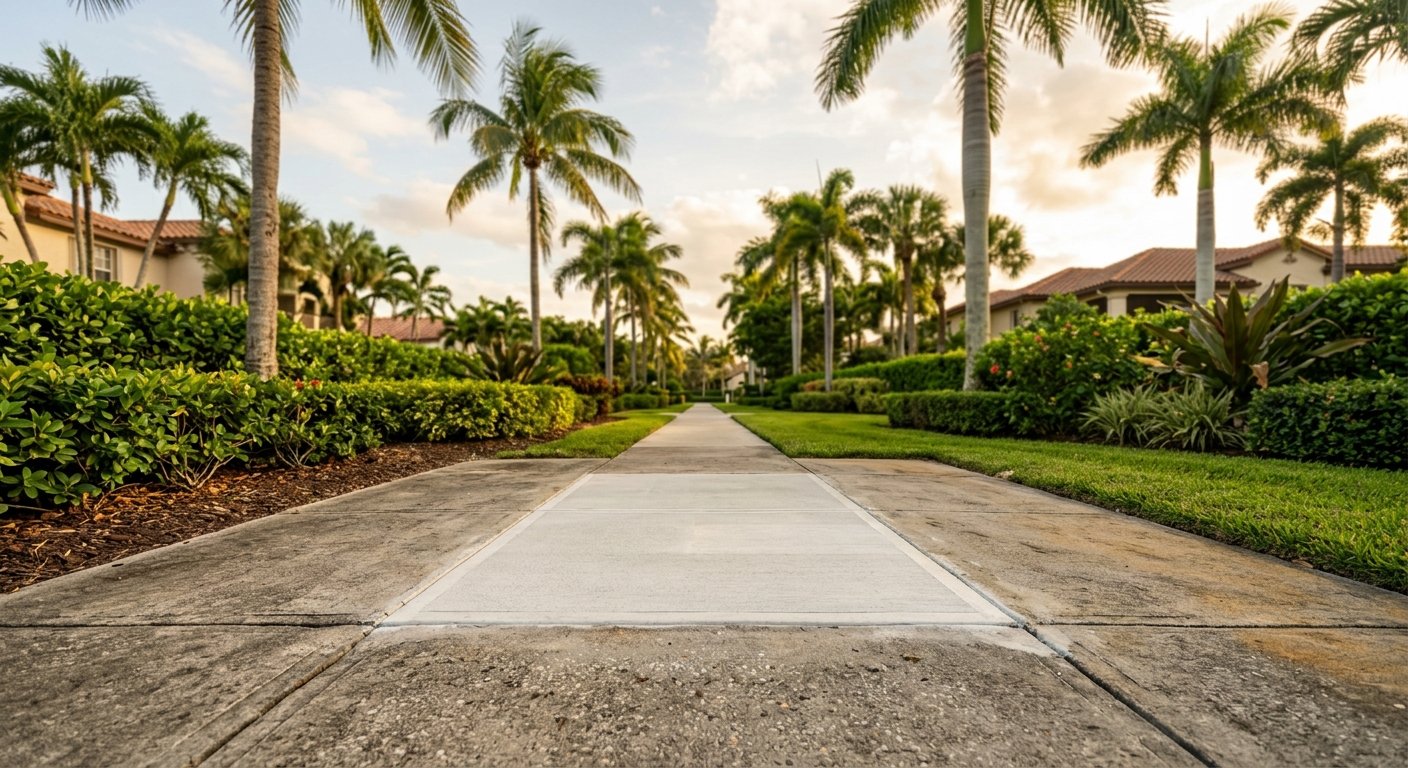
A single raised concrete slab — just half an inch above grade — is enough to trigger a costly premises liability lawsuit in Florida. For property managers and HOA boards across Palm Beach County, that’s not a hypothetical. It’s a reality that plays out in courtrooms and insurance claims offices every year. The good news: fast, ADA-compliant sidewalk repair is available right now, and it costs far less than most property owners expect.
Whether you manage a condominium complex in Boca Raton, oversee public infrastructure for a municipality, or operate a commercial property in West Palm Beach, this guide covers everything you need to know about addressing trip hazards quickly, legally, and cost-effectively.
Why Uneven Sidewalks Are a Liability Crisis in Florida
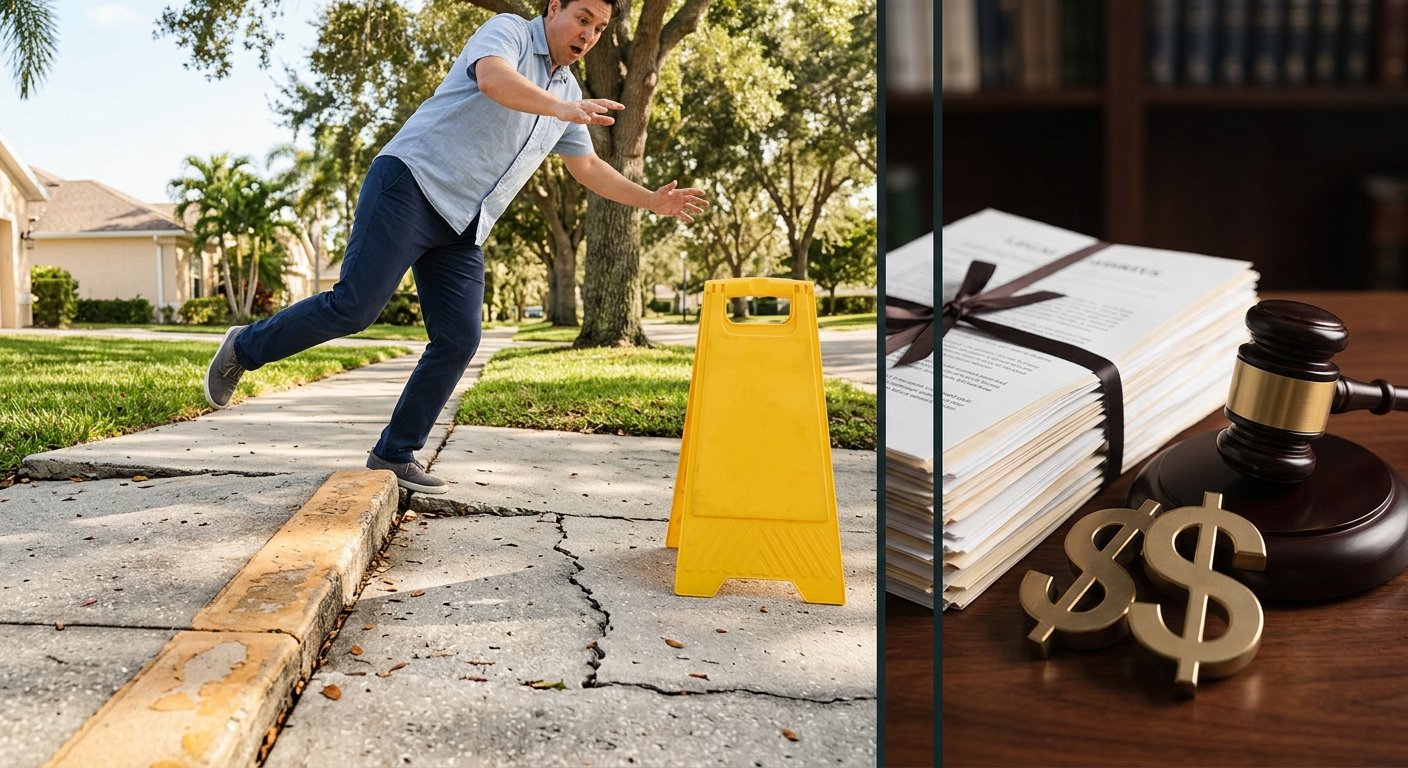
Florida’s premises liability statutes place a clear duty of care on property owners. When a visitor, tenant, or member of the public is injured due to a known hazard — including uneven sidewalk surfaces — the property owner can be held responsible for damages including medical bills, lost wages, and pain and suffering.
In Palm Beach County, the risk is compounded by several factors:
- Florida’s mature tree canopy frequently causes root intrusion, lifting and cracking concrete over time
- High moisture levels accelerate soil settling beneath slabs
- Heavy pedestrian traffic in mixed-use areas and residential communities increases exposure
- The active senior population in South Florida means more pedestrians who may be vulnerable to trip-and-fall injuries
Ignoring an uneven sidewalk doesn’t just create physical risk — it signals awareness of the problem without remediation, which can be particularly damaging in litigation. The longer a documented hazard goes unaddressed, the more expensive the legal exposure becomes.
ADA Sidewalk Requirements Florida Property Owners Must Know
The Americans with Disabilities Act sets measurable standards for accessible pedestrian routes. Under ADA Accessibility Guidelines published by the U.S. Access Board, key requirements include:
- Maximum vertical change in level: Changes up to ¼ inch are permitted without treatment. Changes between ¼ inch and ½ inch must be beveled. Anything above ½ inch constitutes a non-compliant trip hazard.
- Cross slope: Walkway cross slopes must not exceed 2% (1:50 ratio) to prevent difficulty for wheelchair users
- Surface condition: Surfaces must be stable, firm, and slip-resistant
- Clear width: Accessible routes must maintain a minimum 36-inch clear path
For municipalities and public entities in Palm Beach County, ADA compliance isn’t optional — it’s a federal mandate. Private commercial property owners face similar obligations under Title III of the ADA. Non-compliance exposes entities to federal complaints, civil lawsuits, and costly court-ordered remediation programs.
Understanding these thresholds is the first step. The second step is choosing a repair method that actually meets them — and that’s where many property owners go wrong.
Sidewalk Grinding vs. Precision Concrete Cutting: What’s the Difference?
When most people think of trip hazard repair, they think of sidewalk grinding — a method that uses an abrasive wheel to sand down raised edges. While grinding is faster and cheaper on paper, it has significant drawbacks that matter for ADA compliance and long-term performance.
The Problem with Grinding
Sidewalk grinding in Palm Beach creates a rough, abraded surface that can deteriorate quickly in Florida’s sun and humidity. More critically, grinding removes surface material at an angle that often fails to meet the ADA’s ½-inch maximum change in level requirement — particularly for more significant elevation changes. The result is a repair that may satisfy a visual inspection but doesn’t hold up under legal or technical scrutiny.
Grinding also fails to address larger displacement issues. Once the height differential exceeds roughly ¾ inch, grinding cannot achieve a compliant transition without removing so much material that the slab becomes structurally compromised.
Why Precision Concrete Cutting Works Better
Florida Sidewalk Solutions uses a patented precision concrete cutting technology that produces a clean, measured bevel that precisely meets ADA transition requirements. Rather than abrading the surface, a controlled cutting process creates a smooth, durable ramp across the elevation change — eliminating the hazard while preserving the structural integrity of the slab.
The results are measurable and documentable, which matters enormously for liability defense. When a repair is performed to exact ADA tolerances and documented accordingly, property owners have a clear record demonstrating due diligence. Learn more about how this approach works in our detailed overview of patented concrete cutting for sidewalk repair.
How Fast Is Fast? Understanding Repair Timelines
One of the most common concerns from property managers and HOA boards is disruption. Nobody wants to close pedestrian pathways for days or weeks. The practical reality of precision concrete cutting is that most trip hazard repairs in Palm Beach County are completed within a single day — often within hours.
A typical repair scenario:
- Site assessment and documentation of existing hazards and measurements
- Precision cutting performed on-site with minimal equipment footprint
- Cleanup completed — no demolition debris, no concrete disposal logistics
- Area reopened to foot traffic immediately after work is complete
For large properties with multiple hazards — apartment complexes, school campuses, or municipal sidewalk networks — phased repair schedules can be developed to minimize disruption while systematically addressing every documented issue. This contrasts sharply with full concrete replacement, which requires demolition, haul-away, forming, pouring, and curing time that can stretch across multiple days or weeks per section.
The Cost Advantage: Repair vs. Replacement in Palm Beach County
Full sidewalk panel replacement is frequently the default recommendation from general contractors — but it’s rarely the most appropriate solution for trip hazard correction. Precision concrete cutting repairs typically cost 70–90% less than full slab replacement for equivalent hazard elimination.
Consider a property with 40 identified trip hazards. A replacement approach might involve removing and repouring multiple panels at several hundred to several thousand dollars per panel, plus permit fees, traffic control, and extended project timelines. The same 40 hazards addressed through precision cutting can often be completed in one to two days at a fraction of that cost.
There’s also an environmental dimension worth noting. Concrete demolition generates significant waste that must be transported to disposal facilities. Precision cutting eliminates demolition entirely — no debris, no dump fees, no environmental footprint from haul-away. For municipalities with sustainability goals or HOAs with environmentally conscious residents, this matters.
For a thorough comparison of the two approaches, see our resource on sidewalk repair vs. replacement.
Who Needs Trip Hazard Repair in Palm Beach County?
Sidewalk leveling in Palm Beach County is relevant across virtually every property category:
- HOAs and condominium associations: Common area walkways, pool decks, and parking lot pedestrian paths are frequent sources of member trip-and-fall claims
- Municipal public works departments: Aging sidewalk networks require ongoing inspection and cost-effective remediation programs
- Commercial property owners: Retail centers, office parks, and restaurants carry significant slip-and-fall exposure
- Schools and universities: High pedestrian volumes combined with ADA obligations create compounded risk
- Healthcare facilities: Vulnerable patient populations and strict regulatory environments demand reliable, compliant surfaces
- Residential homeowners: Municipal sidewalk liability in Florida can fall on adjacent property owners in certain situations
If you’re unsure whether your property has qualifying hazards, a professional site assessment will identify and document every non-compliant surface condition. Learn more about trip hazard repair services and what a typical assessment covers.
Frequently Asked Questions
What qualifies as a trip hazard under ADA guidelines in Florida?
Under ADA Accessibility Guidelines, a vertical change in level exceeding ½ inch between adjacent concrete panels constitutes a non-compliant trip hazard. Changes between ¼ inch and ½ inch must be beveled at a 1:2 slope. Any surface displacement above these thresholds creates both a safety concern and a legal liability for property owners in Palm Beach County and throughout South Florida.
Is sidewalk grinding ADA compliant for trip hazard repair?
Grinding can produce a compliant bevel for minor displacements, but it has significant limitations for larger elevation changes and often creates surface degradation over time. Precision concrete cutting consistently achieves the exact ADA transition tolerances required, making it the more reliable and documentable solution for compliance purposes.
How long does trip hazard repair take in Palm Beach County?
Most individual trip hazard repairs using precision concrete cutting are completed within a few hours. Larger properties with multiple hazards can often be fully addressed in one to two days. Sidewalks are generally accessible to foot traffic immediately after completion — there’s no curing period required.
Does repairing sidewalk trip hazards really reduce lawsuit risk?
Prompt, documented repair is one of the strongest defenses available to property owners facing premises liability claims. It demonstrates awareness of the duty of care and timely action. While no repair can guarantee immunity from future claims, addressing known hazards to ADA compliance standards significantly reduces exposure and strengthens your legal position if an incident does occur.
Can I repair some trip hazards and not others if my budget is limited?
Prioritizing the most severe hazards — those with the greatest vertical displacement or highest pedestrian traffic — is a reasonable approach when working within budget constraints. A professional site assessment can help you prioritize based on severity, traffic patterns, and legal exposure. Creating a phased remediation plan with documented timelines also demonstrates ongoing good-faith efforts toward compliance.
Schedule Your Palm Beach County Site Assessment Today
Florida Sidewalk Solutions has spent over 20 years solving exactly these problems for property managers, municipalities, HOAs, and commercial owners across Palm Beach County and Broward County. Licensed, insured, and equipped with patented precision concrete cutting technology, the team delivers ADA-compliant results faster and at dramatically lower cost than replacement — without demolition, without extended downtime, and with full documentation for your records.
If your property has uneven sidewalks, don’t wait for a fall to force the issue. Contact Florida Sidewalk Solutions today to schedule a professional site assessment and get a clear, cost-effective plan for bringing your walkways into compliance.