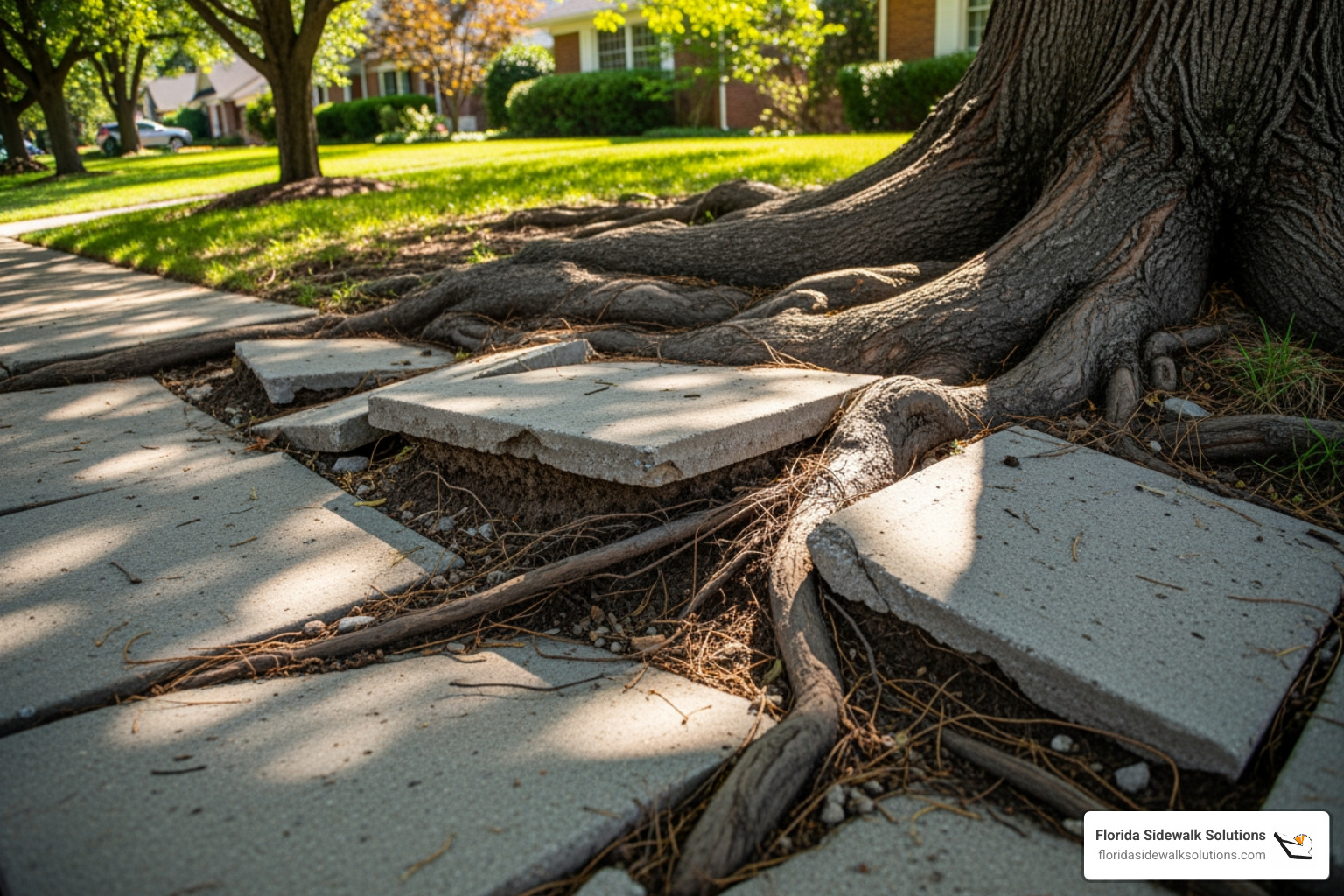
The Growing Problem of Tree Roots and Sidewalk Safety
Shaving tree roots under sidewalk is a risky practice that many property managers consider when dealing with lifted concrete, but it often does more harm than good. Here’s what you need to know:
Quick Answer: Should You Shave Tree Roots Under Your Sidewalk?
- Not Recommended – Shaving tree roots creates wounds that invite disease and decay
- Destabilizes Trees – Cutting roots within 3x the trunk diameter can cause tree failure
- Temporary Fix – Roots regrow within 3-5 years, causing the problem to return
- Better Solution – Modify the sidewalk concrete itself using precision cutting methods
- ADA Compliance – Any vertical change over ¼ inch must be corrected to avoid violations
As a Municipal Maintenance Manager, you’ve probably heard the phrase “Wouldn’t it be nice to have a tree growing right there?” turn into “Look what the roots are doing to the sidewalk!” This is one of the most common infrastructure challenges in Florida, where mature trees like Live Oaks send powerful roots under concrete slabs, creating serious trip hazards.
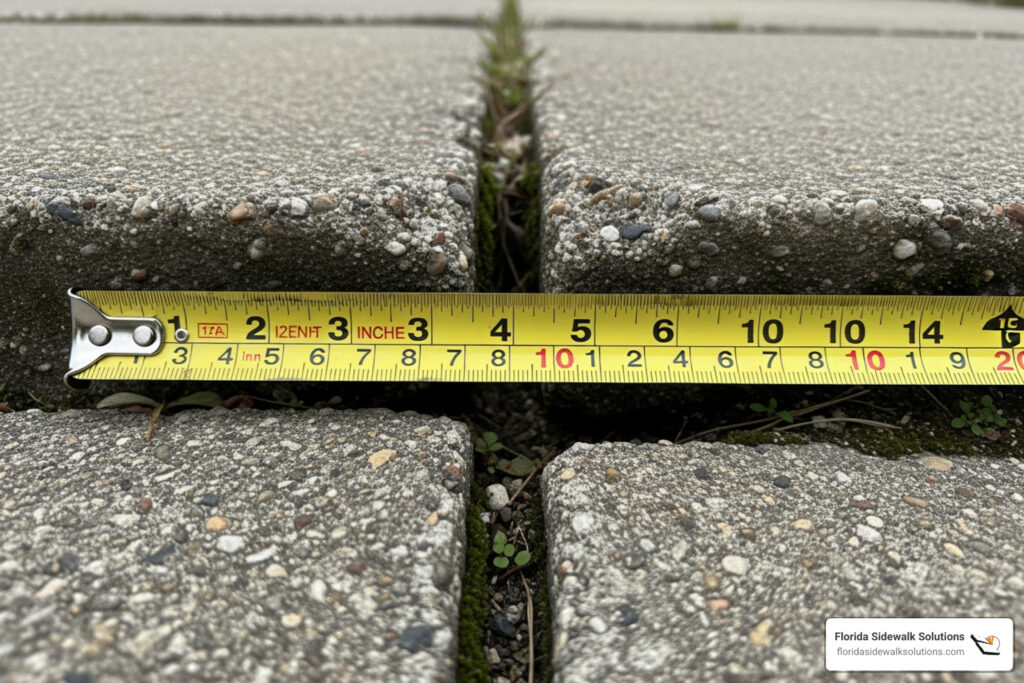
Once a sidewalk lifts over ½ inch, you’re facing both a liability issue and an ADA violation. The Americans with Disabilities Act requires any vertical change over ¼ inch between sidewalk panels to be corrected. For municipal managers working with tight budgets, the pressure to find a quick, cheap fix is real.
That’s where the temptation to “shave” or grind down tree roots comes in. But this approach carries severe risks to tree health and stability while providing only temporary relief. The good news? There’s a better way that protects both your trees and your pedestrians while meeting ADA standards and staying within budget.
Florida Sidewalk Solutions specializes in precision sidewalk cutting that removes trip hazards without touching tree roots. This method is more effective and costs only a fraction of traditional repair approaches like concrete grinding or full replacement.
Understanding the Conflict: Why Tree Roots Heave Sidewalks
Picture this: a gorgeous oak tree providing shade on a hot Florida afternoon, its canopy stretching wide and welcoming. But underneath? Its roots are quietly staging an uprising against your sidewalk. This conflict between trees and concrete plays out in communities across Florida, from Davie to Fort Myers, and it’s more than just an eyesore—it’s a genuine safety crisis waiting to happen.
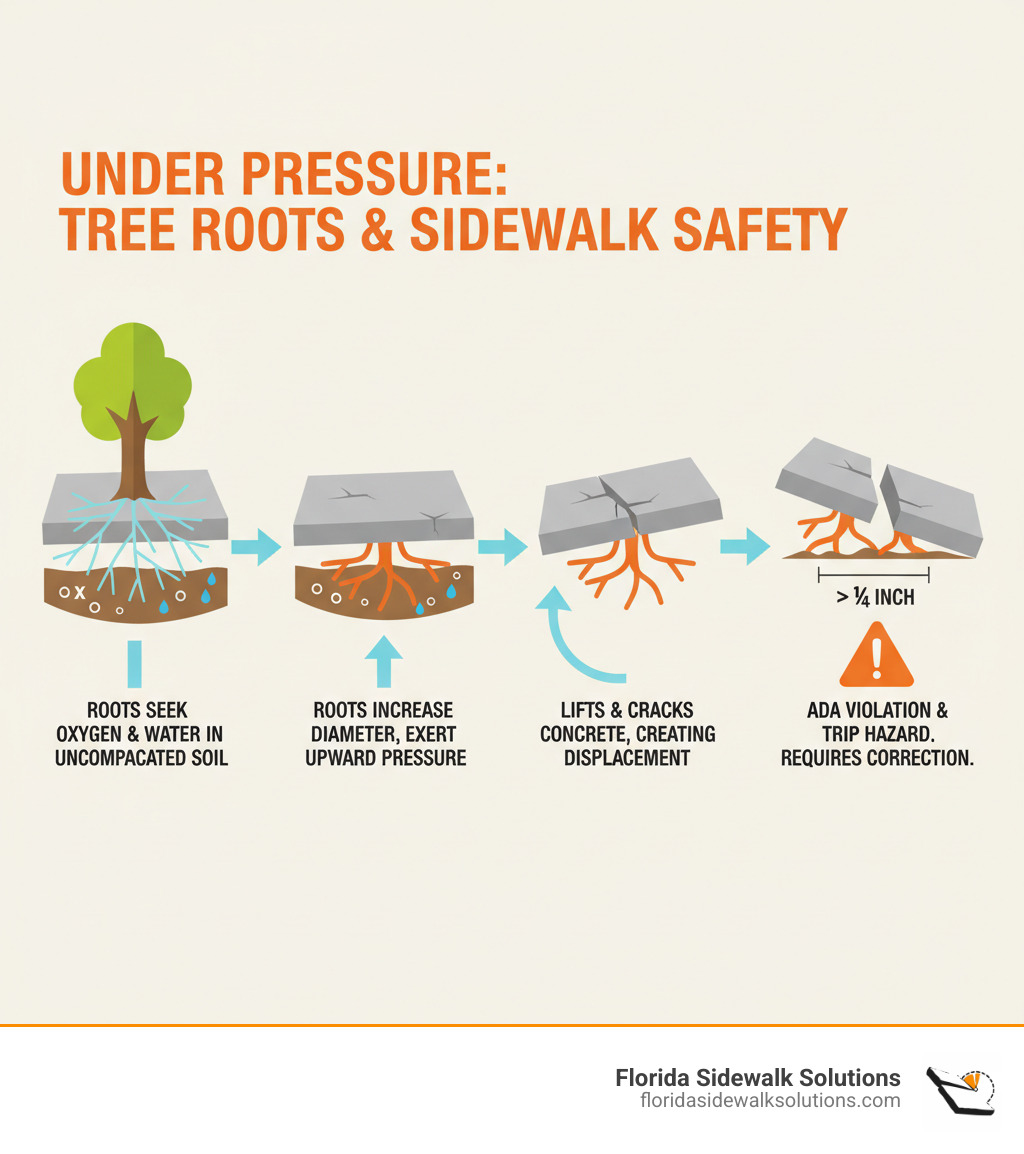
Here’s the thing about tree roots: they’re opportunistic explorers. They don’t just hunt for water—they’re also searching for oxygen and nice, uncompacted soil where they can stretch out and grow. And where do they find these perfect conditions? Right beneath your sidewalk.
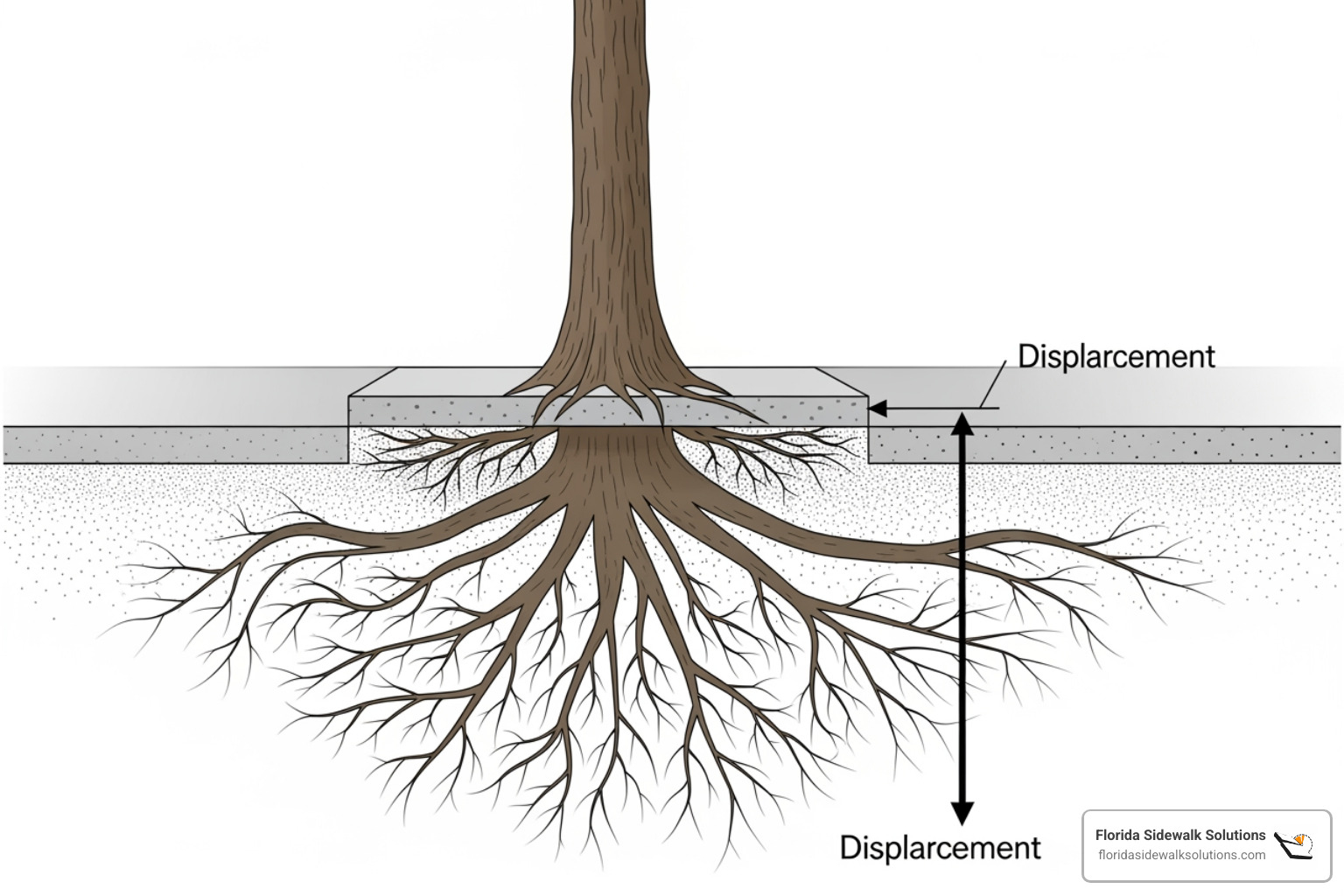
Most sidewalks in Florida are only about four inches thick, poured directly on native soil. Compare that to driveways and roads, which typically go six inches deep or more over a gravel base. For a tree root, a sidewalk is an easy target—thin concrete over soft, oxygen-rich soil. It’s like an open invitation.
Now add in secondary root thickening, which is just a fancy way of saying that roots get fatter as they age. That slender root that first wiggled under your sidewalk ten years ago? Today it might be as thick as your arm. As these roots expand, they push upward with tremendous force. Think of it like a weightlifter doing a bench press—except the barbell is a concrete slab, and the weightlifter never gets tired.
The result is what we call sidewalk heaving: the concrete lifts, cracks, and creates those uneven surfaces that catch toes and trip unsuspecting pedestrians. Once a sidewalk panel rises more than ¼ inch, you’ve got an ADA violation on your hands. The Americans with Disabilities Act is very clear about this—any vertical change over that quarter-inch threshold must be corrected. And when that lift reaches ½ inch or more, you’re looking at a serious trip hazard and significant liability.
Property owners, HOAs, and municipalities can face costly lawsuits when someone gets injured on these lifted sections. The legal and financial risks are real, which is why so many people start looking for quick fixes—including the tempting but problematic practice of shaving tree roots under sidewalk panels.
In Florida, certain trees are particularly talented at creating these problems. Live Oaks are the most notorious culprits. These majestic trees are beloved for their sprawling canopies and Southern charm, but their robust root systems and prominent root flares can wreak havoc on sidewalks, especially when they’re planted in those narrow strips between the street and walkway.
Maples, Elms, and Sweetgums also make the troublemaker list. These species tend to have shallow, aggressive root systems that spread wide rather than deep. They’re constantly searching for resources near the surface, which puts them on a collision course with any concrete in their path.
Understanding why and how roots lift sidewalks is the first step in solving the problem. The key is finding a solution that protects both your trees and your pedestrians—without creating more problems down the road.
The High-Risk “Fix”: Shaving Tree Roots Under Sidewalk
When you’re staring at a sidewalk that’s been pushed up by a stubborn tree root, the idea of shaving tree roots under sidewalk might seem like the perfect compromise. After all, if you can just trim down the top of that root, you can level the concrete without killing the tree, right?
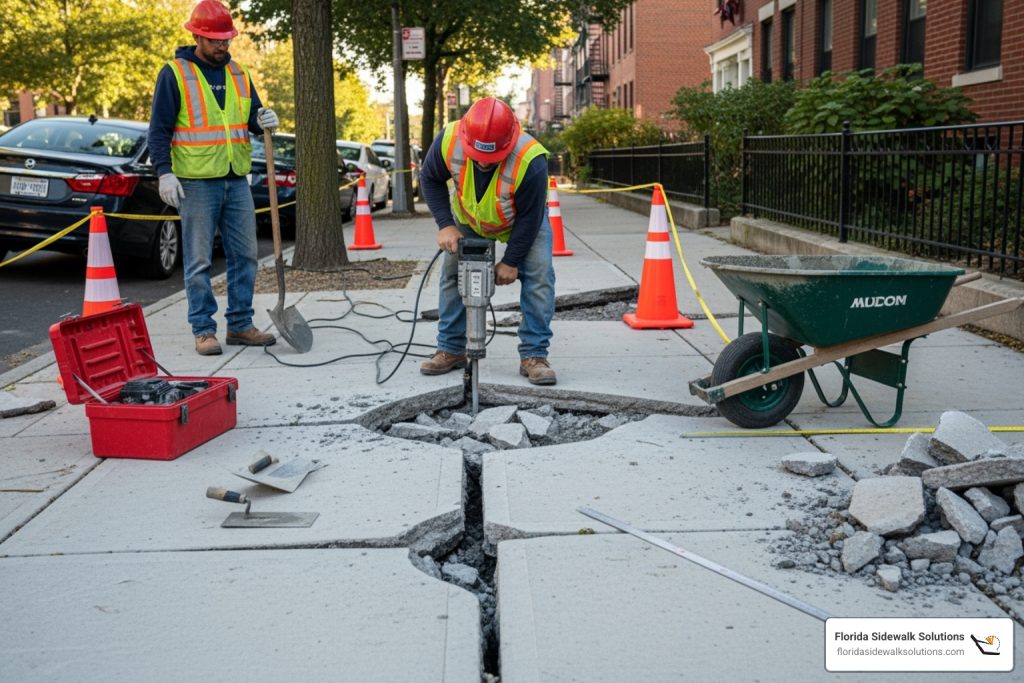
Here’s what root shaving actually involves: it’s a method where someone grinds down or cuts away the top surface of the offending root to reduce its thickness. The goal is to create enough clearance underneath the sidewalk to level it out, theoretically without severing the entire root. Contractors might use chainsaws, specialized root cutting machines, or grinding tools to shave off the top portion of the root while leaving the bottom intact.
It sounds reasonable in theory. But in practice? It’s a risky gamble that rarely pays off.
The Severe Risks to Your Tree’s Health and Stability
Let’s talk about what really happens when you shave a tree root. Spoiler alert: it’s not pretty.
When you cut into a root, you’re creating an open wound. Think of it like a deep cut on your own skin, except trees can’t put a bandage on it. These wounds become entry points for all sorts of problems: fungi, bacteria, and wood-boring insects that see the exposed tissue as an all-you-can-eat buffet. Once these pathogens get inside, they can cause root decay that doesn’t just stay in one spot. The decay spreads through the root system and can even work its way up into the trunk, slowly compromising the entire tree from the inside out.
But the immediate danger is even more concerning: tree destabilization. Trees rely on their root systems for stability, especially those large lateral roots that spread out from the trunk. These roots are the tree’s anchor system, keeping it upright during windstorms and hurricanes. When you shave or cut these roots, you’re essentially cutting the tree’s anchor lines.
Here’s a critical number to remember: cutting roots within the “critical root plate” – which is approximately three times the trunk diameter from the tree’s base – is extremely dangerous. For instance, if you have a tree with a 20-inch diameter trunk, you shouldn’t be cutting roots closer than 60 inches from the trunk. When roots are cut this close, the tree becomes structurally unsound and prone to windthrow, which is the technical term for when a tree topples over. In Florida, where we face hurricane-force winds regularly, a destabilized tree isn’t just a liability – it’s a disaster waiting to happen.
We’ve seen it happen: a beautiful Live Oak that looked perfectly healthy one day comes crashing down during a storm, crushing cars, damaging homes, or worse. Often, the culprit is root damage that happened years earlier, slowly weakening the tree’s grip on the earth.
Even if the tree doesn’t fall, the long-term outlook isn’t good. A tree with shaved roots may soldier on for a while, but it’s living on borrowed time. The stress makes it more vulnerable to drought, disease, and environmental pressures. What you intended as a way to save the tree often becomes the beginning of its slow decline toward death.
Why Shaving Tree Roots Under Sidewalk is Not Recommended
Given everything we’ve just discussed, we need to be direct: shaving tree roots under sidewalk is rarely appropriate and should almost never be done.
The biggest problem? It’s a temporary fix masquerading as a permanent solution. Roots don’t just give up after you cut them. They regrow, and they regrow with a vengeance. Statistics show that severed roots can cause new sidewalk lifting within three to five years. You’re essentially kicking the can down the road while creating new problems for the tree. It becomes a costly cycle where you’re paying to address the same issue over and over again.
Even when done carefully, root shaving creates those dangerous wounds we talked about. Research shows that cutting roots greater than three inches in diameter should be avoided whenever possible because they’re highly susceptible to disease and decay. And even smaller roots contribute to the tree’s overall health and stability – every cut takes a toll.
The general recommendation from arborists is clear: avoid cutting any roots closer to the trunk than three to five times the tree’s diameter at breast height. For a 12-inch diameter tree, that means staying at least 36 to 72 inches away from the trunk. When you’re dealing with roots that have lifted a sidewalk, they’re often much closer than that, putting them squarely in the danger zone.
There’s also a practical problem: controlling the depth of the cut is nearly impossible when you’re working with roots partially buried in soil or compressed under concrete. What starts as an attempt to shave just the top surface often becomes a deeper cut than intended, further compromising the root’s structural integrity.
So when is root shaving ever acceptable? Only in very limited circumstances: for small, non-structural roots located far from the trunk, and only after consulting with a certified arborist who can assess the specific tree’s health and stability. Even then, most arborists will recommend against it, knowing that it’s a Band-Aid solution that doesn’t address the underlying conflict between tree roots and concrete.
The bottom line is this: shaving tree roots under sidewalk prioritizes a quick fix over the long-term health of your trees and the safety of your community. There’s a better way – one that protects both your trees and your pedestrians while actually solving the problem for good.
The Florida Sidewalk Solutions Approach: Safe, Effective, and Tree-Friendly
When you’re standing in front of a lifted sidewalk panel with a magnificent oak tree nearby, it’s easy to feel stuck between a rock and a hard place. Do you harm the tree or ignore the hazard? The good news is you don’t have to choose. At Florida Sidewalk Solutions, we’ve built our entire approach around a simple principle: modify the sidewalk, not the tree.
After years of watching property managers struggle with the aftermath of root cutting and shaving tree roots under sidewalk, we developed a method that protects both your pedestrians and your trees. No compromises, no regrets, and no dead trees down the line.
Precision Sidewalk Cutting for Trip Hazard Removal
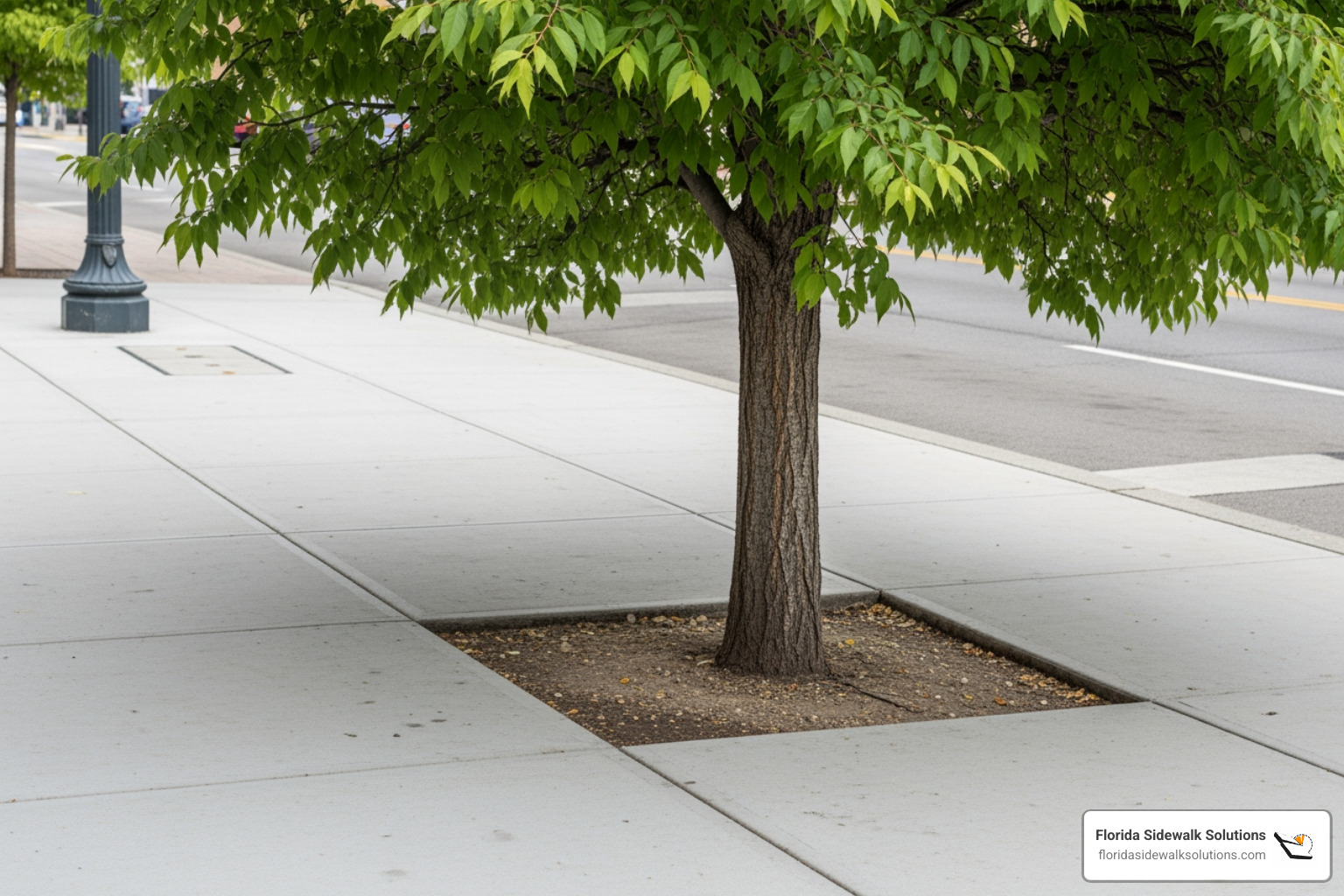
Our patented sidewalk cutting technology tackles the real problem: the uneven concrete surface. Instead of attacking the tree’s roots, we precisely cut and level the lifted concrete panels themselves, creating smooth transitions that eliminate trip hazards completely.
Here’s what makes our approach different:
The tree stays healthy because we never touch its root system. Not even close. While others are grinding down roots and creating wounds that invite disease, we’re working exclusively with the concrete above. Your tree keeps all its structural support, all its disease resistance, and all its stability during storm season.
The cost savings are substantial. We’ve seen property managers spend thousands on root cutting, only to face the same problem three years later when those roots grow back. Meanwhile, full sidewalk replacement can run ten times what our precision cutting costs. Our method gives you a permanent fix to the trip hazard at a fraction of traditional repair expenses.
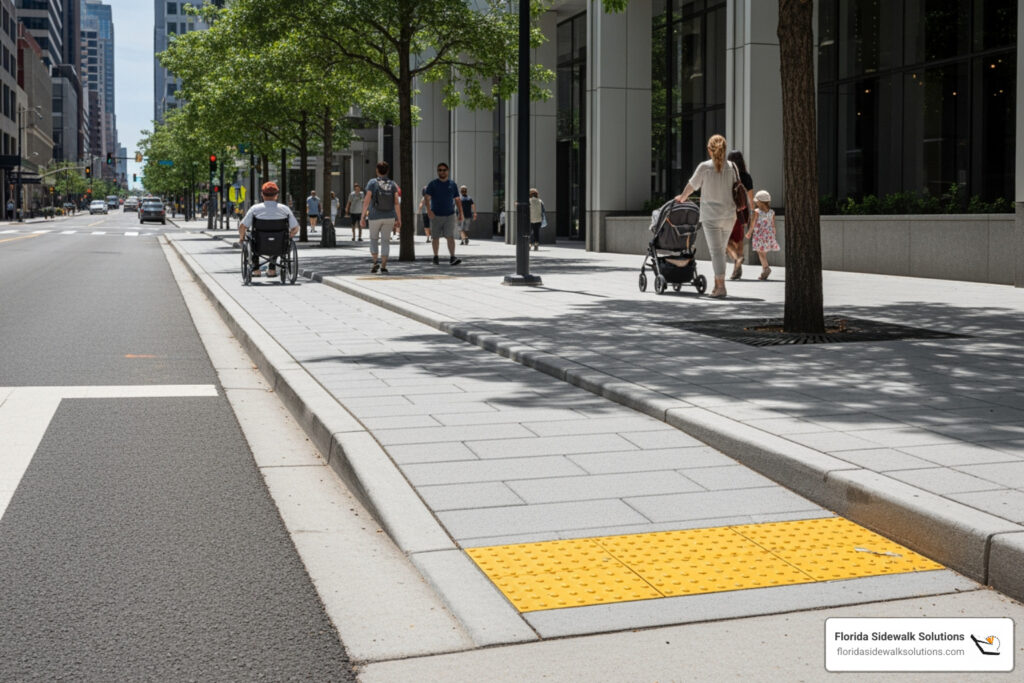
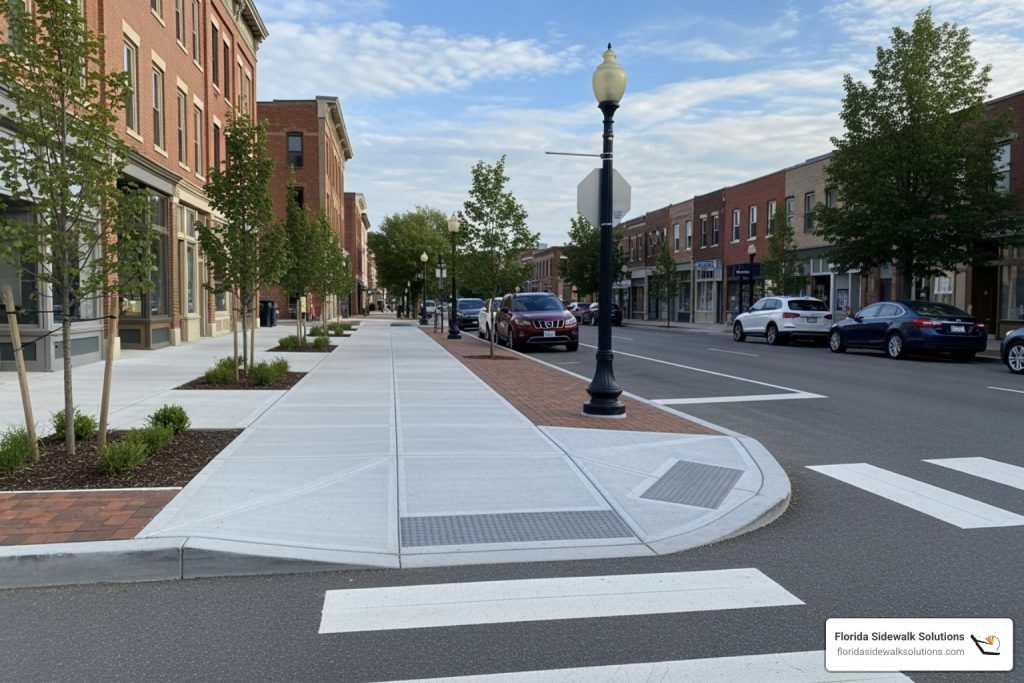
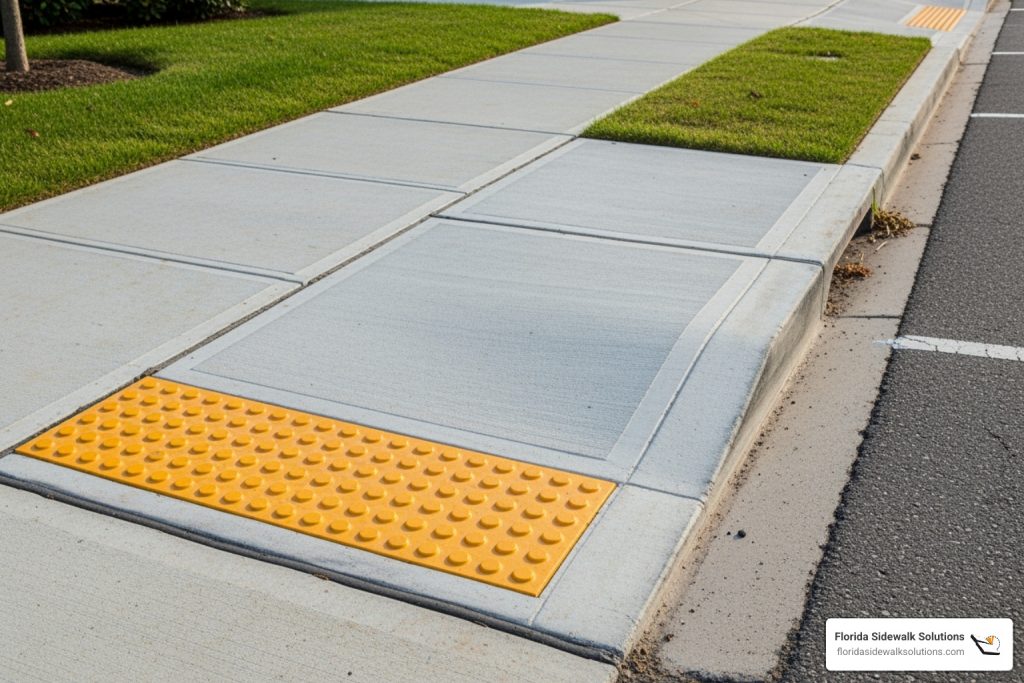
ADA compliance isn’t just a checkbox for us—it’s the foundation of everything we do. We eliminate every vertical change over ¼ inch and correct slopes to meet federal standards. This means your sidewalks are safe for wheelchairs, walkers, strollers, and everyone in between. More importantly, you’re protected from liability and costly violations.
The process itself is remarkably fast and clean. Most repairs are completed quickly, allowing pedestrians back on the sidewalk immediately. There’s minimal dust, minimal disruption, and minimal hassle. Our technology works seamlessly around tree roots, curbs, gutters, and walls, creating that smooth, continuous pathway everyone deserves.
Preventing Future Trip Hazards
Fixing existing trip hazards is important, but preventing new ones? That’s even better. We’ve learned a lot about what works and what doesn’t when it comes to keeping trees and sidewalks in harmony.
Start with smart tree placement. When you’re planning new landscaping, give trees the space they need. Large trees should be planted at least 20 feet from sidewalks, while smaller trees (those under 20 feet tall) need at least 10 feet of clearance. Yes, it seems like a lot of space when you’re looking at a tiny sapling, but that sapling has big plans for the future.
Soil quality matters more than most people realize. Trees with access to deep, uncompacted soil are far less likely to send their roots searching under sidewalks for oxygen and water. Create generous tree wells or planting islands with quality soil, and your trees will grow down instead of out.
For new sidewalk installations near existing trees, consider adding root barriers or a root-excluding base layer. An 18-inch deep root barrier can redirect roots downward, while a thick layer of coarse gravel or rigid foam board under new concrete discourages roots from growing directly beneath the slab. These preventative measures cost far less than repeated repairs.
Regular inspections are your best friend. The earlier you catch a lifting panel, the easier it is to address. A sidewalk that’s just starting to lift can be corrected quickly with our precision cutting method before it becomes a serious hazard or ADA violation. Think of it like catching a cavity early instead of waiting for a root canal.
Comparing Your Options: Root Shaving vs. Florida Sidewalk Solutions’ Sidewalk Cutting
Let’s put the two approaches side by side so you can see exactly what you’re getting with each option:
| Feature | Root Shaving | Florida Sidewalk Solutions’ Sidewalk Cutting |
|---|---|---|
| Tree Impact | High risk: Creates wounds, leads to disease/decay, destabilizes tree, potential death. | None: Our method works on the concrete, leaving roots completely undisturbed. |
| Cost | Variable: Initial cost may seem low, but recurring issues and potential tree replacement make it expensive long-term. | Low: Significantly more cost-effective than traditional repairs; often 1/10th the cost of removal/replacement. |
| Longevity | Temporary: Roots regrow within 3-5 years, causing problem recurrence. | Permanent (for the existing hazard): Addresses the concrete issue directly, providing a lasting level surface. |
| ADA Compliance | Difficult: Often hard to achieve precise leveling, may compromise tree, leading to future non-compliance. | Achievable: Precisely cuts and levels concrete to meet all ADA vertical and slope requirements. |
| Liability | High: Compromised tree stability and recurring trip hazards increase liability. | Low: Eliminates trip hazards, ensures ADA compliance, significantly reducing liability risks. |
| Disruption | Can be disruptive; potential for repeat work. | Minimal: Fast process, immediate pedestrian access. |
When you compare shaving tree roots under sidewalk to our precision cutting method, the choice becomes clear. One approach puts your trees at risk and gives you temporary relief. The other protects your trees, eliminates the hazard permanently, and costs less over time. For municipal managers working with tight budgets and even tighter timelines, that’s not just a better solution—it’s the only solution that makes sense.
Frequently Asked Questions about Tree Roots and Sidewalks
We hear these questions all the time from property managers and homeowners across Florida. Let’s explore the concerns that keep coming up when trees and sidewalks collide.
Will cutting a tree root kill the tree?
The honest answer? Yes, it absolutely can—and the bigger the root, the bigger the risk. Cutting a tree root isn’t like trimming a hedge. Trees depend on their root systems for everything: water, nutrients, and the structural support that keeps them standing upright during our famous Florida storms.
When you cut a large root, especially one close to the trunk, you’re compromising the tree’s stability. Think of it like removing support beams from a building. Cutting major structural roots significantly increases the risk of tree failure and death. The critical zone to avoid is within the root plate—that’s the area roughly three times the diameter of the trunk. For a tree with a 20-inch trunk, that means you shouldn’t be cutting roots within five feet of the base.
Shaving tree roots under sidewalk creates open wounds that become entry points for disease, fungi, and pests. These infections don’t stay localized; they spread through the root system and can eventually reach the trunk, causing the entire tree to decline. Roots larger than three inches in diameter are particularly vital and should almost never be touched. Even cutting smaller roots carries risk, as decay can spread and destabilize the tree over time.
Here’s what makes this especially concerning in Florida: we’re not just talking about a tree looking sick. We’re talking about a mature Live Oak or Maple becoming a windthrow hazard during hurricane season. A tree that looks perfectly healthy above ground might be structurally compromised below, waiting for the next tropical storm to send it crashing onto homes, cars, or worse.
How long does it take for cut roots to grow back and lift the sidewalk again?
This is where the frustration really sets in for property managers. Severed roots don’t just die off quietly—they’re stubborn. They regrow, and when they do, you’re right back where you started. Research shows that roots can regrow under a sidewalk within three years, and the interval between root pruning and renewed sidewalk lifting typically ranges from three to five years.
That means if you spend money cutting or shaving roots today, you’ll likely be facing the same trip hazard, the same ADA violation, and the same expense before you know it. It becomes a recurring maintenance problem rather than a permanent solution—a costly cycle that drains your budget year after year.
This is precisely why we focus on modifying the sidewalk itself rather than battling with tree roots. When you address the concrete instead of the tree, you solve the immediate problem without creating future ones. The tree continues to grow healthy and strong, and your sidewalk stays level and compliant.
Who is liable for a trip and fall on a sidewalk lifted by a tree?
This question gets right to the heart of why prompt action matters so much. Liability for a trip and fall on a sidewalk lifted by tree roots often falls on the adjacent property owner, the homeowner association (HOA), or the municipality, depending on your local ordinances and the specific circumstances.
In Florida, if you own property next to a public sidewalk, you may very well be responsible for keeping it safe. Once a sidewalk lifts over ½ inch, you’re looking at a serious liability issue. Layer on the ADA requirement that any vertical change over ¼ inch must be corrected, and the legal stakes become even higher.
Failing to address these hazards promptly can lead to expensive lawsuits, significant financial penalties, and damage to your organization’s reputation. Imagine a child tripping on a lifted sidewalk panel outside your property, or an elderly resident using a walker who takes a fall because of a root-heaved section you’ve been meaning to fix. The legal and financial consequences can be devastating.
Promptly repairing the hazard is the best way to mitigate legal and financial risk. By eliminating trip hazards and ensuring ADA compliance, you protect the public and shield yourself from liability. Our precision sidewalk cutting method addresses this head-on—removing the trip hazard, meeting ADA standards, and doing it all without harming the tree or creating future problems.
Conclusion: Making the Right Choice for Safe Sidewalks and Healthy Trees
We’ve covered a lot of ground together—from understanding why tree roots lift sidewalks in the first place to exploring the serious risks that come with trying to fix the problem by shaving tree roots under sidewalk. If there’s one thing we hope you take away from this, it’s this: while the temptation to grind down or cut those troublesome roots might seem like a quick fix, it’s a gamble that puts both your trees and your community at risk.
Shaving tree roots under sidewalk is a high-risk, temporary fix that can endanger your tree in ways you might not see until it’s too late. Those open wounds invite disease and decay. The structural damage can leave a once-sturdy tree vulnerable to toppling during Florida’s intense storms. And after all that risk? The roots often grow back within three to five years, leaving you right back where you started—only now with a compromised tree and a recurring expense.
There’s a better path forward, and it doesn’t involve harming your trees at all. The Florida Sidewalk Solutions sidewalk cutting method is a safer, more permanent solution that protects both trees and pedestrians. Our specialized technology focuses on modifying the concrete itself, precisely cutting and leveling the sidewalk to eliminate trip hazards and create smooth, compliant transitions. Your trees stay healthy and stable. Your sidewalks become safe and accessible. And you avoid the cycle of temporary fixes that drain your budget year after year.
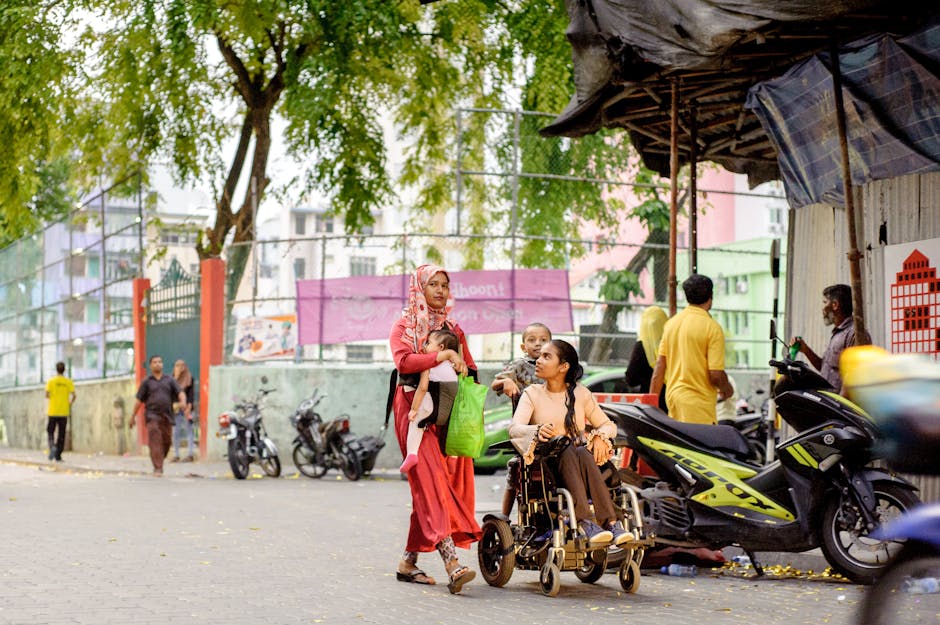
Prioritizing ADA compliance protects the public and reduces liability. When you correct those vertical changes over ¼ inch, you’re not just checking a regulatory box—you’re making your community safer for everyone, from parents pushing strollers to seniors with walkers to people using wheelchairs. You’re also protecting yourself from costly lawsuits and citations that can arise when someone gets hurt on a non-compliant sidewalk.
For existing trip hazards in your Florida community—whether you’re managing properties in Davie, Fort Myers, or West Palm Beach—professional sidewalk cutting offers a cost-effective and compliant repair without harming the tree. It’s often just a fraction of the cost of full replacement, it’s fast, and it works around your valuable trees instead of against them. That’s the kind of solution that makes sense for your budget, your trees, and your community’s safety.
Ready to protect both your sidewalks and your trees? More info about our sidewalk cutting services.