Understanding ADA Trip Hazards: What Every Property Manager Needs to Know
An ADA trip hazard is defined by the Americans with Disabilities Act as any vertical change of more than 1/4 inch at any joint or crack on a walking surface. This simple measurement has major implications for public safety, accessibility, and legal liability.
Quick Answer: ADA Trip Hazard Rules
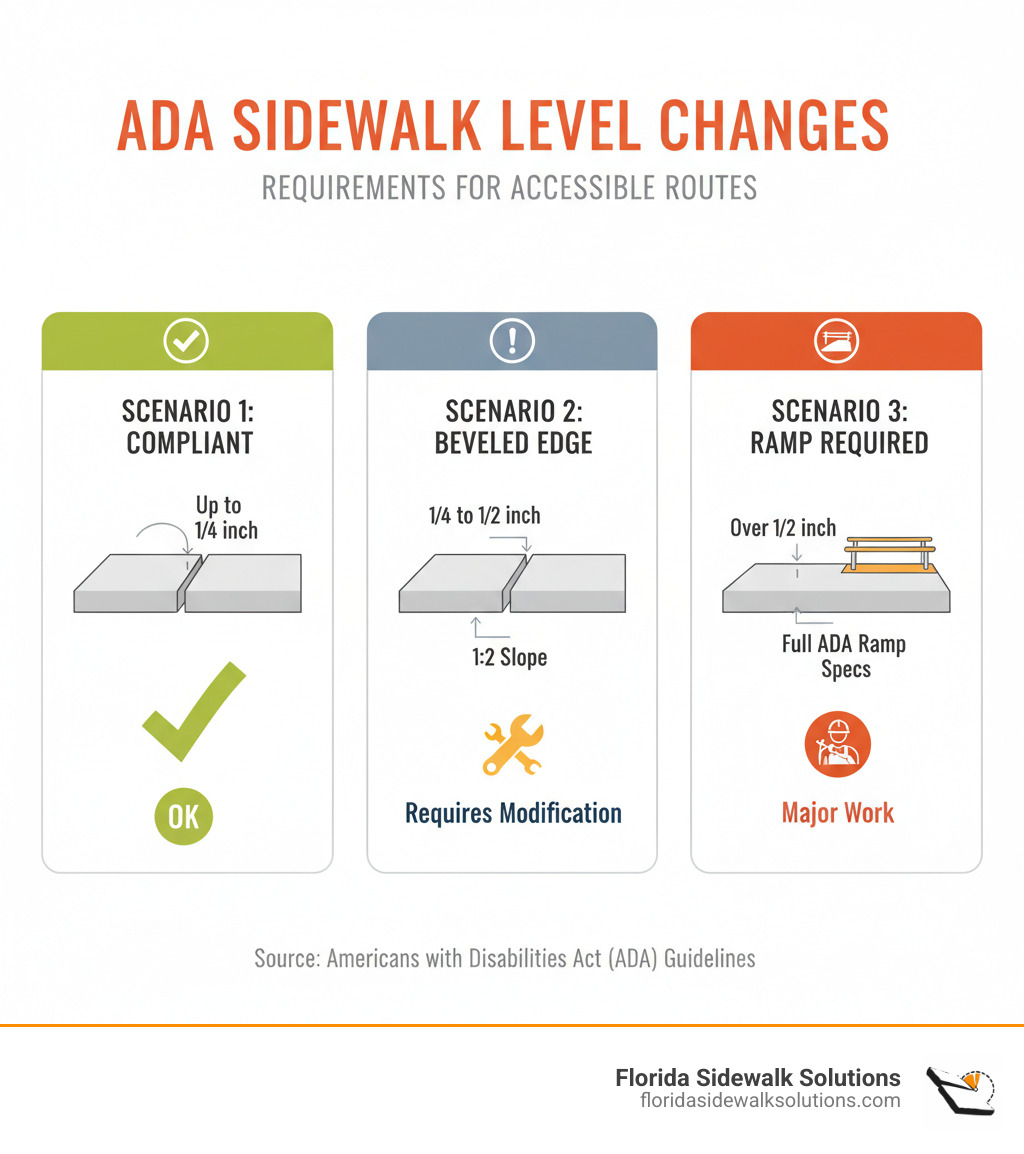
- Changes up to 1/4 inch: No treatment required
- Changes between 1/4 inch and 1/2 inch: Must be beveled with a slope no steeper than 1:2
- Changes over 1/2 inch: Must be treated as a ramp with full ADA ramp specifications
- Fines for non-compliance: Up to $75,000 for first violations, $150,000 for subsequent violations
If you manage municipal sidewalks, you know the challenge. Budget constraints make delaying repairs tempting, but each uneven slab is a potential lawsuit and a barrier to accessibility. The good news is that full replacement isn’t always necessary for compliance.
As a municipal maintenance manager, you need solutions that are cost-effective, minimize disruption, and meet ADA standards. Many property owners learn too late that not all repair methods deliver true compliance.
This guide covers everything you need to know about ADA trip hazards, from the specific measurements that define a violation to the repair methods that deliver lasting results without breaking your budget.
What is an ADA Trip Hazard? The Critical Details
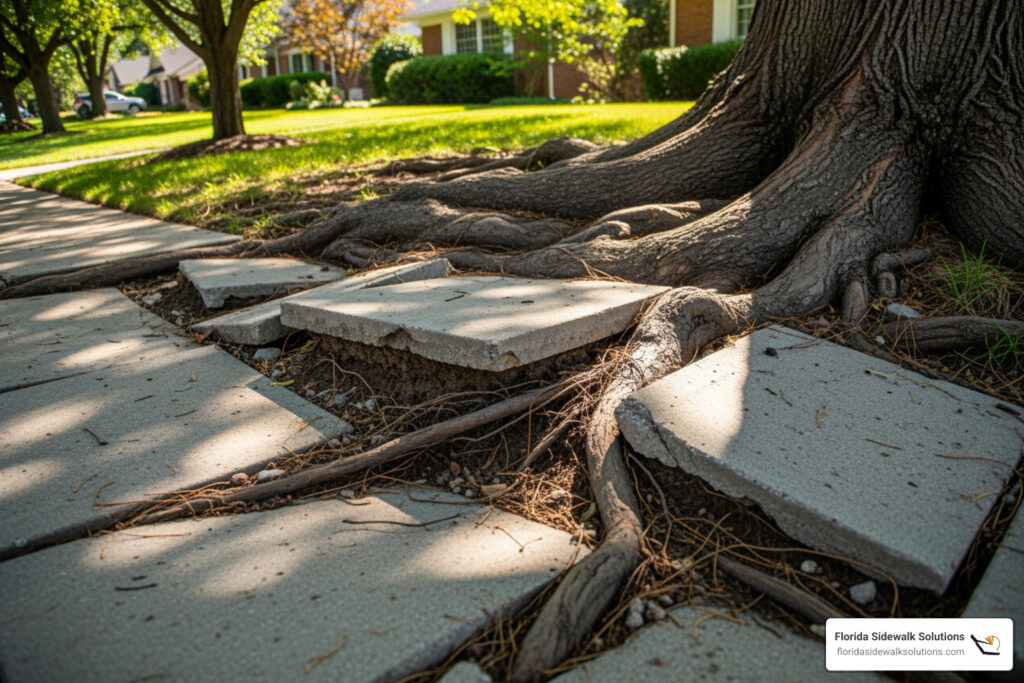
An ADA trip hazard is more than a rule violation—it’s a safety risk. The Americans with Disabilities Act (ADA) provides specific, measurable guidelines because a minor bump can be a serious barrier for someone using a wheelchair, walker, or cane. The most common hazard is vertical displacement, where one concrete section is higher than another. In Florida, this is often caused by tree roots, shifting sandy soil, or weather cycles.
The 2010 ADA Standards spell out exactly how to measure and address these changes in level. The key is knowing which measurement triggers which solution.
Defining an ADA Trip Hazard: The Quarter-Inch Rule
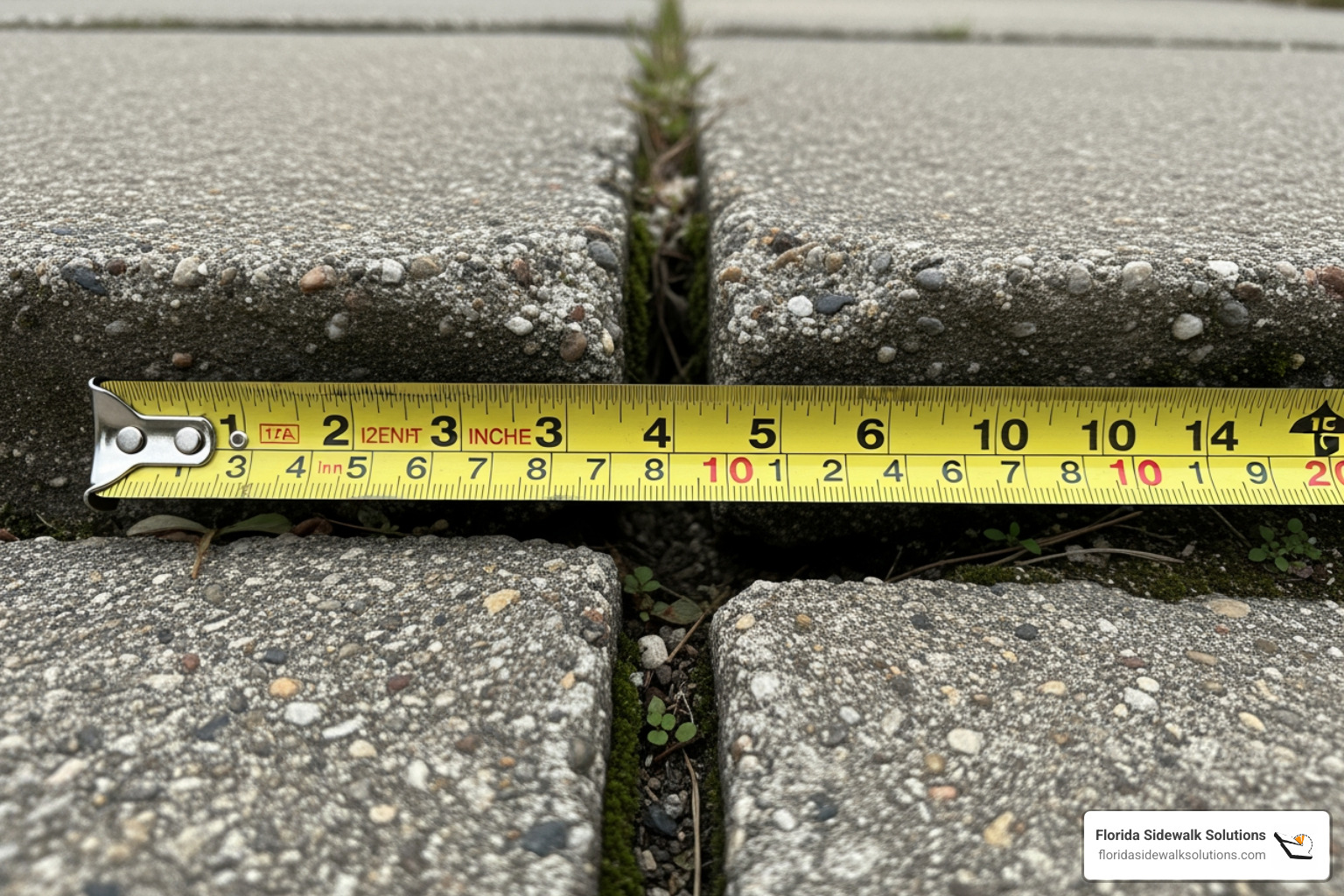
The most important number is 1/4 inch. Any vertical change greater than this at a joint or crack is an ADA trip hazard. The standard is precise because even this small difference is enough to catch a wheelchair wheel, snag a cane, or cause a stumble, posing a significant danger to people with mobility or visual impairments. This rule applies to all accessible routes, including sidewalks and walkways. If you measure more than a 1/4-inch vertical difference, you have a hazard that must be addressed. A simple ruler is all you need to check for compliance.
When a Bevel is Required
For level changes between 1/4 inch and 1/2 inch, a full replacement isn’t always needed. The ADA allows for a beveled edge with a slope no steeper than 1:2 (one inch of vertical rise for every two inches of horizontal distance). This creates a smooth transition that wheels can easily roll over. For property managers, this is good news. A compliant bevel can be created with precision cutting or grinding, avoiding the cost and disruption of full replacement. The key is creating a smooth, consistent slope that completely eliminates the abrupt edge of the trip hazard.
Level Changes Requiring Ramps
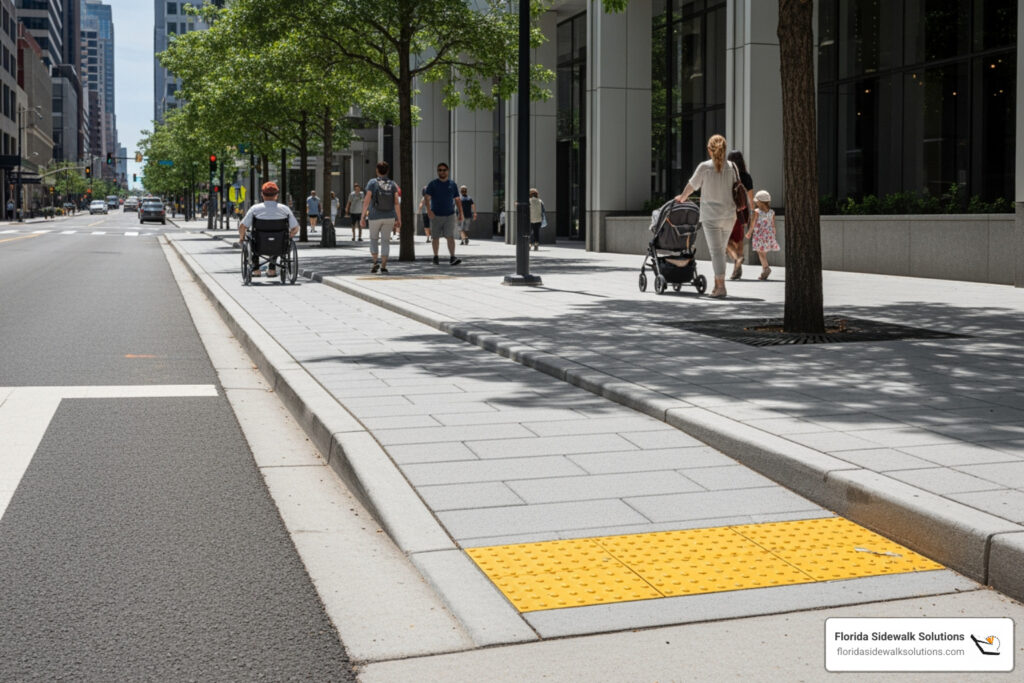
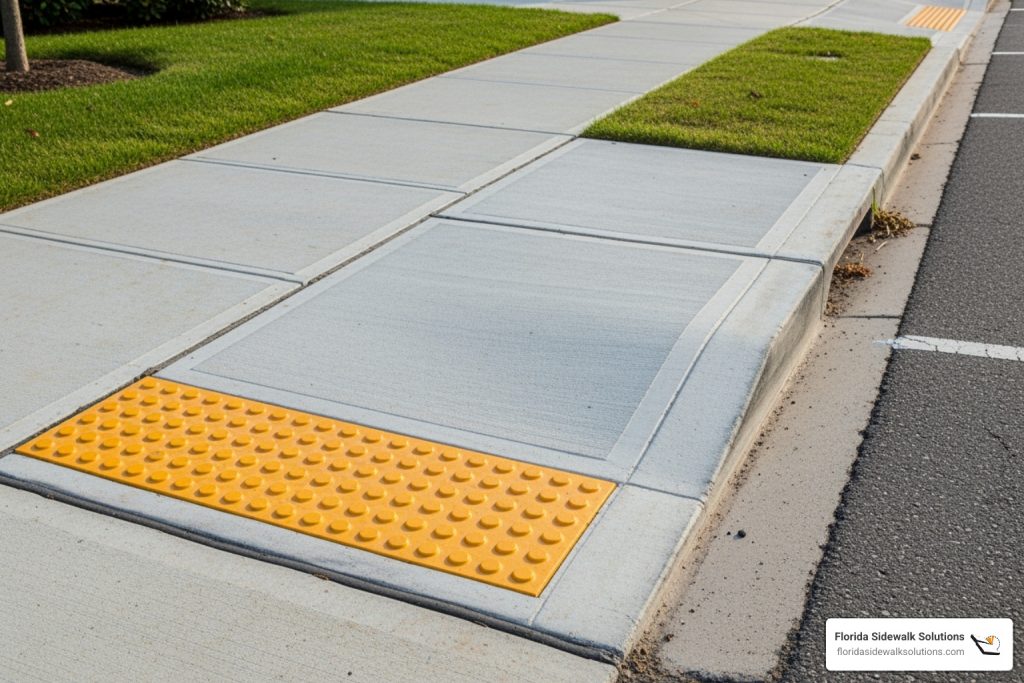
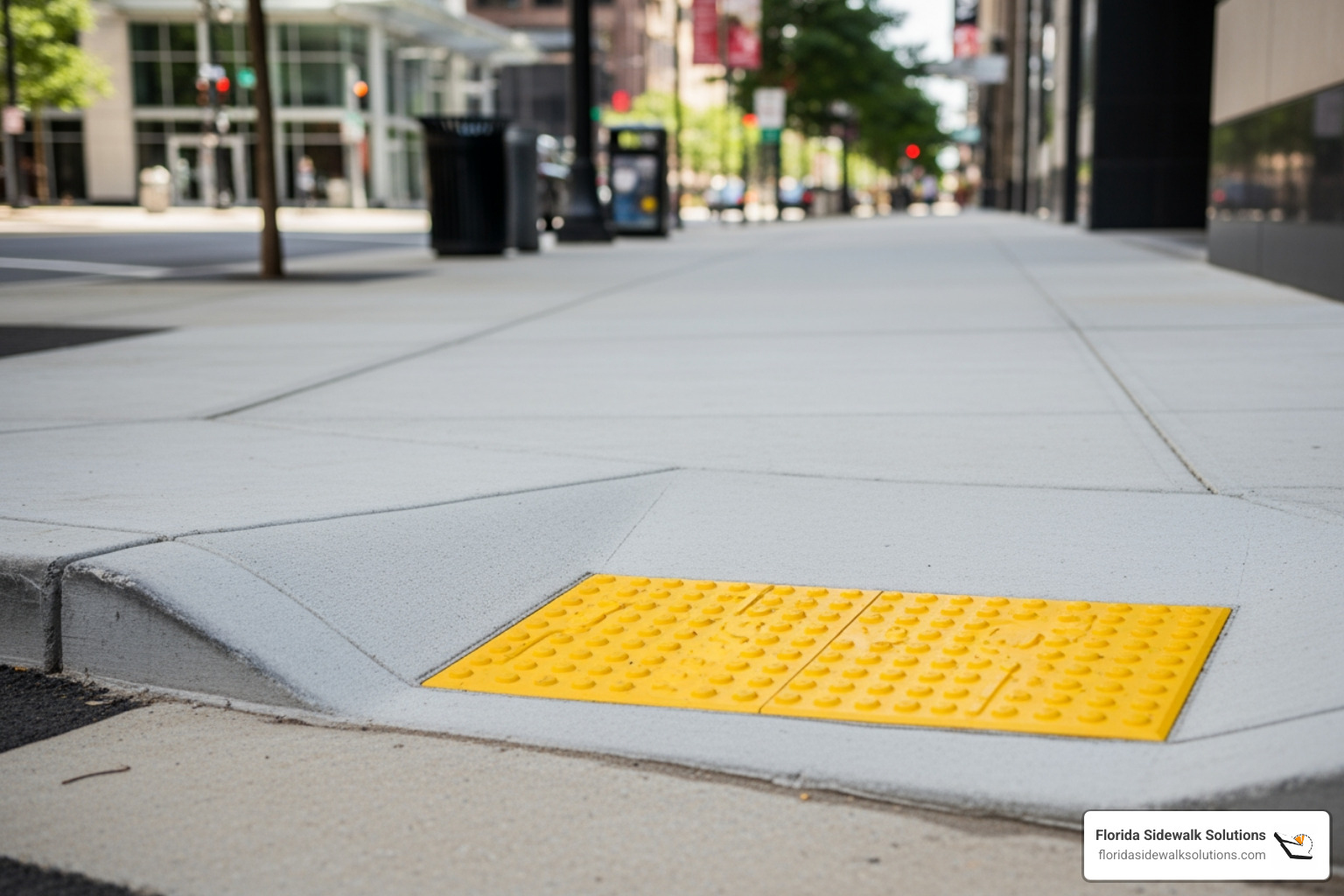
If a vertical change exceeds 1/2 inch, a simple bevel is not enough. The hazard must be treated as a ramp, which has its own strict ADA specifications. Ramps require a much gentler slope than a bevel—generally no steeper than 1:12 (one inch of rise per 12 inches of run). They also have specific requirements for width, landings, and often handrails to ensure safe passage for wheelchair users. Curb ramps, which connect sidewalks to streets, also fall under these detailed rules, covering slope, width, and detectable warning surfaces. For complete technical details, refer to the Access Board’s rules for ramps and curb ramps. Addressing level changes over 1/2 inch is more complex, but it is non-negotiable for compliance.
Beyond the Lip: Other ADA Sidewalk Surface Requirements
While uneven slabs are the most obvious ADA trip hazard, true compliance goes beyond just level surfaces. The ADA also sets standards for surface texture, drainage, and slope to ensure sidewalks are safe and comfortable for everyone, especially in Florida’s climate.
Firm, Stable, and Slip-Resistant Surfaces
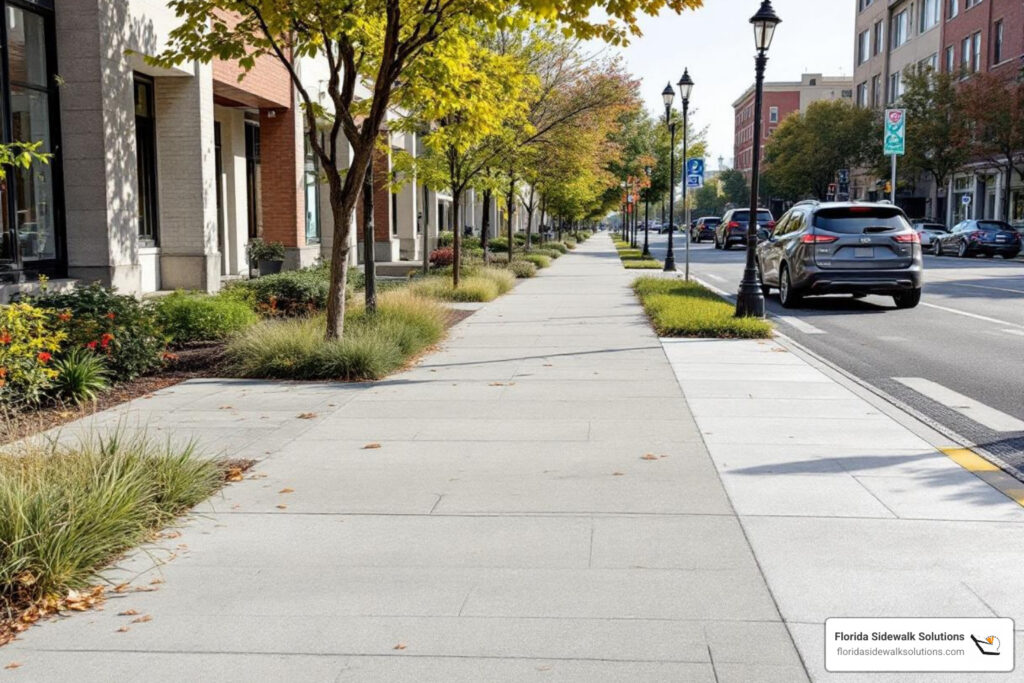
The ADA requires all accessible walking surfaces to be firm, stable, and slip-resistant. A firm and stable surface does not shift or sink underfoot, which is critical for people using mobility aids. Slip-resistance is especially important in Florida, where frequent rain can make surfaces slick. Standard concrete and asphalt generally meet these requirements. The Access Board surface guidelines warn against materials that become hazardous when wet. Materials like loose gravel, wood chips, or unstabilized pavers are not compliant because they lack the necessary firmness and stability. For accessible routes in South Florida, properly installed concrete or asphalt is the correct choice.
Rules for Gaps, Openings, and Slope
The ADA also has precise rules for gaps and slope. Gaps and openings, such as those in drainage grates or between pavers, cannot be wider than 1/2 inch. Furthermore, elongated openings must be oriented perpendicular to the direction of travel to prevent crutch tips or cane ends from getting stuck. Slope requirements are also critical. The running slope (in the direction of travel) cannot exceed 1:20 (5%); anything steeper is considered a ramp and must meet ramp specifications. The cross slope (side-to-side for drainage) must be even gentler, not exceeding 1:48 (about 2%). This slight angle prevents water from pooling but is gentle enough that wheelchair users don’t have to fight to stay on a straight path. These details are just as important as fixing a vertical ADA trip hazard for creating a truly accessible sidewalk.
Fixing the Problem: Compliant Sidewalk Repair Methods
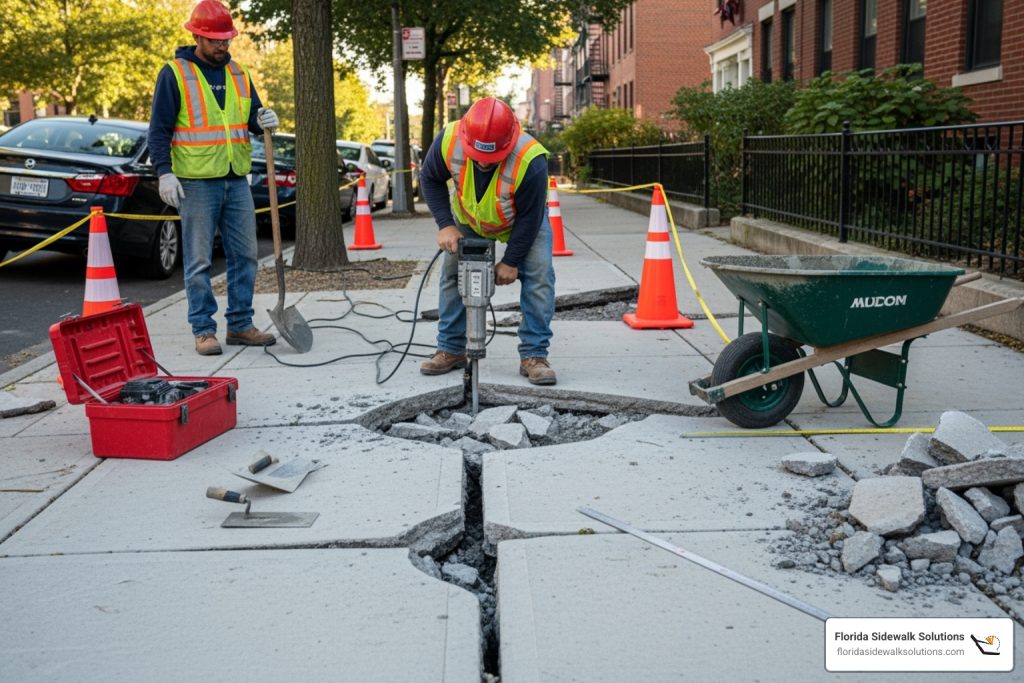
Once you’ve identified an ADA trip hazard, you have several repair options. You don’t always need to tear out and replace the concrete. However, repair methods vary significantly in cost, durability, and their ability to achieve true ADA compliance.
Repairing an ADA Trip Hazard: Methods and Best Practices
When repairing a trip hazard, you have three main options:
Grinding or scarifying grinds down the higher concrete section. While quick and inexpensive, it’s difficult to achieve a precise ADA-compliant bevel. The process often leaves a rough, inconsistent surface and creates significant dust.
Full concrete replacement removes the problem slab and pours new concrete. This guarantees compliance but is the most expensive and disruptive option, making it impractical for multiple hazards.
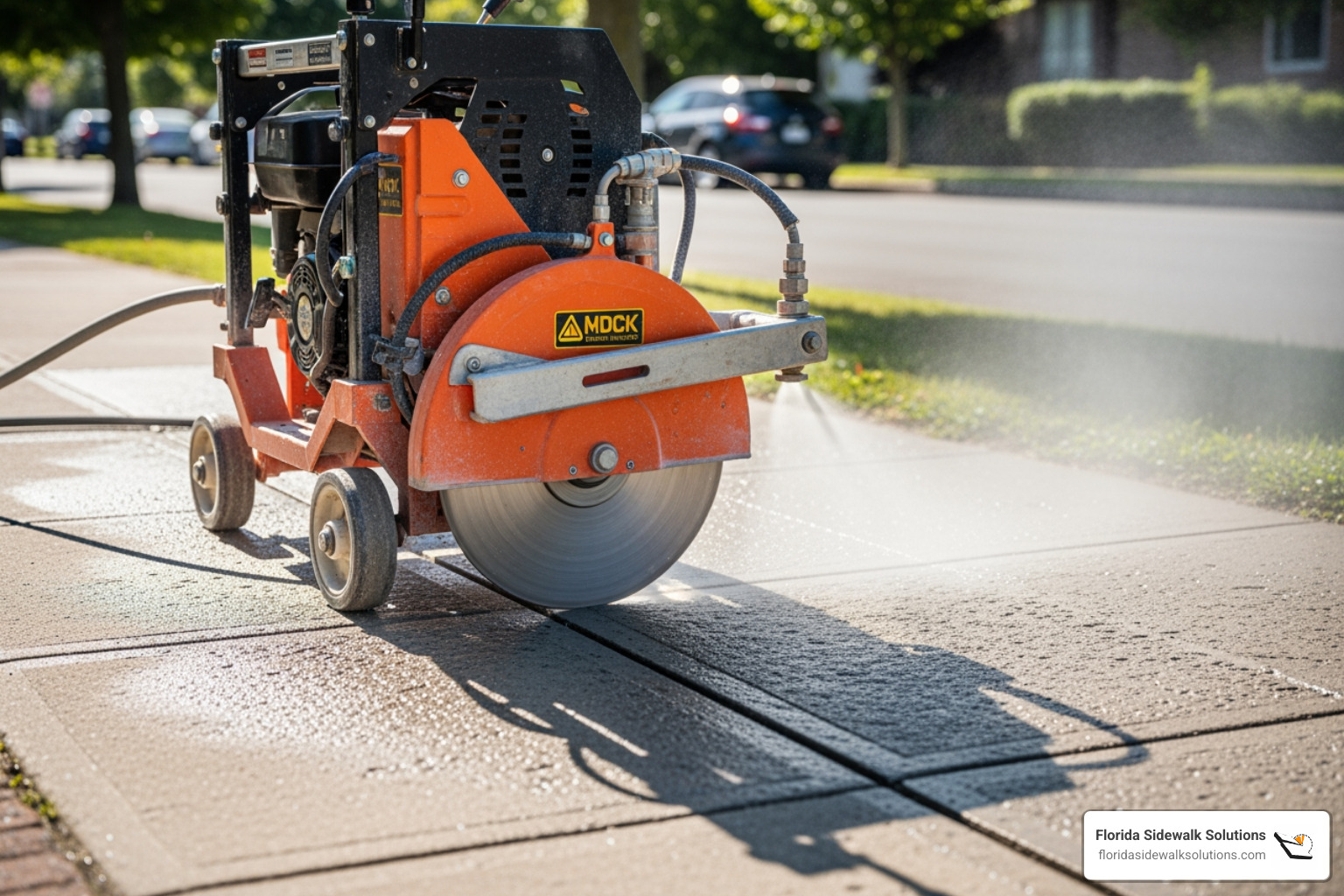
Precision horizontal cutting uses specialized equipment to remove the exact amount of concrete needed to eliminate the hazard and create a precise, compliant 1:2 bevel.
| Method | Cost | Time | Disruption | Precision for ADA | Durability |
|---|---|---|---|---|---|
| Sidewalk Cutting | Low to Moderate | Short | Minimal | High (Exact) | Excellent |
| Grinding/Scarifying | Low | Short | Moderate | Moderate | Good |
| Full Replacement | High | Long | Significant | High (New) | Excellent |
The critical point is that ADA compliance requires precise measurements, not just making a surface “better.” This is where methods like grinding often fall short.
Why Precision Cutting is the Gold Standard
At Florida Sidewalk Solutions, our patented sidewalk cutting method is the gold standard for ADA trip hazard removal. Our precision technology addresses the shortcomings of conventional methods, delivering results that are both compliant and cost-effective.
Exact compliance is non-negotiable. Our technology makes precise, edge-to-edge cuts to achieve a perfect zero-point differential or the exact 1:2 bevel the ADA requires. There’s no guesswork, ensuring every repair meets the standard so you can document compliance with confidence.
The finished surface matters. We restore the sidewalk’s appearance and functionality, creating a smooth, uniform surface that blends seamlessly with the surrounding concrete. This improves aesthetics and creates a comfortable walking experience.
Liability reduction is real. Addressing an ADA trip hazard with our precision method significantly reduces your exposure to slip-and-fall claims. For property managers in Fort Lauderdale, Miami, and throughout Florida, this peace of mind is invaluable.
Cost-effectiveness changes the game. Our method costs less than full replacement and is more precise than grinding. It’s faster and requires less labor, making comprehensive compliance achievable within budget constraints.
Minimal disruption keeps traffic flowing. Our process generates significantly less noise and dust than grinding, and pedestrians can often use adjacent sidewalk sections while we work. This is ideal for busy areas in Boca Raton or Coral Springs. Our patented technology is a genuine advancement, delivering measurably better results for our clients across Florida.
Understanding the Financial and Legal Risks of an ADA Trip Hazard
An ignored ADA trip hazard is more than an eyesore; it’s a significant liability. For Florida property owners, failing to address a non-compliant sidewalk can lead to severe financial penalties, legal battles, and damage to your community reputation.

Legal and Financial Consequences of Non-Compliance
The ADA has significant enforcement power. A non-compliant sidewalk can lead to devastating legal and financial fallout.
Premises liability lawsuits are the most immediate threat. A trip-and-fall incident can lead to a lawsuit covering medical bills, lost wages, and pain and suffering, with settlements often reaching six figures.
The federal government also imposes substantial financial penalties for non-compliance. A first violation can result in fines up to $75,000, and subsequent violations can cost $150,000 per occurrence, as outlined in the government-imposed fines.
Finally, there’s the cost of damage to your community relationships. Failing to maintain accessible sidewalks sends a negative message. In Florida communities like Davie or Coral Springs, proactive compliance demonstrates a commitment to accessibility and inclusion, strengthening your community standing.
Who is Responsible? Property Owners vs. Municipalities
Understanding who is liable for sidewalk maintenance is key to avoiding legal trouble.
Municipalities are primarily responsible for public sidewalks in the public right-of-way. Florida cities like Fort Lauderdale and Miami are legally obligated to maintain these sidewalks and repair any ADA trip hazard.
Private commercial property owners are also responsible. The ADA covers most businesses serving the public, meaning if a sidewalk on your property provides access to your business, you must keep it compliant. This applies to nearly all entities covered by the ADA.
Homeowner Associations (HOAs) often have jurisdiction over common areas, including sidewalks. They must ensure these pathways are safe and accessible for all residents and visitors.
Historic properties are not exempt. While the law allows flexibility to preserve historic features, owners must still provide the highest possible level of accessibility.
The bottom line is that whether you’re a municipal manager in Boca Raton, a business owner in West Palm Beach, or an HOA board member in Coral Springs, sidewalk compliance is your responsibility. Proactively addressing trip hazards protects your finances, reputation, and community.
Frequently Asked Questions about ADA Sidewalk Compliance
Navigating ADA compliance can be complex. Here are answers to common questions about ADA trip hazard rules and sidewalk accessibility in Florida.
Are private residences required to follow ADA sidewalk rules?
Generally, no. The ADA does not cover single-family homes or privately owned condominiums not used for business purposes. However, local city or county ordinances may still have sidewalk maintenance requirements, so it’s wise to check with your local building department. Also, if you operate a business from your home that serves the public, ADA requirements could apply. The Exemptions under the ADA guidelines offer more clarification.
What is the difference between the ADA and the Architectural Barriers Act (ABA)?
Both laws mandate accessibility, but they apply to different properties.
The Americans with Disabilities Act (ADA) is a broad civil rights law covering state and local government facilities and public accommodations (e.g., retail stores, hotels, offices). For most commercial property managers in Florida, the ADA is the relevant law.
The Architectural Barriers Act (ABA) applies to buildings and facilities owned, leased, or funded by the federal government, such as a post office or VA hospital. You can learn more at the Architectural Barriers Act page.
How often should sidewalks be inspected for ADA trip hazards?
The ADA does not mandate a specific inspection frequency, but proactive maintenance is the best way to prevent liability. We recommend inspecting sidewalks at least once or twice a year, with more frequent checks for high-traffic areas. You should also inspect your property after significant weather events, like tropical storms or heavy rain, which can cause new damage. Encourage community members to report potential hazards, as they may spot issues first. Finally, document all inspections, findings, and repairs. This paper trail is crucial for demonstrating your commitment to safety and can be invaluable if your maintenance practices are ever questioned.
Conclusion
For many, a sidewalk is just a path. But for someone with a mobility aid or limited vision, an uneven slab is a serious barrier. Addressing ADA trip hazard compliance is essential for creating a community where everyone can move safely and freely.
As this guide has shown, proactive compliance protects you from significant financial risks, including costly lawsuits and federal fines up to $150,000. More importantly, it creates safer pathways for everyone in your community, from Boca Raton to Miami.
The good news is that achieving compliance doesn’t require expensive and disruptive sidewalk replacement. Florida Sidewalk Solutions offers a smarter approach. Our patented precision cutting technology removes ADA trip hazards with surgical accuracy, creating perfectly compliant surfaces without the cost or waste of other methods. It’s faster, more precise, and more affordable than grinding or replacement.
We help property managers and municipalities across Florida, from Davie to West Palm Beach, solve their sidewalk safety challenges within their budgets. Your sidewalks connect your community, and everyone deserves to use them safely.
Ready to eliminate trip hazards and achieve lasting ADA compliance? Get a quote for your Florida sidewalk cutting project and find how our proven technology can protect your property and your community.