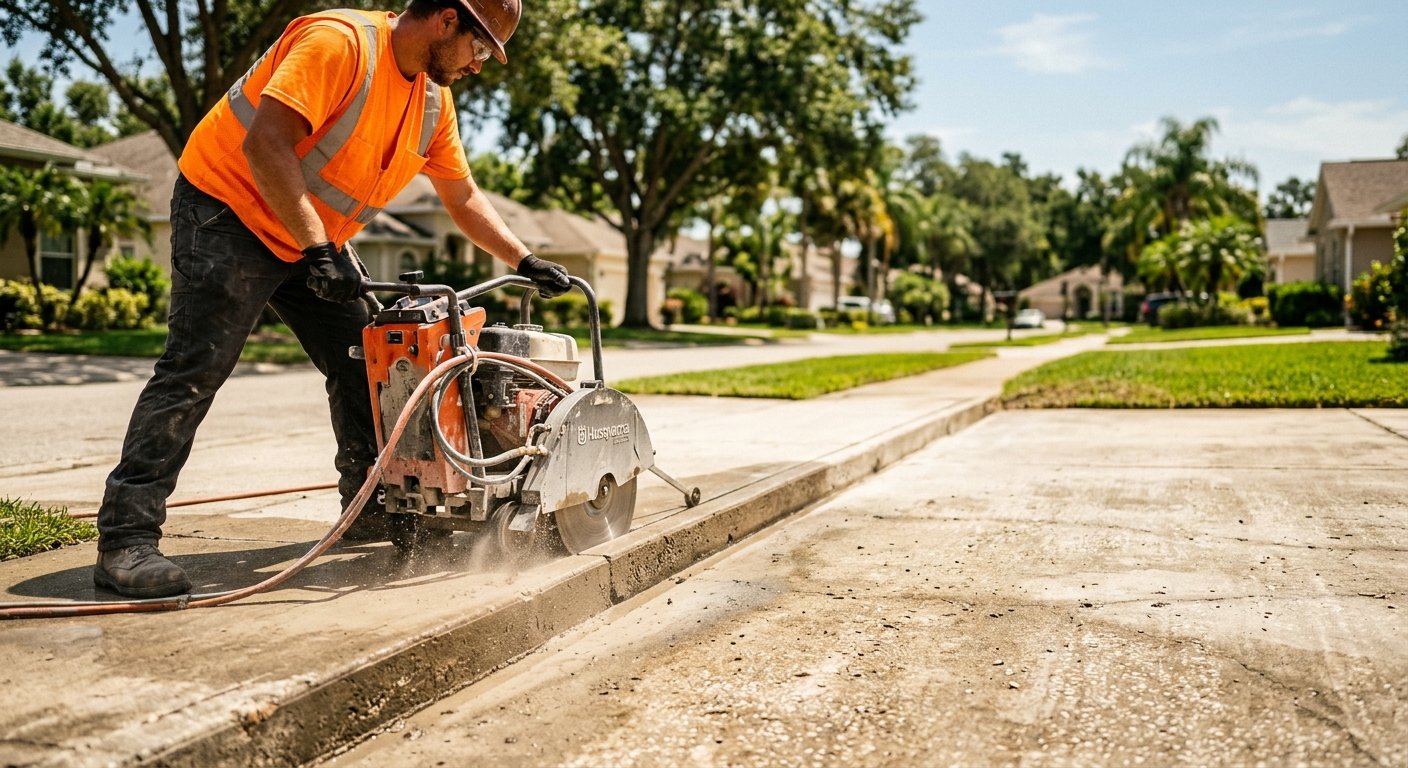
Precision concrete cutting removes trip hazards more durably and cost-effectively than grinding for most sidewalk repair situations. Cutting uses a saw blade to remove a precise, beveled slice of raised concrete, producing a flush, ADA-compliant surface that lasts. Grinding shaves material away and often leaves a rough, shallow result that can deteriorate faster. For property managers and HOA boards in Palm Beach and Broward County, understanding this difference directly affects safety compliance and long-term budget decisions.
- Precision concrete cutting produces a cleaner, longer-lasting repair than traditional grinding in most trip hazard scenarios.
- Both methods can achieve ADA compliance, but cutting is better suited to larger vertical displacements and high-traffic areas.
- Cutting technology costs 70–90% less than full sidewalk replacement, according to Florida Sidewalk Solutions’ service positioning.
- ADA standards define a trip hazard as any vertical change greater than 1/4 inch — knowing this threshold is the starting point for any repair decision.
- Florida’s subtropical conditions accelerate root intrusion and concrete displacement, making method selection even more consequential here than in other climates.
What Qualifies as a Trip Hazard Under ADA Standards?
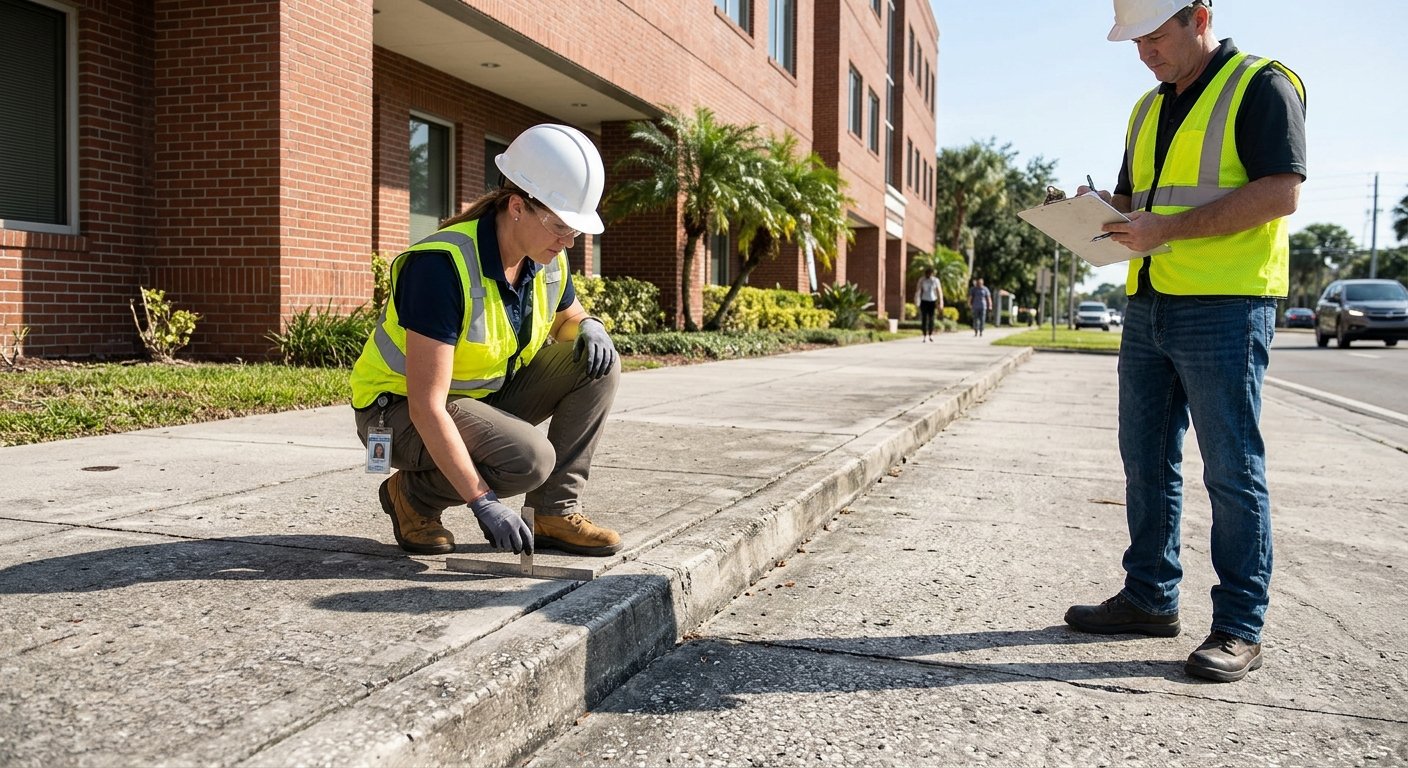
Before comparing repair methods, decision-makers need a firm grasp of the legal threshold. Under the Americans with Disabilities Act Accessibility Guidelines published by the U.S. Access Board, any vertical change in a walking surface greater than 1/4 inch constitutes a trip hazard. Changes between 1/4 inch and 1/2 inch must be beveled at a slope no steeper than 1:2. Changes above 1/2 inch are not permitted regardless of beveling.
This standard applies to sidewalks, pathways, parking lot access routes, and any pedestrian surface covered by ADA requirements. For Florida municipalities, HOAs, and commercial property owners, failure to address displacements above this threshold creates documented liability exposure. The repair method you choose must bring the surface into full compliance with these thresholds — not just make the hazard look better.
If you want a deeper look at how these standards apply to your specific property type, the dedicated guide on ADA sidewalk compliance for Florida property managers covers the compliance framework in detail.
How Precision Concrete Cutting Works
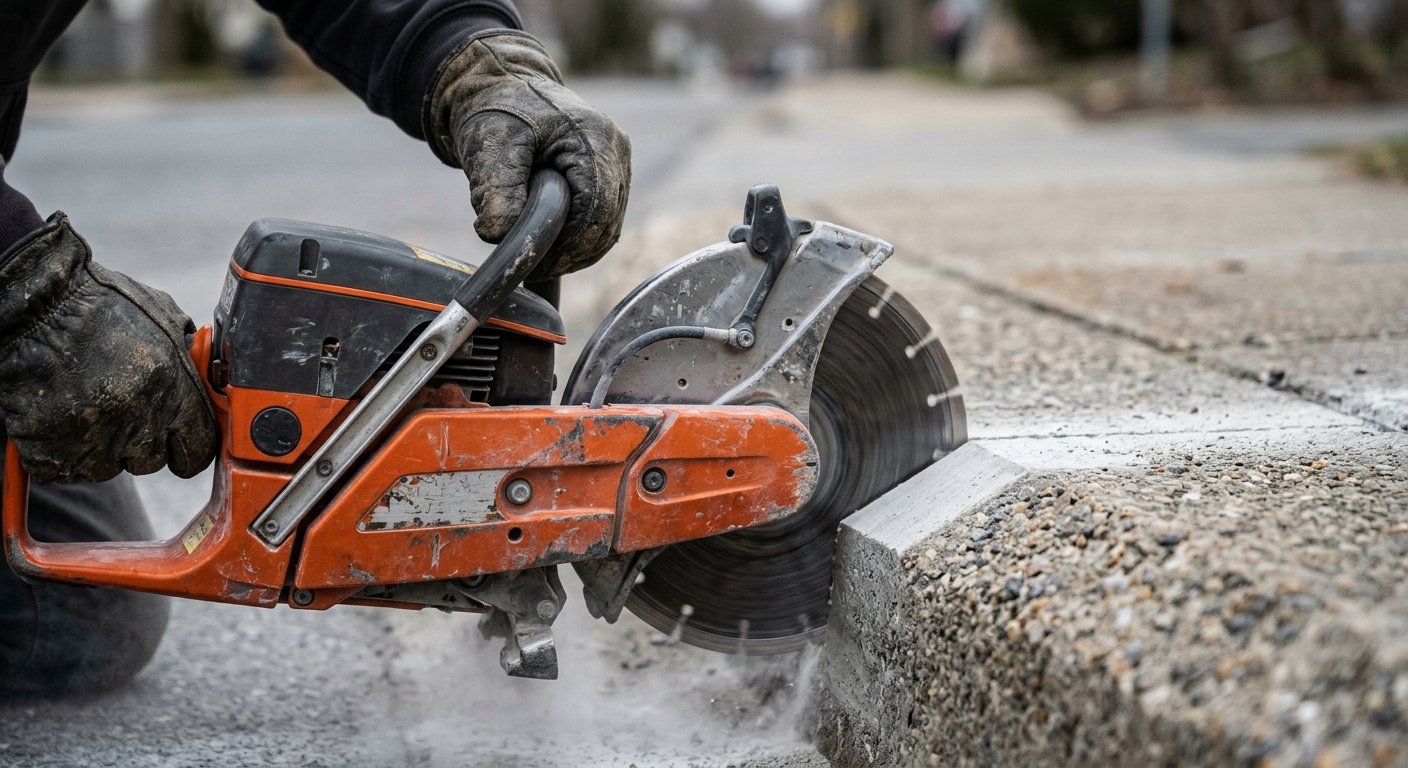
Patented precision concrete cutting uses a specialized diamond-blade saw to remove a measured wedge of concrete from the raised panel edge. The blade angle is calculated to produce a flush surface that meets ADA beveling requirements exactly. The result is a smooth, clean transition between panels with no height differential remaining.
Because the blade cuts through the full depth of the raised section, the repaired surface is structurally continuous with the surrounding slab. There is no added material, no filler, and no overlay that can separate or degrade over time. The cut surface is also visually clean — significantly less conspicuous than a ground or patched area.
Florida Sidewalk Solutions uses patented precision concrete cutting technology refined over 20 years of South Florida service. The blade geometry is engineered to achieve the correct bevel in a single pass, reducing both time on site and the margin for error that hand-operated grinders introduce.
From an operational standpoint, cutting generates minimal dust compared to grinding (most debris is collected as larger fragments that are easily removed), produces no demolition waste requiring haul-away, and allows the repaired surface to return to pedestrian use almost immediately. There is no curing period, no lane closure extending days, and no heavy equipment staging that disrupts the surrounding area.
How Traditional Grinding Works — and Where It Falls Short
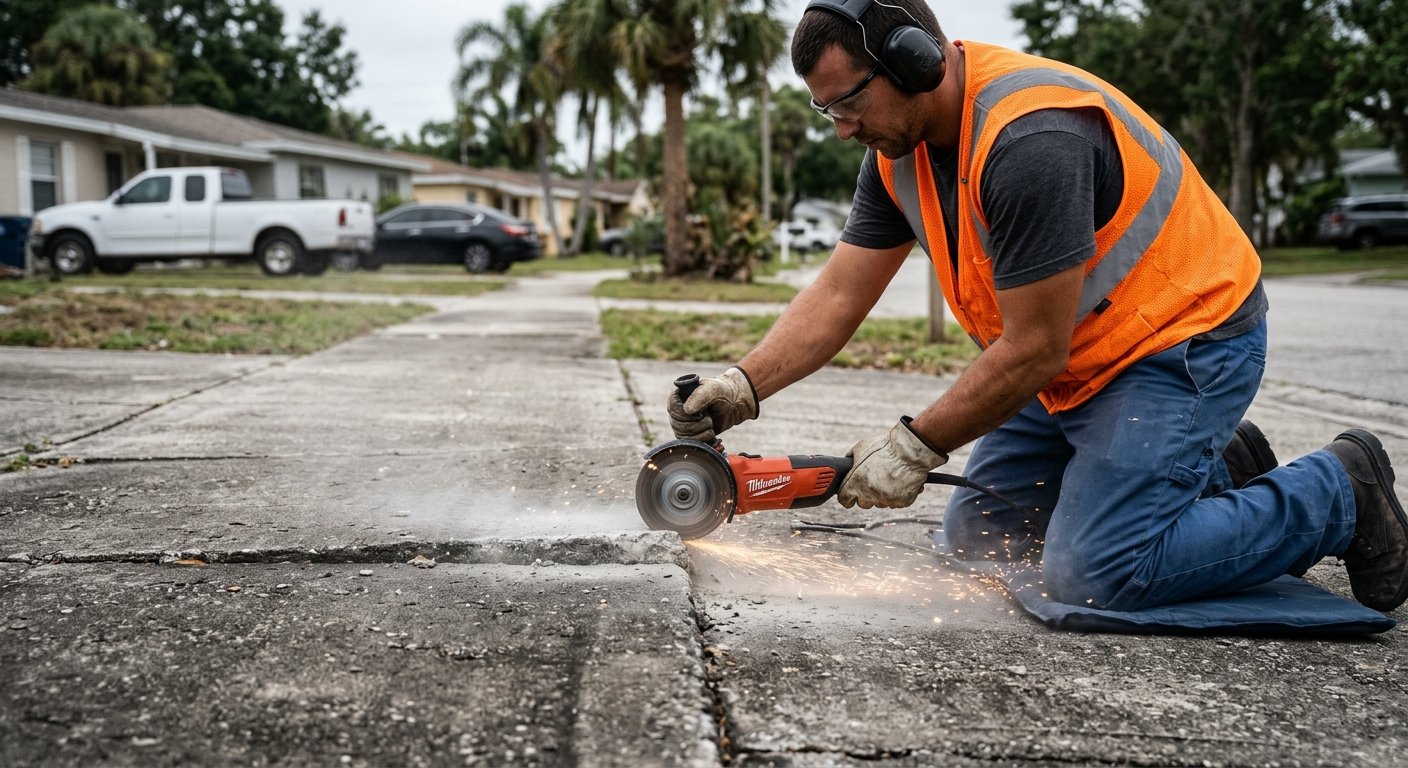
Grinding uses a rotating abrasive wheel to shave down the raised edge of a sidewalk panel. At its best, it reduces the vertical displacement to an acceptable level and creates a beveled transition. It is a legitimate repair method that ADA permits, and for very small displacements — at or just above the 1/4-inch threshold — it can be entirely appropriate.
The limitations become meaningful at larger displacements. Grinding removes material progressively, so a significant vertical raise requires removing substantial concrete from the higher panel. This can create a thinned section that is more susceptible to cracking, especially in Florida where tree roots continue to exert upward pressure and thermal movement occurs year-round. The ground surface is also characteristically rougher than a cut surface, which can affect both traction and long-term wear.
For a full breakdown of how grinding compares to replacement and why neither option is always the obvious answer, the article on sidewalk grinding versus replacement options addresses both scenarios with useful context.
| Factor | Precision Cutting | Traditional Grinding |
|---|---|---|
| ADA compliance capability | Yes — precise bevel angle achieved | Yes — for smaller displacements |
| Surface finish quality | Smooth, clean edge | Rougher, abraded surface |
| Best displacement range | Any ADA-relevant displacement | Small displacements near 1/4 inch |
| Debris and waste | Minimal; no demolition waste | Concrete dust; may require cleanup |
| Structural integrity of panel | Maintained; no thinning | Panel may thin at edge |
| Disruption to site | Minimal; quick return to use | Moderate; area must be cleared |
| Cost vs. replacement | 70–90% less | Generally less than replacement |
Why Cost Comparisons Need Context
Any property manager evaluating repair bids needs to look beyond the initial invoice. A grinding repair that degrades or fails ADA compliance within a year or two carries a hidden cost: re-mobilization, repeat repair, and the liability window during which the hazard exists again. Precision cutting, because it removes the displacement rather than shaving it down, tends to stay in compliance longer between re-inspections.
Full concrete replacement — removing and pouring a new panel — is the most expensive option and generates significant demolition waste. Florida Sidewalk Solutions’ cutting-based approach delivers the same compliant outcome at a fraction of the replacement cost. For municipalities managing hundreds of panels or HOAs with extended sidewalk networks, that difference allows the same budget to address substantially more hazards.
The article on how concrete cutting technology saves municipalities money examines the budget math in more depth, including how stretching a repair budget across more locations reduces overall liability exposure.
In Florida, documented knowledge of a trip hazard — through a prior complaint, inspection report, or notice — without prompt remediation significantly strengthens a plaintiff’s negligence claim. Choosing a faster, more durable method is not just a budget decision; it is a risk management decision.
Florida Conditions That Influence Method Choice
South Florida’s combination of mature tree canopies, sandy soil, and year-round moisture creates sidewalk displacement patterns that differ from northern states. Root intrusion is the dominant cause of panel lifting in Palm Beach and Broward County communities. When roots are the cause, the underlying pressure source should be addressed as part of any repair plan — otherwise, the hazard is likely to recur regardless of method.
Precision cutting is particularly well-suited to root-caused displacements because the raised panel remains structurally intact. The cut simply removes the trip hazard at the edge. If the root issue is managed separately, the panel can provide years of continued service without replacement. Understanding why panels fail in the first place helps inform a smarter long-term approach — a topic covered in detail on why uneven sidewalks fail and how to fix them permanently.
Florida’s high humidity also affects grinding repairs more than cutting repairs. Ground concrete surfaces can absorb moisture into the newly exposed aggregate, and if the repair has thinned the panel edge, freeze-thaw is not a concern here, but repeated wetting and drying cycles in combination with ongoing root pressure can accelerate edge deterioration.
Identify and measure the displacement
A qualified inspector measures the vertical change at each panel edge. Any displacement above 1/4 inch requires corrective action under ADA guidelines.
Assess the cause of displacement
Determining whether root intrusion, soil settlement, or panel degradation is responsible informs whether cutting alone is sufficient or whether additional root management is warranted.
Select the appropriate repair method
For most displacements in the ADA-actionable range, precision cutting produces the most durable and cleanest result. Grinding may be appropriate for minimal displacements in lower-traffic areas.
Execute the repair and document compliance
Post-repair documentation — photographs and measurements confirming the surface meets ADA standards — protects against future liability claims and supports your risk management records.
Frequently Asked Questions
Is precision concrete cutting the same as grinding?
No. Concrete cutting uses a diamond saw blade to remove a precise wedge of concrete, creating a clean, flush bevel. Grinding uses an abrasive wheel to shave down the raised surface. Cutting generally produces a smoother, more structurally sound result and is better suited to larger displacements.
Can either method make a sidewalk fully ADA compliant?
Yes, both methods can achieve ADA compliance when performed correctly. The key requirement is that any vertical change exceeding 1/4 inch must be eliminated or reduced to a properly beveled transition (1:2 slope maximum between 1/4 and 1/2 inch). Precision cutting is more consistent in achieving the required bevel geometry, particularly for larger displacements.
How soon can a sidewalk be used after cutting?
Because concrete cutting removes material rather than applying any filler or overlay, there is no curing period required. Pedestrian access can typically be restored almost immediately after the work is complete, making it well suited to high-traffic areas in commercial or municipal settings.
What happens if a trip hazard is not repaired?
Unrepaired trip hazards create documented liability exposure for property owners, HOAs, and municipalities. Under Florida premises liability law, property owners have a duty to maintain safe conditions for foreseeable visitors. A known hazard that goes unaddressed can support a negligence claim if someone is injured. Prompt repair is both a safety obligation and a risk management necessity.
Does Florida Sidewalk Solutions serve both Broward and Palm Beach County?
Yes. Florida Sidewalk Solutions provides trip hazard repair, ADA compliance assessment, and precision concrete cutting services throughout Palm Beach County and Broward County. With 20 years of Florida-specific experience, the team understands local soil conditions, root intrusion patterns, and the compliance requirements that apply to Florida properties.
Choosing a repair method is not just a budget decision — it is a risk management decision that affects compliance, durability, and liability for years after the work is done.
The ADA Title II guidance from the U.S. Department of Justice makes clear that public entities and places of public accommodation have ongoing obligations to maintain accessible routes — not just to install them. A sidewalk that was compliant at construction can become non-compliant as panels shift, and the obligation to correct that falls on the property or facility owner. Selecting the most durable repair method available is the most direct way to extend the interval between re-inspections and re-repairs.
Get a Trip Hazard Assessment for Your Property
Florida Sidewalk Solutions is licensed, insured, and ready to assess your Palm Beach or Broward County sidewalks — providing a clear plan for ADA-compliant trip hazard removal with minimal disruption to your property.
About Florida Sidewalk Solutions
Florida Sidewalk Solutions specializes in sidewalk safety, ADA compliance, and trip hazard prevention for Florida property managers, municipalities, and commercial property owners. Using patented concrete cutting technology, they deliver cost-effective repairs that are 70-90% less expensive than replacement, with minimal disruption and no demolition waste. With 20 years of Florida-specific experience, they provide the expert solution for eliminating liability risks while meeting ADA standards and legal requirements. Visit floridasidewalksolutions.com →