
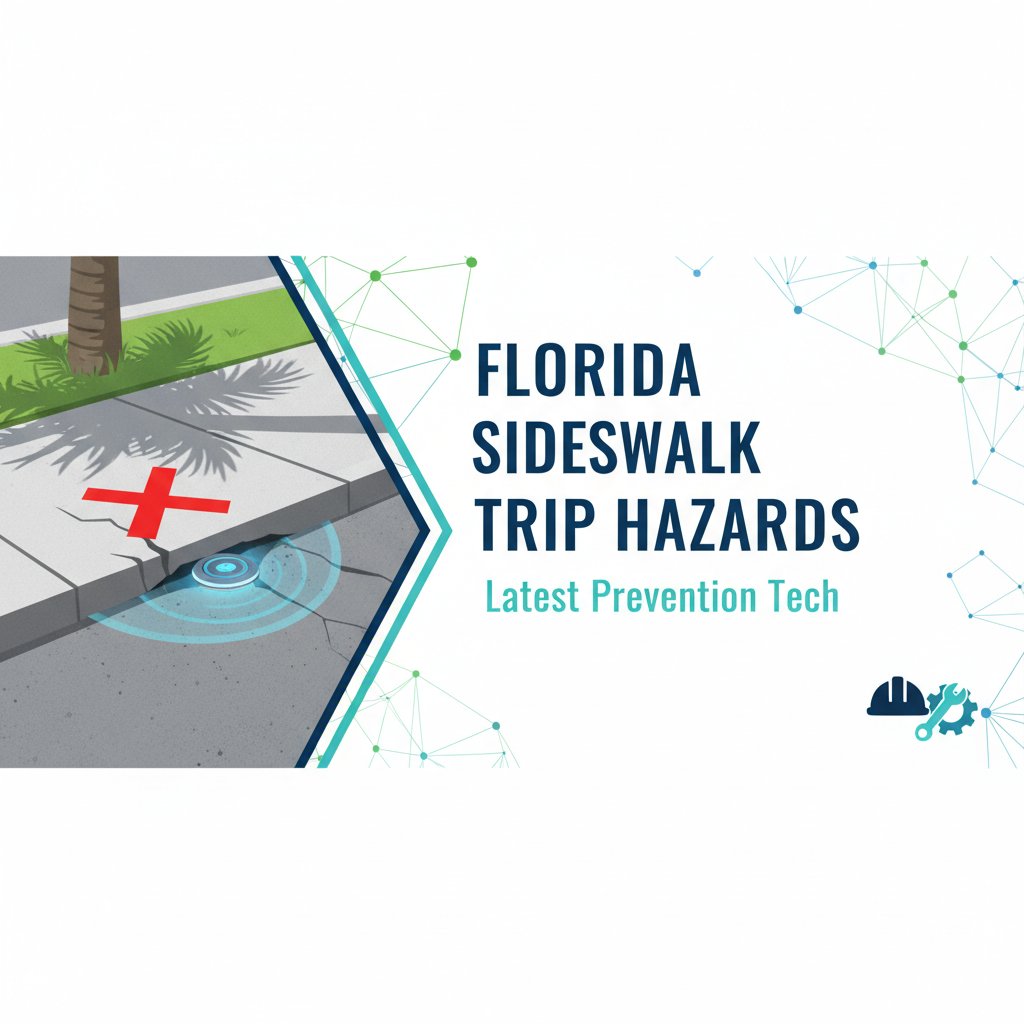
Florida property owners face a harsh reality: a single sidewalk trip and fall can cost hundreds of thousands in legal settlements, not to mention the moral burden of someone getting injured on your property. With over 234,000 trip and fall injuries requiring emergency room visits annually in the United States, and sidewalk defects representing a major cause, the question isn’t whether you should address concrete trip hazards—it’s how quickly you can eliminate them before an incident occurs.
Traditional repair methods have left property managers stuck between expensive concrete replacement and ineffective grinding solutions. However, precision concrete cutting technology has revolutionized sidewalk trip hazard removal in Florida, offering a superior alternative that addresses both safety compliance and budget constraints.
Understanding the Liability Landscape in Florida
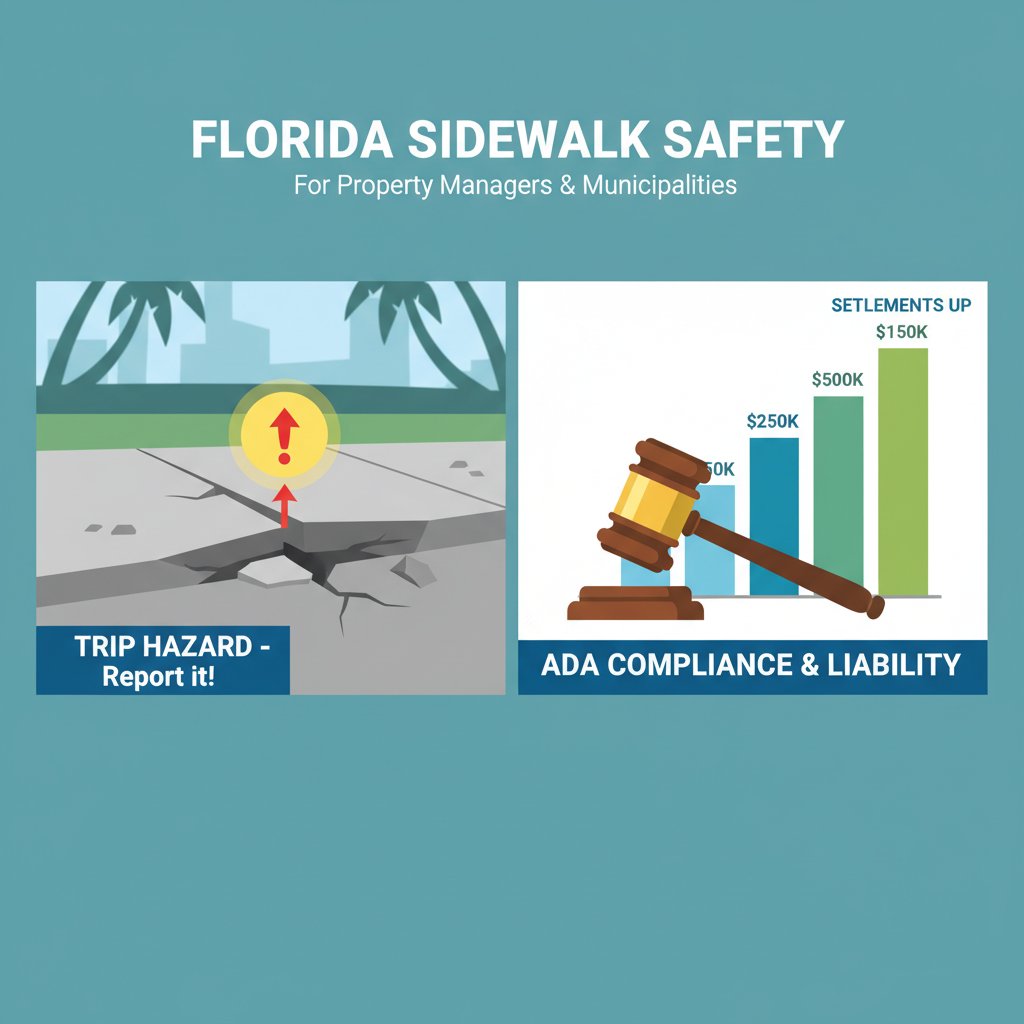
Florida premises liability law holds property owners accountable for maintaining safe conditions on their sidewalks. When a visitor or pedestrian suffers injury from a trip hazard, property owners may face substantial legal exposure. Recent settlements in Florida have ranged from $150,000 to over $1 million for serious injuries caused by uneven sidewalk repair negligence.
The legal threshold is clear: vertical displacement of just one-half inch or greater constitutes a trip hazard under most municipal codes and ADA guidelines. This seemingly minor elevation difference can catch a pedestrian’s foot, causing devastating falls that result in broken bones, head trauma, or worse.
Property managers and HOA board members must recognize that “I didn’t know about it” rarely provides adequate legal defense. Regular inspections and prompt remediation demonstrate the reasonable care standard that courts expect from property owners.
ADA Compliance: Non-Negotiable Standards
The Americans with Disabilities Act establishes specific requirements for sidewalk accessibility. According to ADA standards, vertical changes in level exceeding one-quarter inch but less than one-half inch must be beveled with a slope no greater than 1:2. Vertical changes exceeding one-half inch require ramping solutions or complete elimination of the elevation change.
For commercial properties, schools, municipal facilities, and HOAs, ADA compliance isn’t optional—it’s mandatory. Non-compliance can trigger Department of Justice investigations, costly lawsuits, and mandatory retrofitting orders. The financial penalties pale in comparison to the legal liability when someone with mobility challenges suffers injury due to ADA violations.
Florida sidewalk solutions must address both general trip hazards and ADA-specific requirements to provide comprehensive protection.
Why Traditional Methods Fall Short
Concrete Replacement: Prohibitively Expensive
Full concrete replacement has been the default solution for decades, but it comes with substantial drawbacks. The process requires demolition of existing slabs, removal and disposal of broken concrete, site preparation, forming, pouring, and curing time. Total costs typically range from $8 to $15 per square foot, making large-scale sidewalk repairs budget-breaking for most properties.
Beyond expense, replacement causes significant disruption. Pedestrian access must be blocked for 3-7 days during curing. The noise, dust, and construction equipment disturb residents and customers. For municipalities and commercial properties, this disruption translates to complaints and lost business.
Environmental impact adds another concern. Concrete demolition generates massive amounts of waste destined for landfills, and new concrete production contributes substantially to carbon emissions.
Grinding: A Temporary Band-Aid
Concrete grinding sounds appealing initially—it’s less expensive than replacement and relatively quick. However, grinding creates more problems than it solves for sidewalk leveling in Florida.
The grinding process exposes aggregate and creates a rough, porous surface that accelerates deterioration. In Florida’s climate, this exposed surface absorbs moisture, promoting faster degradation and creating new trip hazards within 1-3 years. The rough texture also presents ADA concerns, as it can impede wheelchair movement and creates an uneven walking surface.
Aesthetically, ground concrete looks patched and unprofessional—hardly the appearance desired for community entrances, commercial properties, or municipal facilities. The visible evidence of a “cheap fix” can actually decrease property values.
Precision Concrete Cutting: The Superior Solution
Precision concrete cutting technology represents a quantum leap forward in trip hazard repair. This patented process uses specialized diamond-blade equipment to make precise vertical cuts that create a smooth, beveled transition meeting ADA slope requirements.
The concrete cutting technology repair process works by strategically removing small amounts of concrete at exact angles, transforming dangerous vertical lips into compliant, safe transitions. Unlike grinding, which creates rough surfaces, precision cutting produces clean, professional finishes that maintain the sidewalk’s structural integrity and appearance.
Cost Savings That Matter
Property managers consistently report 70-90% cost savings compared to concrete replacement. A typical repair that might cost $1,200 through replacement can be completed for $200-300 using precision cutting. For properties with dozens or hundreds of trip hazards, these savings multiply into tens of thousands of dollars.
These savings allow property managers to address every identified hazard immediately rather than prioritizing only the worst locations due to budget constraints. Comprehensive remediation significantly reduces liability exposure.
Speed and Minimal Disruption
Precision concrete cutting completes most repairs in under 15 minutes per location. Sidewalks remain accessible with only brief, rolling closures as technicians move from one spot to the next. No curing time means no extended closures—pedestrians can use the sidewalk immediately after repair.
For commercial properties and HOAs, this minimal disruption maintains normal operations. Schools can schedule repairs during class hours without blocking student movement. Retail centers avoid the customer-deterring construction zones that plague replacement projects.
Environmental Responsibility
No demolition means no concrete waste heading to landfills. The cutting process removes only small amounts of material—typically just ounces per repair location. No new concrete production means no carbon emissions from cement manufacturing.
For municipalities and institutions with sustainability commitments, precision cutting aligns with environmental goals while solving safety problems.
Long-Term Durability
Because precision cutting maintains the concrete’s dense surface layer, repaired areas resist weathering and deterioration. The smooth, angled transitions don’t trap water or debris. In Florida’s challenging climate, this durability proves essential for long-term trip and fall liability prevention.
Property managers report precision-cut repairs remaining compliant and safe for 10+ years, often outlasting the surrounding concrete that develops its own age-related issues.
Real Results from Florida Properties
A large Central Florida HOA faced 87 identified trip hazards throughout their community sidewalks. Concrete replacement quotes exceeded $42,000, with work requiring six weeks of rolling construction. Using precision concrete cutting sidewalks technology, they completed all repairs in three days for $8,100—an 81% cost saving with minimal resident disruption.
A South Florida municipality eliminated 156 trip hazards along a two-mile pedestrian corridor, avoiding $78,000 in replacement costs while completing the project for $14,200. The work occurred during normal business hours with no extended sidewalk closures.
These case studies represent typical results: dramatic cost savings, minimal disruption, and comprehensive hazard elimination that reduces liability exposure.
Why Florida Properties Choose Specialized Expertise
Florida’s unique conditions demand specialized knowledge. Root intrusion from aggressive tropical vegetation, sand-based subsurface conditions, and intense UV exposure create specific challenges for sidewalk maintenance. Solutions that work in other states may fail quickly in Florida’s environment.
Companies with decades of Florida-specific experience understand these regional factors. They recognize how substrate conditions affect repair longevity, which hazard patterns indicate underlying drainage issues, and how to create repairs that withstand Florida’s climate extremes.
This expertise connects to proven concrete cutting technology refined over years of real-world application. The equipment, techniques, and quality standards have been developed specifically to address the challenges property managers face daily.
Taking Action: The Path Forward
Addressing sidewalk trip hazards shouldn’t wait until after someone gets injured. Property managers and decision-makers should implement a systematic approach:
- Conduct comprehensive sidewalk inspections, documenting all elevation changes exceeding one-quarter inch
- Prioritize high-traffic areas, accessibility routes, and locations near building entrances
- Obtain multiple repair quotes, comparing not just cost but methodology and long-term durability
- Schedule repairs during optimal weather windows to ensure quality results
- Establish regular inspection schedules to identify new hazards before they create liability
The investment in proactive trip hazard removal delivers returns far exceeding the repair costs. Legal fees alone from defending a single lawsuit typically dwarf comprehensive property-wide remediation expenses.
Choosing the Right Repair Partner
Not all concrete repair services offer equivalent quality. When evaluating providers for uneven sidewalk repair, consider these factors:
- Demonstrated experience with precision cutting technology specifically—not just general concrete work
- Understanding of ADA requirements and local municipal codes
- Insurance coverage adequate for commercial and municipal projects
- Portfolio of completed projects similar to your property type
- Warranty provisions covering workmanship and durability
The lowest bid often reflects inexperience or inadequate methodology. Quality precision cutting requires specialized equipment and trained technicians who understand proper technique and compliance standards.
Protect Your Property and Your Peace of Mind
Sidewalk trip hazards represent preventable risks that no property owner should ignore. The combination of serious liability exposure, ADA compliance requirements, and the availability of cost-effective solutions makes proactive remediation the only sensible choice.
Precision concrete cutting technology has transformed sidewalk trip hazard removal in Florida from an expensive burden into an affordable, efficient process. Property managers finally have access to solutions that satisfy both budget constraints and safety obligations.
Don’t wait for an injury, lawsuit, or ADA complaint to force action. Contact Florida Sidewalk Solutions today for a comprehensive property assessment. Our precision concrete cutting sidewalks technology eliminates trip hazards quickly, affordably, and permanently—protecting the people who use your property and the financial interests you’re responsible for safeguarding. Let our two decades of Florida-specific expertise deliver the peace of mind that comes from knowing your sidewalks meet safety standards and your liability exposure has been minimized.