Why Cracked Sidewalks Are More Than Just an Eyesore
Cracked concrete repair is essential for maintaining safe, ADA-compliant sidewalks and protecting property owners from liability. Whether you’re dealing with minor surface cracks or dangerous trip hazards, understanding your repair options can save time, money, and prevent serious accidents.
Quick Answer: Key Steps for Repairing Cracked Concrete Sidewalks
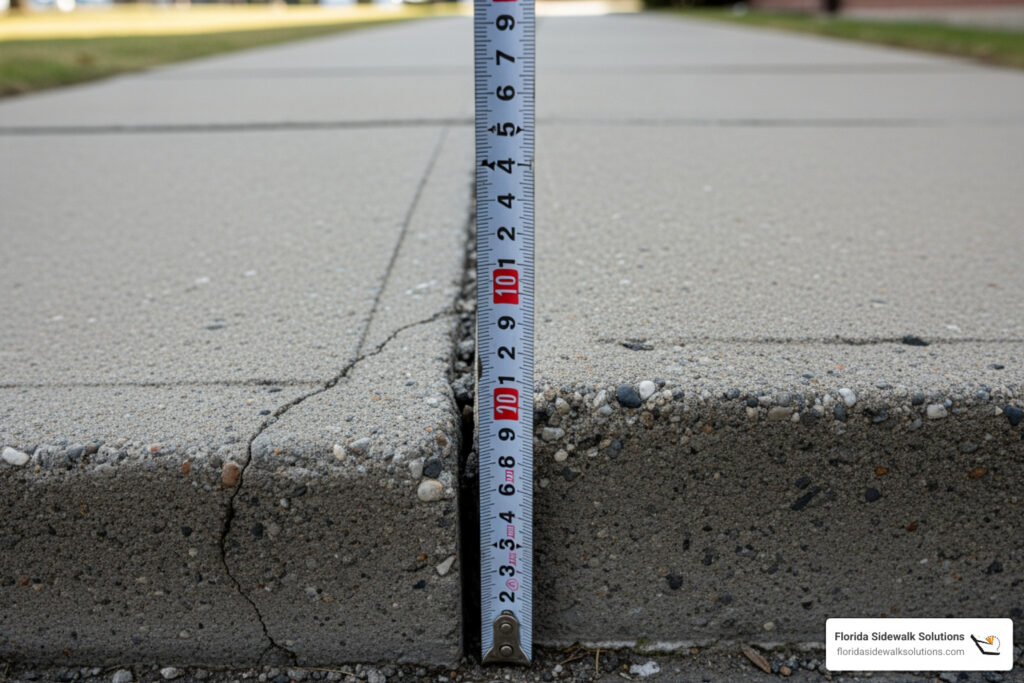
- Assess the damage – Measure crack width and height differences between slabs
- Determine if it’s a trip hazard – Any change in level over 1/4 inch requires immediate attention per ADA guidelines
- Choose the right repair method – Minor hairline cracks may need sealing, while uneven slabs require professional leveling
- Address the root cause – Identify soil settlement, tree roots, or drainage issues
- Ensure ADA compliance – Professional repairs must meet accessibility standards
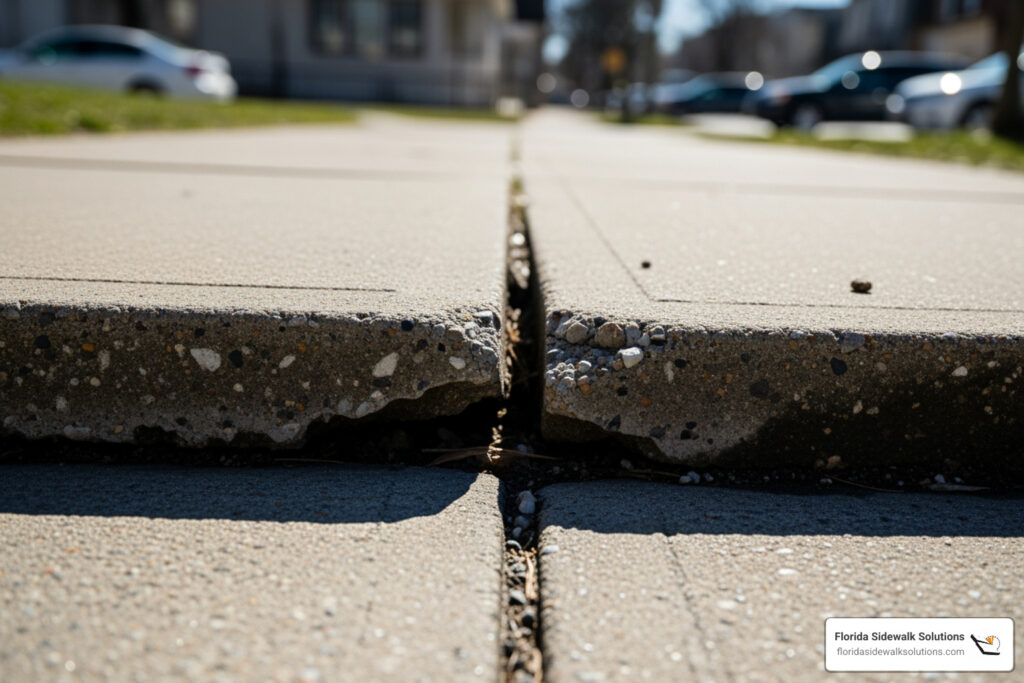
Cracked sidewalks are more than unsightly; they’re a serious liability. Property owners and municipalities face costly lawsuits from trip-and-fall accidents caused by uneven concrete. According to the Americans with Disabilities Act (ADA), any vertical change in a sidewalk’s level over 1/4 inch is a trip hazard.
What many property managers don’t realize is that traditional repair methods often fall short. Concrete grinding can’t reach panel edges, leaving hazards behind. Full removal and replacement is expensive, disruptive, and time-consuming. Temporary patches rarely last.
The good news is that modern precision cutting methods can repair trip hazards effectively, restore ADA compliance, and cost significantly less. For Municipal Maintenance Managers on tight budgets, understanding the difference between a cosmetic fix and professional sidewalk leveling is crucial.
This guide will show you how to identify, assess, and repair cracked concrete sidewalks—from minor DIY touch-ups to serious trip hazards requiring professional intervention.
First Steps: Assessing the Damage and Understanding the Cause
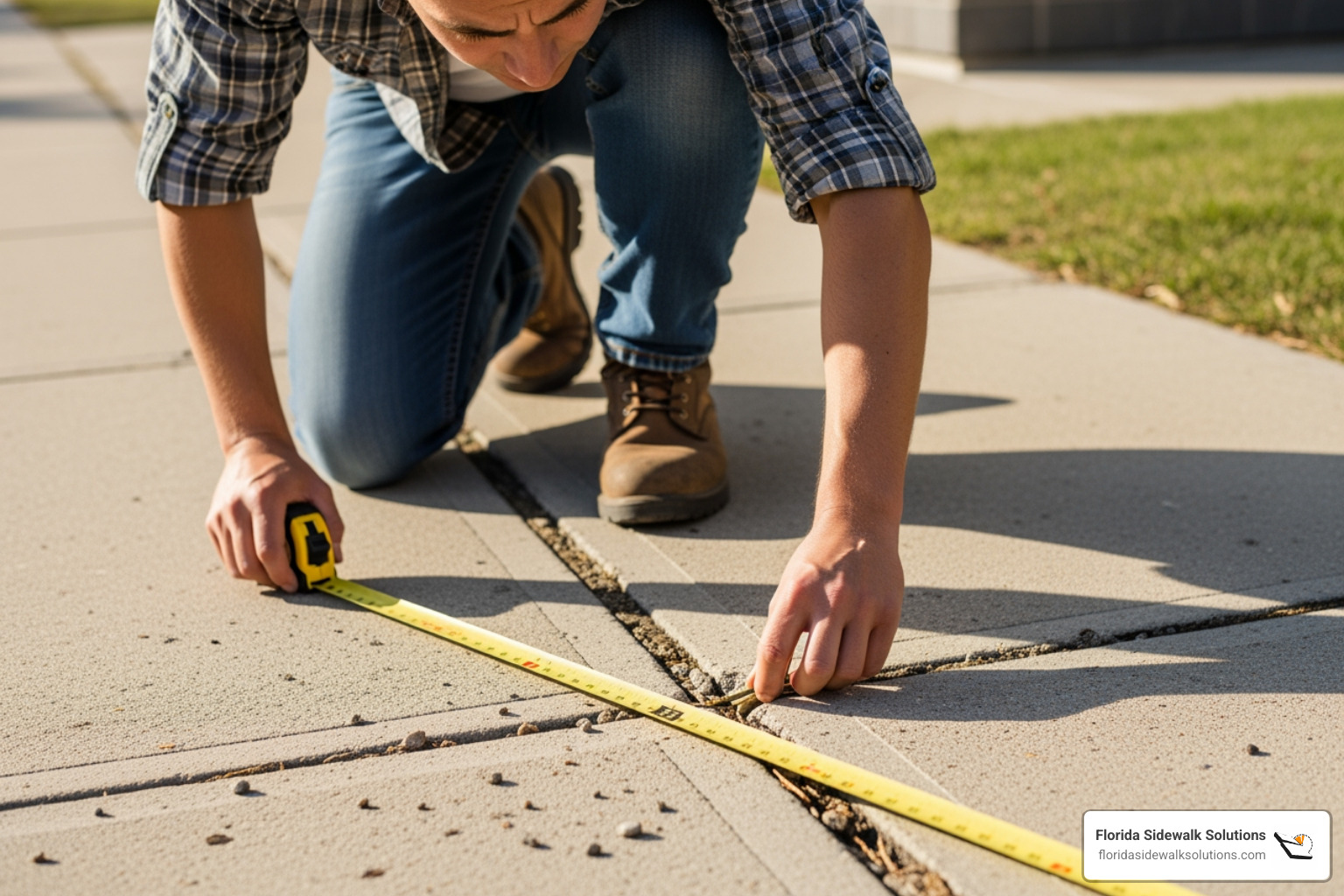
Before you can fix a cracked sidewalk, you need to understand what you’re dealing with. Think of yourself as a concrete detective – your mission is to figure out what kind of damage exists, how severe it is, and why it happened. Getting these answers right is the difference between a repair that lasts and one that fails within a year.
Common Causes of Sidewalk Cracks in Florida
Concrete is tough, but several factors, especially in Florida, can lead to cracks:
- Soil Settlement: Florida’s sandy soil and high water table, especially in areas like Miami and Fort Lauderdale, can cause the ground beneath sidewalks to shift, leading to cracks and uneven slabs.
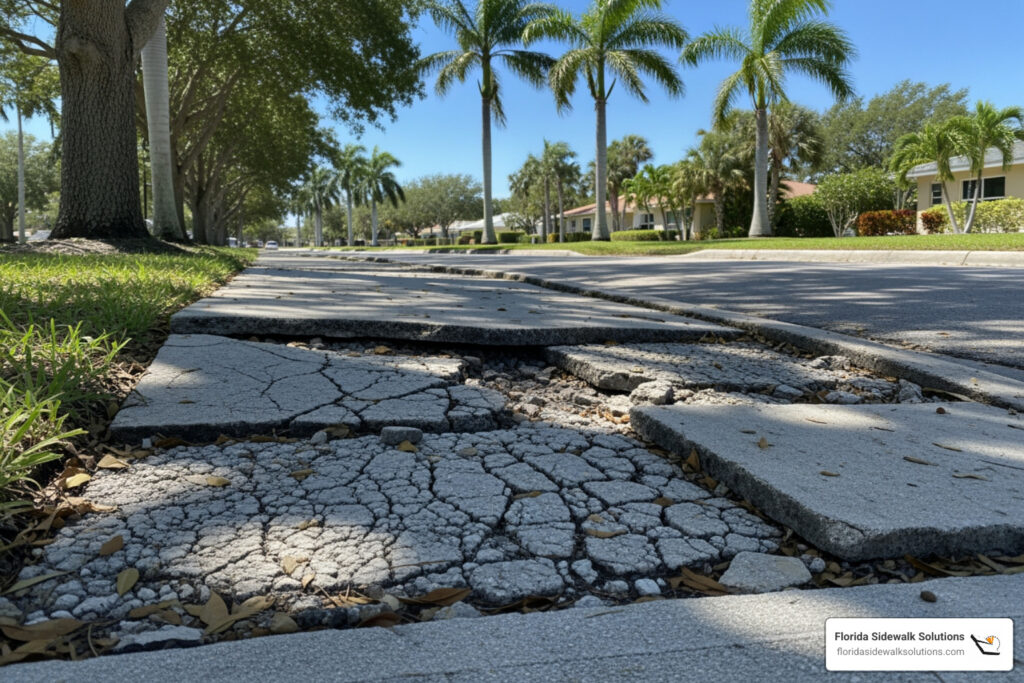
- Tree Roots: Expanding roots from Florida’s beautiful trees can push up concrete with immense force, creating dangerous trip hazards.
- Drying Shrinkage & Temperature: Concrete naturally shrinks as it cures. If it dries too fast in the Florida sun, or from constant temperature changes, stress cracks can form.
- Poor Drainage: Water that doesn’t drain away properly can erode the soil under the sidewalk, causing it to sink and crack.
- Heavy Loads: Unexpected heavy loads from vehicles like delivery or construction trucks can cause stress fractures.
Identifying Crack Types and Their Significance
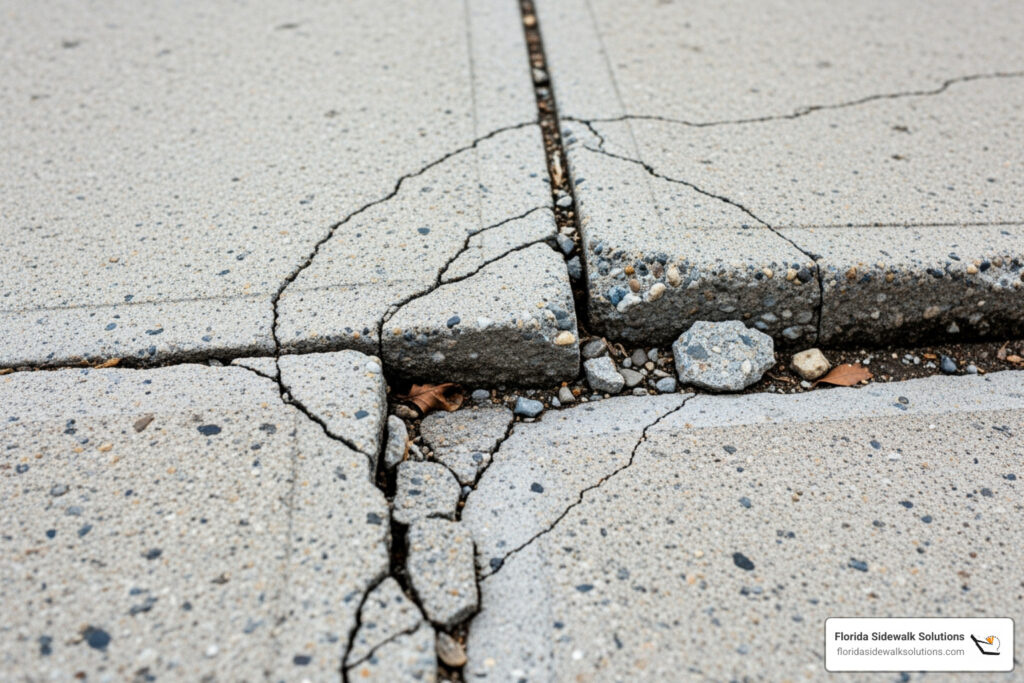
Not all cracks are equal. Knowing the type helps determine the solution for cracked concrete repair:
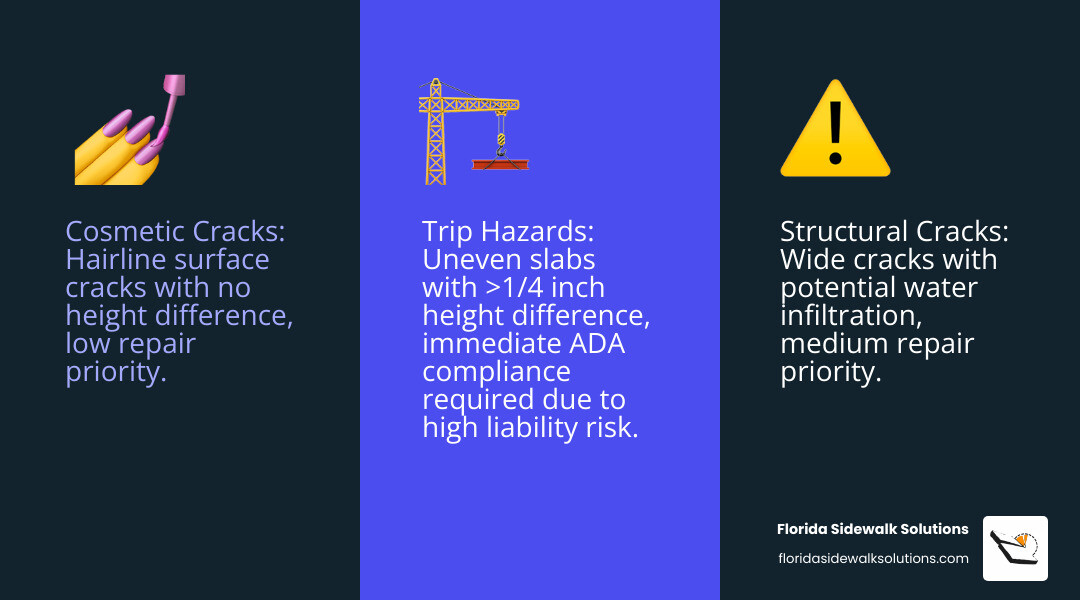
- Hairline Cracks: Thin surface cracks (crazing) are usually cosmetic and not a structural concern.
- Wide Cracks (over 1/4 inch): These are more serious, allowing water to seep in and erode the soil base, worsening the problem.
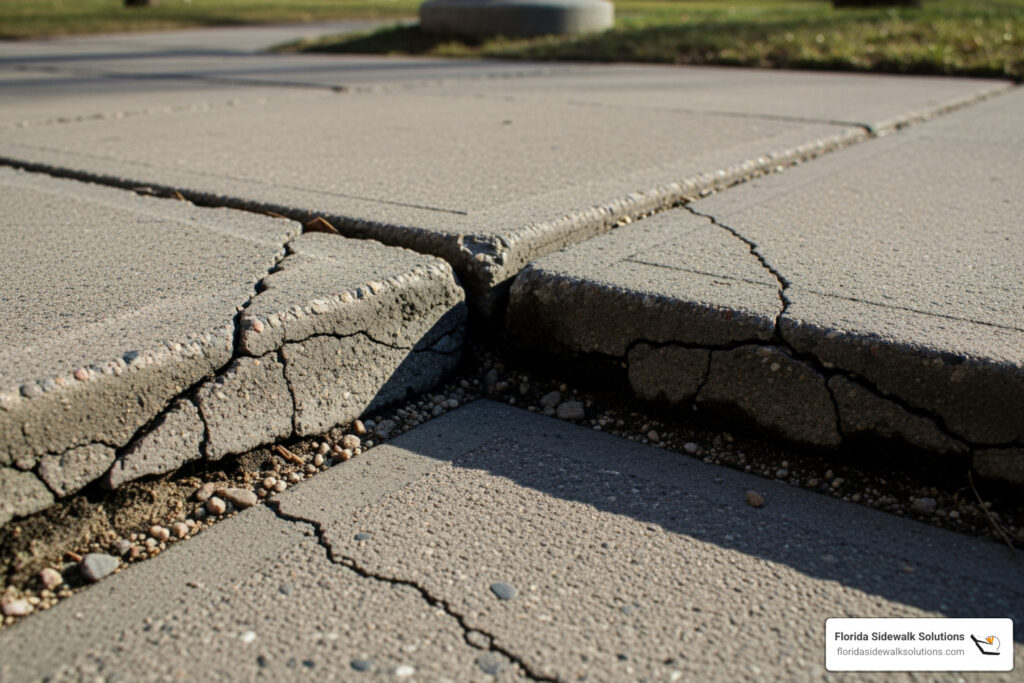
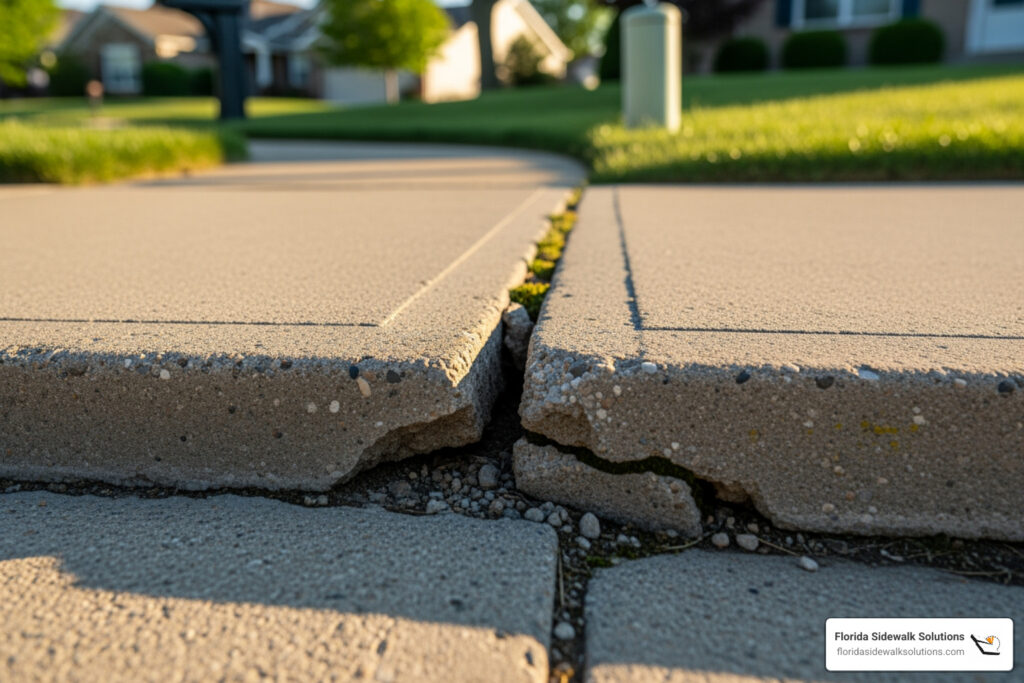
- Uneven Cracks (Trip Hazards): This is the most critical issue. When one slab is higher than another by more than 1/4 inch, it’s an ADA violation and a major liability.
For a detailed breakdown of identifying and addressing these specific issues, check out our Guide to Sidewalk Trip Hazard Repair.
Signs of Sidewalk Safety Issues
Beyond visible cracks, watch for these safety red flags:
- Height Differences: Any lip between slabs over 1/4 inch is an immediate trip hazard.
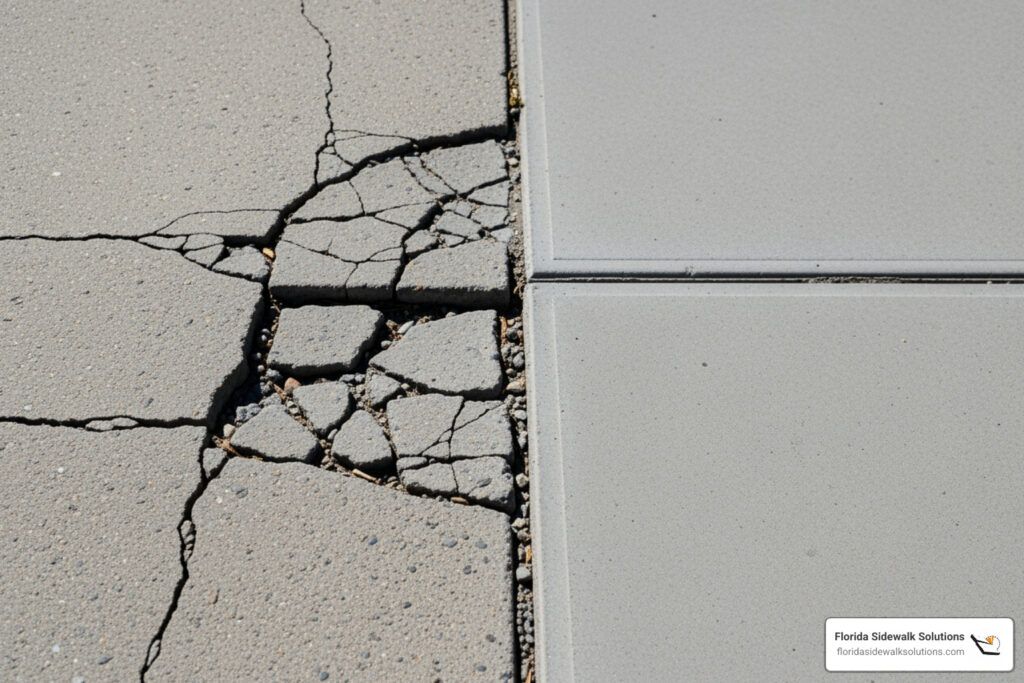
- Spalling or Chipping: Flaking concrete creates rough surfaces and indicates internal water damage.
- Ponding Water: Puddles signal uneven settlement and drainage issues that will worsen over time.
- Loose or Rocking Slabs: This indicates severe instability in the base soil and requires immediate professional attention.
Why Ignoring Cracked Sidewalks is a Risk
Ignoring a cracked sidewalk is a risk you can’t afford. Here’s why:
- Liability: Trip-and-fall accidents can lead to costly lawsuits. In Florida, property owners are legally responsible for maintaining safe walkways.
- ADA Compliance: The Americans with Disabilities Act mandates accessible public sidewalks. A height difference over 1/4 inch is a violation that can result in fines and legal action.
- Worsening Damage: Cracks let water in, which erodes the soil base and weakens the concrete from within, turning a small issue into a major expense.
- Reduced Property Value: Damaged, uneven sidewalks create a poor first impression and signal neglect, hurting your property’s curb appeal and value.
DIY vs. Professional Sidewalk Trip Hazard Repair: Knowing Your Limits
When you spot a crack in your sidewalk, it’s tempting to fix it yourself. For minor issues, that can work. But for serious safety hazards, a DIY fix can be a costly mistake. The key is knowing the difference between a cosmetic issue and a real trip hazard.
Attempting to fix an uneven slab with caulk is like putting a Band-Aid on a broken bone—it doesn’t solve the underlying problem and leaves the liability in place. Cracked concrete repair for trip hazards requires specialized equipment and expertise.
Simple DIY Fixes for Minor Hairline Cracks
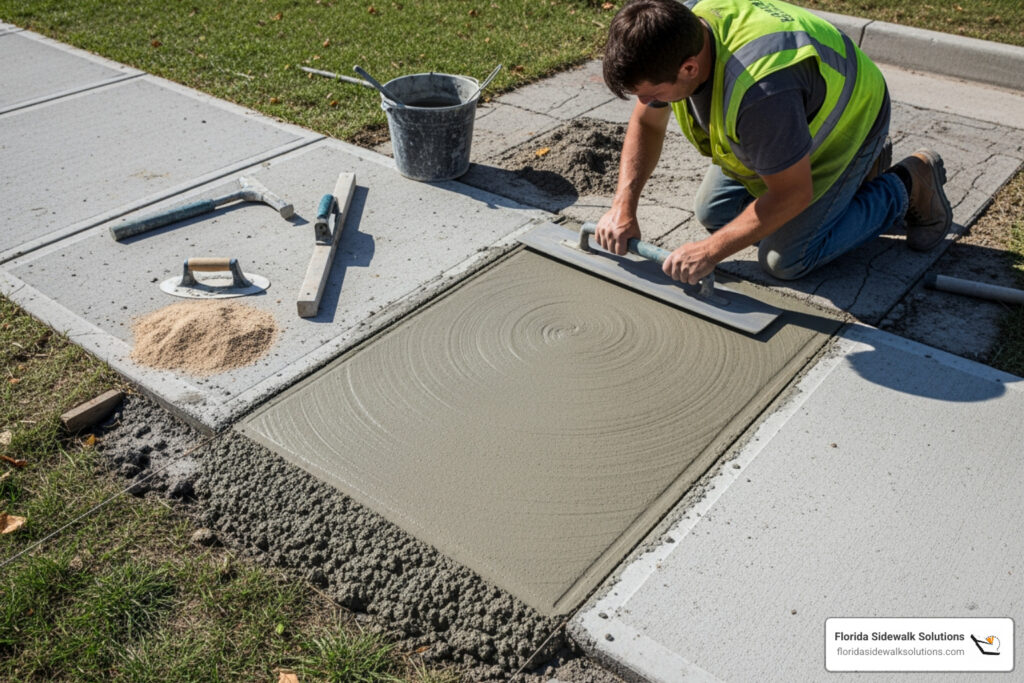
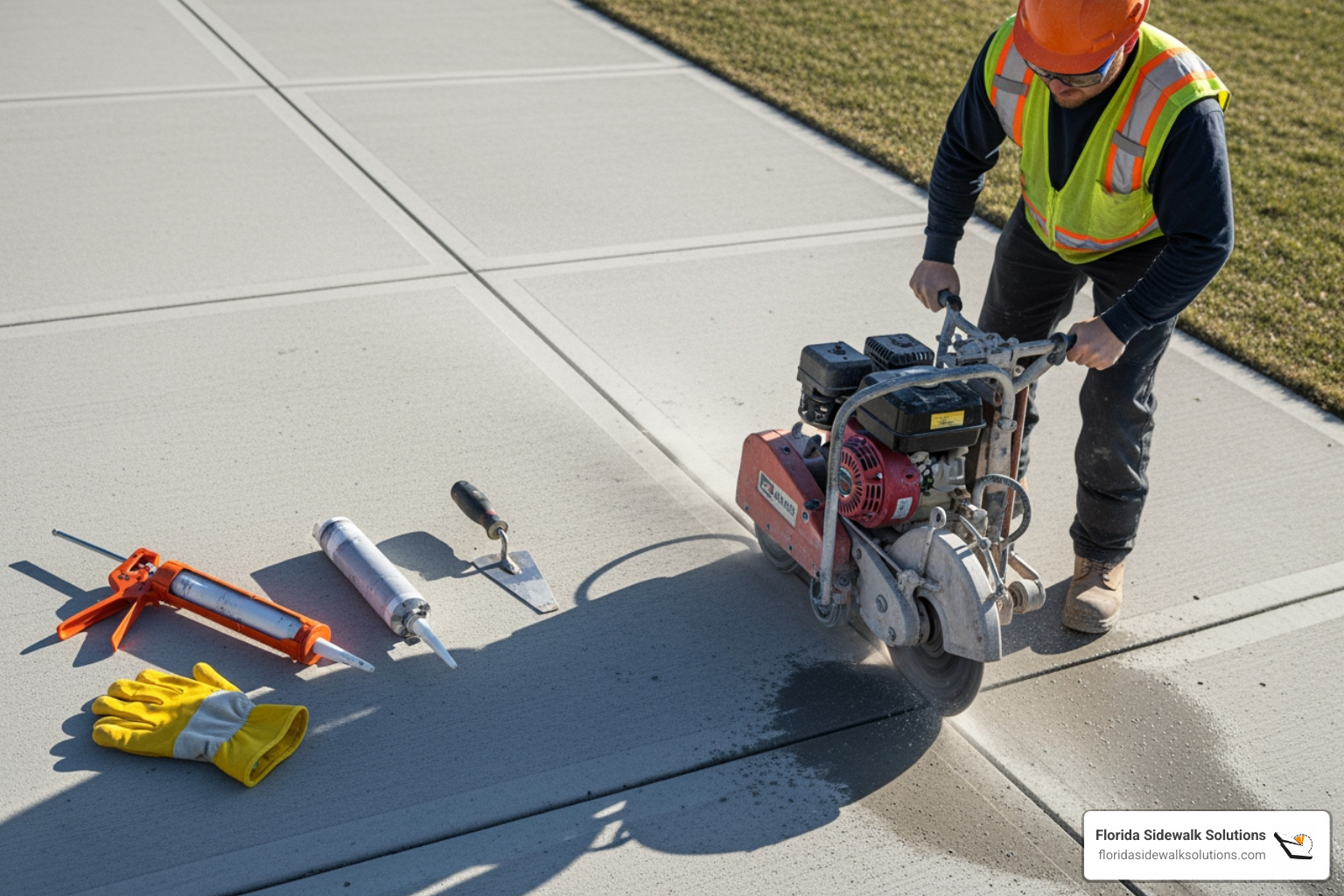
For minor, cosmetic hairline cracks with no height difference, a DIY approach can be suitable. The goal is to seal the crack to prevent water intrusion and improve appearance. This typically involves:
- Cleaning the Crack: Use a wire brush and shop vacuum to remove all debris, dirt, and loose concrete. A clean surface is essential for a lasting bond.
- Applying a Filler: Use a flexible masonry crack filler and a caulk gun to fill the crack. Overfill it slightly.
- Smoothing and Curing: Smooth the filler flush with the concrete surface using a putty knife. Allow it to cure completely as directed by the manufacturer, usually at least 24 hours.
This is a cosmetic fix. It does not address underlying structural issues or level uneven slabs. For anything more than a simple surface crack, professional repair is necessary.
When Professional Assessment is Non-Negotiable
DIY fixes have their limits. It’s time to call a professional for cracked concrete repair when you see:
- Uneven Slabs (Trip Hazards): Any height difference over 1/4 inch is an ADA violation and a serious liability. This requires professional leveling, not just filling.
- Wide or Deep Cracks: Cracks wider than 1/4 inch often indicate underlying soil problems that a simple filler can’t solve.
- Signs of Displacement: If entire sidewalk sections are sinking, shifting, or rocking, the ground beneath is unstable and needs expert assessment.
- Cracks Near Foundations or with Water Leakage: These can signal serious structural or drainage problems that affect your entire property.
While professional repair has an upfront cost, it’s far more cost-effective than repeated failed DIY attempts, full sidewalk replacement, or the potential cost of a lawsuit.
A Guide to Professional Sidewalk Trip Hazard Repair Methods
When you’re dealing with dangerous trip hazards, DIY solutions won’t solve the problem. This is where professional cracked concrete repair becomes essential. At Florida Sidewalk Solutions, we’ve developed a specialized approach that’s effective, efficient, and budget-friendly for communities from Davie to Fort Myers to Boca Raton.
Florida Sidewalk Solutions’ Specialized Cutting Method
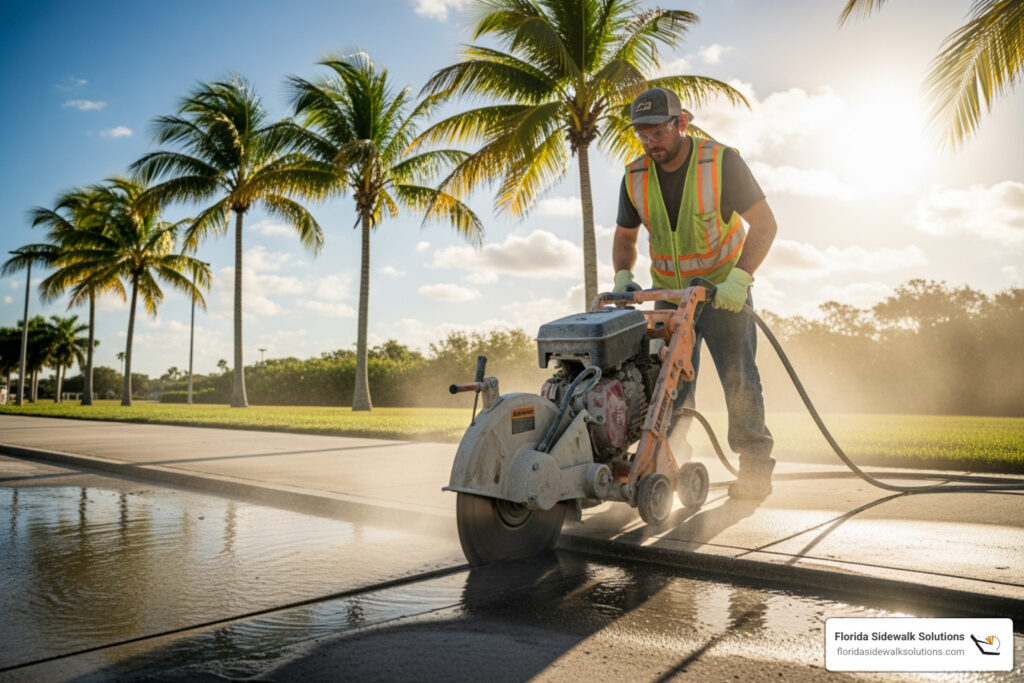
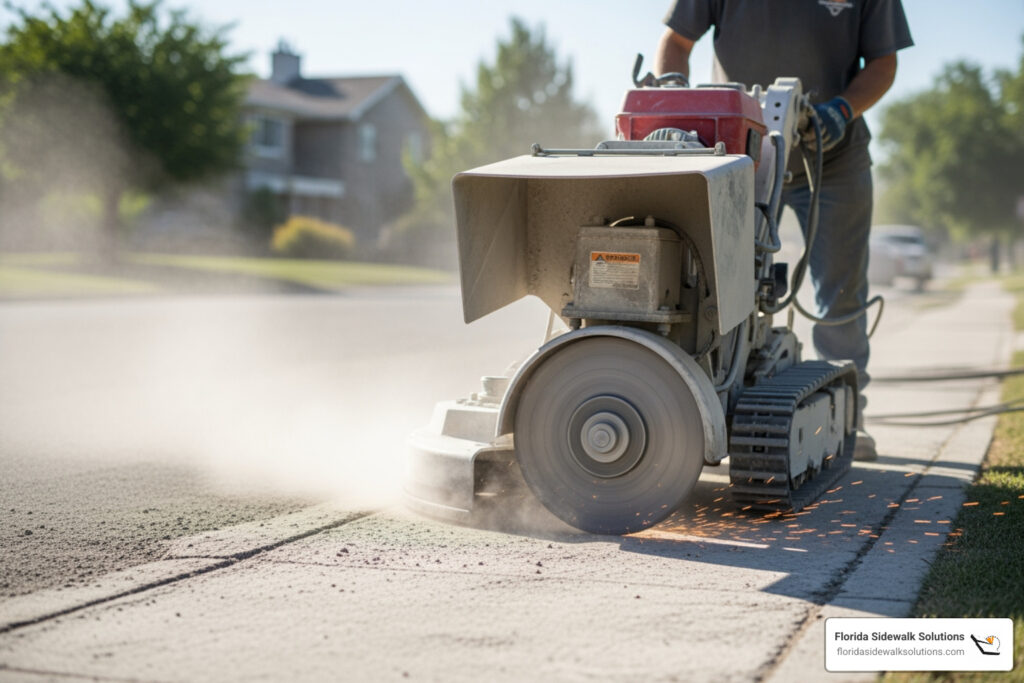
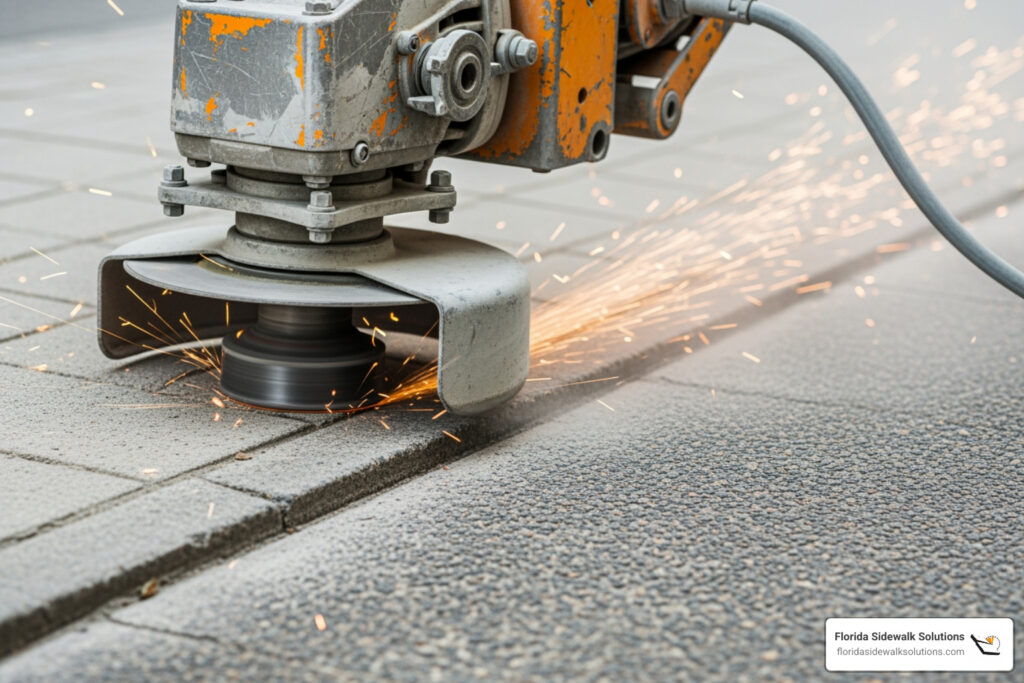
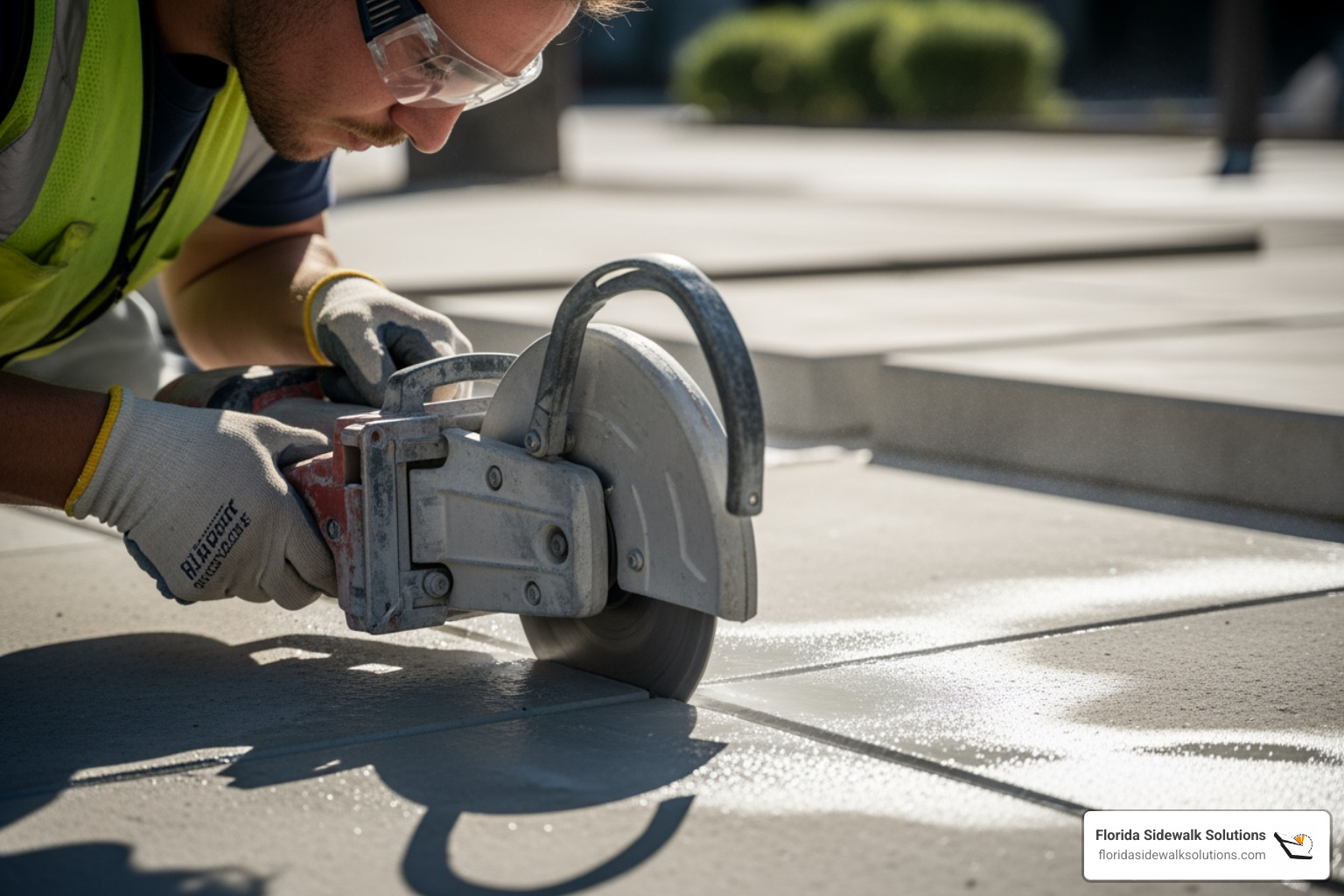
Our mission is to make sidewalks safe. Our patented process creates ADA-compliant sidewalks, eliminates trip hazards, and saves you money. Our philosophy is simple: “Cut it, don’t grind it!”
Traditional methods like grinding often fail to reach the edges of sidewalk panels, leaving residual hazards and an ugly, rough finish. Full removal and replacement is effective but extremely expensive, disruptive, and time-consuming.
Our patented cutting method is different. We use precision equipment to make clean, accurate cuts that level concrete panels and completely eliminate trip hazards. This ensures:
- Guaranteed ADA Compliance: We create a smooth transition with no more than a 1/4 inch vertical change.
- Complete Hazard Removal: Our equipment reaches all areas, including tricky spots near gutters or walls.
- Minimal Disruption: The process is quick and clean, keeping pedestrian traffic flowing.
- Cost Savings: Our method is significantly less expensive than removal and replacement.
Why the Florida Sidewalk Solutions Method Stands Out
Our method provides superior results compared to other options.
- vs. Grinding: Grinding leaves rough marks, often fails to fully remove the hazard at the edges, and may not meet ADA standards. Our cutting method creates a clean, smooth, fully compliant repair.
- vs. Removal/Replacement: Tearing out concrete is the most expensive and disruptive option, with long cure times and significant waste. Our cutting method preserves the existing concrete, saving time, money, and the environment.
By avoiding grinding and replacement, you avoid dust, noise, high costs, and long closures. You get a long-lasting, smooth repair that blends seamlessly with your existing sidewalk, eliminating the ‘patch job’ look and protecting your property from liability.
The Professional Process for Sidewalk Trip Hazard Repair
Our professional process ensures a thorough and lasting repair:
- Initial Assessment: We conduct a detailed inspection, using advanced survey methods to map and document every trip hazard across your property in areas like Coral Springs, Fort Myers, and West Palm Beach.
- Determining the Cause: Our technicians identify the root cause of the displacement, whether it’s soil settlement, tree roots, or drainage issues.
- Repair Strategy & Precise Cutting: We use our patented cutting method to precisely level the uneven slab, restoring it to ADA compliance. Our skilled technicians work quickly and cleanly with minimal disruption.
- Finishing and Final Inspection: We ensure the repaired area is smooth and free of sharp edges. Every repair is then rigorously checked to guarantee it exceeds ADA standards, leaving you with a truly safe and accessible sidewalk.
Preventing Future Sidewalk Cracks and Hazards
While we’re experts in cracked concrete repair and trip hazard removal, we also believe in prevention. Proactive steps can significantly reduce the likelihood of future sidewalk cracks, saving you money and headaches down the road.
Fixing a trip hazard is important, but preventing the next one is even better. Here’s how to keep your sidewalks safe and level for years to come.
- Proper Installation: A durable sidewalk starts with a high-quality concrete mix and a properly prepared, compacted sub-base. This prevents the soil settlement that causes most uneven slabs.
- Control Joints: These planned grooves guide natural cracking into neat, straight lines instead of random patterns. They are essential for managing the stress from temperature changes and shrinkage.
- Adequate Drainage: In Florida, managing water is key. Ensure the landscape is graded to direct rainwater away from sidewalks. Poor drainage erodes the base soil and is a primary cause of trip hazards.
- Sealing Concrete: Applying a quality sealant to new or repaired concrete protects it from water absorption and UV damage, extending its lifespan.
- Manage Tree Roots: Regularly inspect for and address invasive tree roots that can lift concrete slabs. Root barriers can help prevent future damage.
- Annual Inspections: Walk your property annually to spot minor cracks or slight unevenness early. Catching problems before they become major trip hazards saves time, money, and reduces liability.
Conclusion: The Path to Safe, Smooth Sidewalks
We’ve covered how to spot a harmless crack versus a dangerous trip hazard and why the right repair approach is critical. Cracked concrete repair is about safety, liability protection, and preserving property value.
Remember: while minor surface cracks can be a DIY job, any height difference of more than 1/4 inch is a trip hazard that requires professional attention to meet ADA compliance.
At Florida Sidewalk Solutions, our patented cutting method eliminates trip hazards completely, quickly, and affordably—without the high cost of replacement or the incomplete results of grinding. We level uneven slabs with precision, creating sidewalks that are genuinely safe and ADA-compliant.
Whether you manage property in Miami, Fort Lauderdale, or Boca Raton, the stakes are too high to ignore trip hazards. Prevention is key, but when a hazard already exists, you need a solution that works.
Don’t let cracked sidewalks become your liability. The path to safe, smooth, ADA-compliant walkways starts with one simple step.
Find expert sidewalk trip hazard repair services near you
We’re ready to help communities across Florida—from Davie to Coral Springs, West Palm Beach to Fort Myers—create sidewalks that everyone can walk on safely. Because at the end of the day, that’s what matters most.