In Florida HOA communities, responsibility for sidewalk repair costs depends on whether the sidewalk is common property, a public right-of-way, or falls within an individual lot. Most HOA governing documents assign maintenance of common-area walkways to the association, but the details vary by community. Understanding who pays — and who is liable when someone trips — is essential for every board member and property manager in Palm Beach and Broward counties.
- Florida HOA governing documents (CC&Rs, bylaws) are the first place to determine who owns repair responsibility for any sidewalk.
- Common-area sidewalks are almost always the HOA’s financial and legal responsibility; sidewalks in the public right-of-way may shift liability to the municipality.
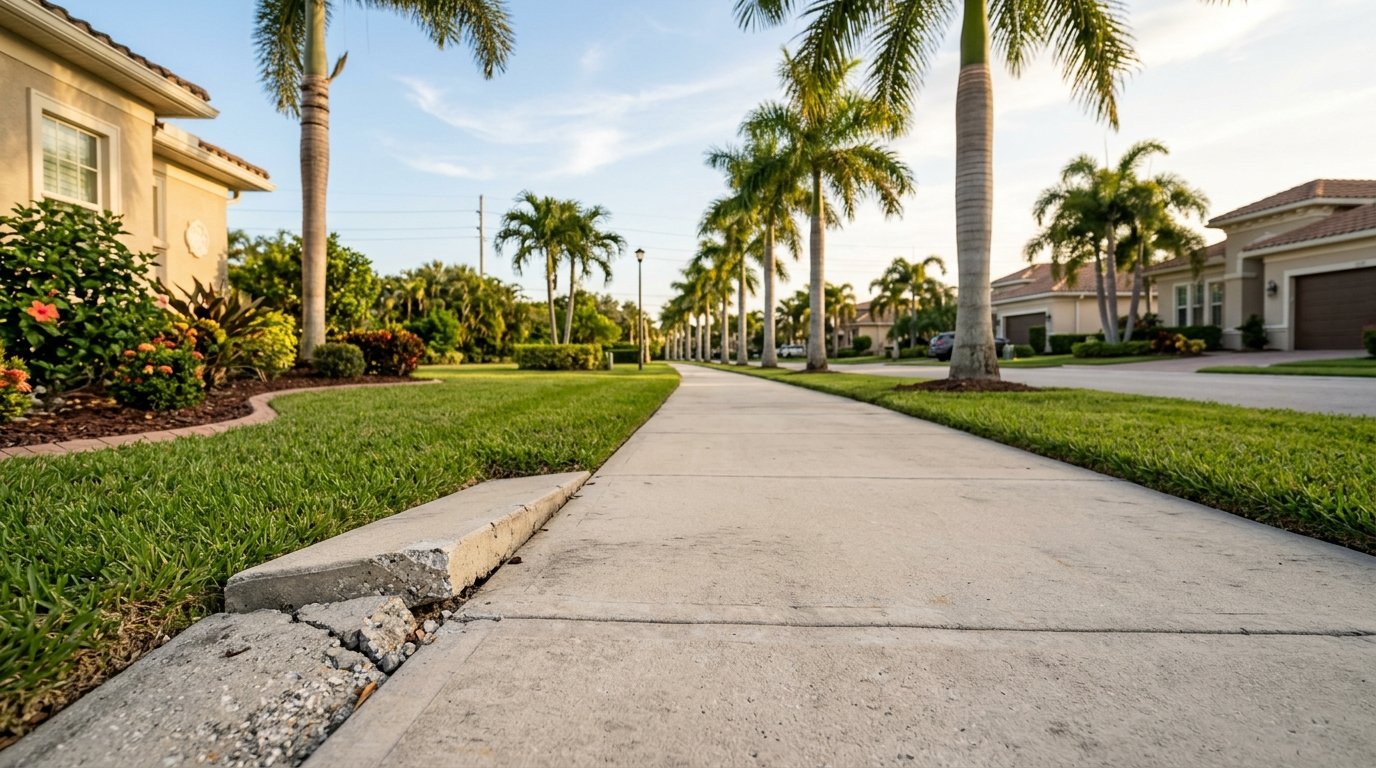
- ADA compliance is not optional — vertical displacements greater than 1/4 inch are trip hazards under federal standards and can expose the HOA to litigation.
- Patented concrete cutting is typically 70–90% less expensive than full sidewalk replacement, making proactive repair a sound financial decision for budget-conscious boards.
- Documenting inspections and repairs is as important as completing them — good records support the HOA’s defense if a claim is filed.
How Florida Law Frames HOA Sidewalk Responsibility
Florida’s Homeowners’ Association Act (Chapter 720, Florida Statutes) requires HOAs to maintain common areas and amenities in good condition. If your community’s walkways are designated common property in the Declaration of Covenants, Conditions, and Restrictions (CC&Rs), the association is legally responsible for keeping them safe and well-maintained. The statute does not specify sidewalks by name, which is precisely why reviewing your own governing documents first is non-negotiable.
When a walkway sits inside the municipal right-of-way — the strip of land between the street curb and the property line — ownership and maintenance obligations can shift to the local government. That said, municipalities in Palm Beach County and Broward County often pass ordinances holding abutting property owners or associations responsible for the condition of right-of-way sidewalks adjacent to their land. The practical result: the HOA may still be on the hook for repairs even if the land technically belongs to the city or county.
Never assume a sidewalk is the municipality’s problem just because it lies in the right-of-way. Check your local municipal code and your HOA’s governing documents before deciding not to act. Waiting for clarity while a hazard sits unaddressed increases liability exposure significantly.
When Homeowners Bear Individual Responsibility
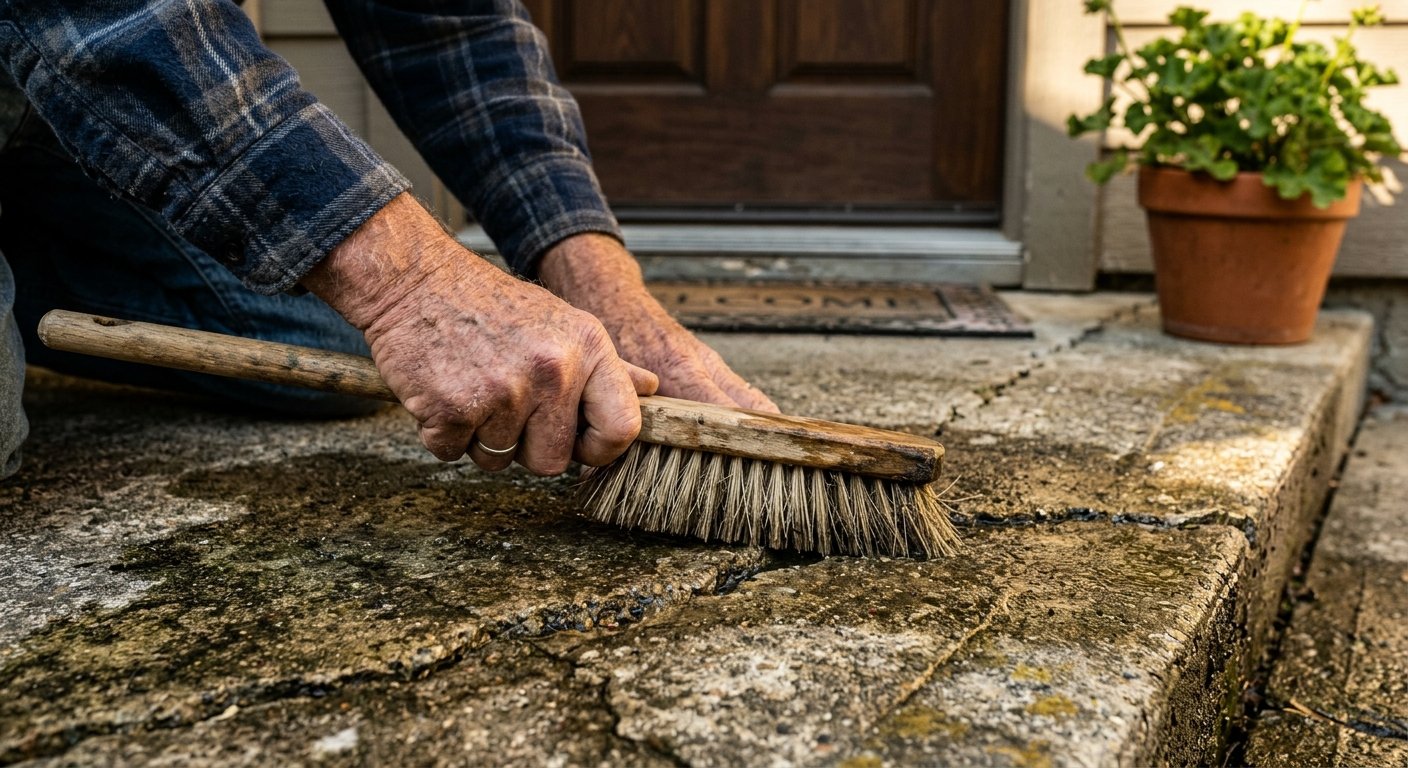
In some HOA communities — particularly those with fee-simple lots where the walkway directly abuts a homeowner’s unit — the CC&Rs may place maintenance responsibility on the individual homeowner rather than the association. This is more common with private entrance paths or courtyard walkways than with shared community sidewalks. Even in these cases, however, the HOA board has a duty to enforce the community’s maintenance standards and may be named in a lawsuit if a guest trips on a hazardous surface and the board failed to act on a known condition.
The safest posture for any HOA board is to treat every unresolved walkway defect as a shared liability risk until the governing documents clearly confirm otherwise. Proactive inspection and repair programs are the most effective way to limit that exposure.
The ADA Compliance Dimension
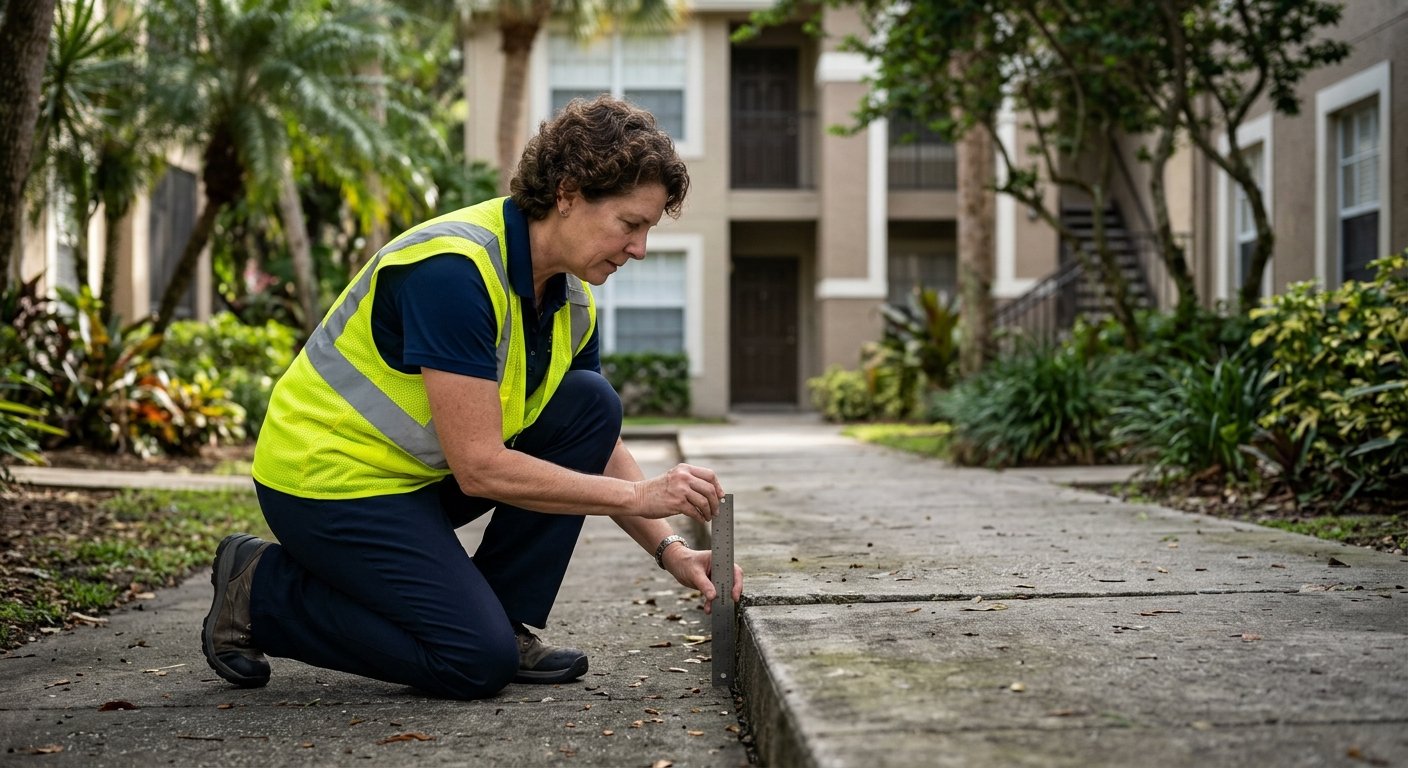
For communities that include commercial facilities, multi-family rental units, or public accommodation areas, the Americans with Disabilities Act adds a federal compliance layer that goes beyond HOA bylaws. Under ADA accessibility standards, any vertical change in a walking surface greater than 1/4 inch constitutes a trip hazard. Changes between 1/4 inch and 1/2 inch must be beveled at a slope no steeper than 1:2. Anything beyond 1/2 inch vertical displacement requires full correction.
Even purely residential HOAs serving communities with aging populations have strong reasons to pursue ADA-level compliance. Accessible, even walkways reduce fall risks for older residents and protect the association from negligence claims. For a deeper look at what these standards mean for your property, this guide to ADA sidewalk compliance for Florida property managers walks through the specific requirements boards need to understand.
A 1/4-inch vertical displacement is all it takes to create a federally recognized trip hazard — and a compelling basis for a personal injury claim.
What Happens When Someone Falls
Florida follows a comparative negligence framework under Florida Statutes § 768.81, meaning fault can be distributed among multiple parties. If a resident or visitor trips on a defective community sidewalk, the HOA can be found partially or fully negligent if it knew — or reasonably should have known — about the hazard and failed to repair it. Courts look at inspection frequency, maintenance records, and how long the hazard existed before the incident. A broken or uneven sidewalk that appears in multiple resident complaints, board meeting minutes, or prior inspection reports is extremely difficult to defend.
The financial consequences extend beyond any judgment. Legal defense costs, increased insurance premiums, and potential loss of coverage all flow from premises liability claims. Boards that treat sidewalk safety as a budget nuisance often discover it becomes a much larger budget crisis after a single serious fall.
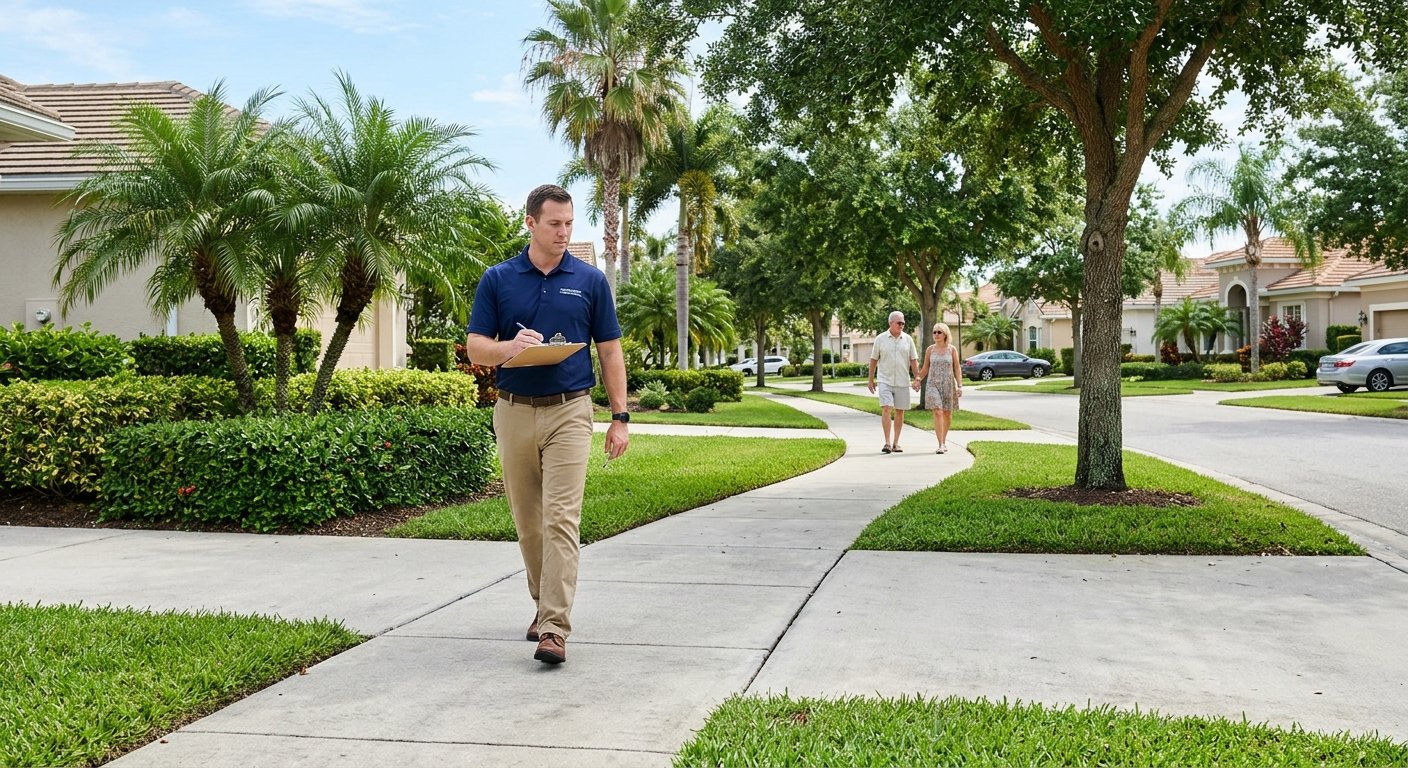
Conduct documented walkway inspections at least twice per year and after significant rain events. Keep written records of every identified defect, the repair decision made, and the date the repair was completed. This paper trail is your board’s best defense if litigation arises.
Repair Options: What Actually Makes Financial Sense
When an HOA budget committee sees the word “sidewalk replacement,” the conversation often stalls. Full concrete replacement is expensive, disruptive, and generates significant construction waste. For boards looking at cost-effective solutions that still meet ADA standards and eliminate trip hazards, patented precision concrete cutting technology is the approach that delivers lasting results without the demolition-level price tag.
Unlike surface grinding — which shaves the top of the raised slab but can leave a rough, uneven finish and rarely achieves the precise tolerances required by ADA standards — precision cutting removes the displacement cleanly. The result is a smooth, beveled edge that meets the 1:2 slope requirement, looks professional, and holds up over time. There’s no rubble to haul away, no extended lane closures, and no replacement cost. Florida Sidewalk Solutions has delivered this approach to HOAs and property managers across Palm Beach County and Broward County for over 20 years.
For those weighing the options, this comparison of sidewalk grinding versus replacement explains the differences clearly. And for communities where the root cause of heaving or cracking is a structural issue, understanding why uneven sidewalks fail in the first place helps boards make smarter long-term maintenance decisions.
Review governing documents
Confirm whether the sidewalk is common property, a right-of-way surface, or individual-lot responsibility before assigning repair costs.
Conduct a documented inspection
Walk the entire community with a measuring tool. Flag every vertical displacement greater than 1/4 inch and photograph each hazard with a date stamp.
Get a professional assessment
Have a licensed sidewalk safety specialist evaluate which hazards can be corrected by precision cutting versus those requiring more involved intervention.
Prioritize and repair
Address the highest-severity hazards first — especially those on high-traffic routes near entrances, pools, or parking areas — and work systematically through the remainder.
Document completion and schedule follow-up
Record every repair with before-and-after photos, the method used, and the date. Schedule the next inspection cycle so the board maintains an ongoing, defensible safety program.
Budgeting for HOA Sidewalk Repair in 2026
Boards often delay repairs because they are waiting for the next budget cycle. This is one of the costliest decisions an HOA can make — not because repair costs increase dramatically over time, but because the legal exposure grows every day a documented hazard goes unaddressed. Precision cutting repairs can typically be completed in a single crew visit with minimal disruption to residents, which also means no prolonged closures of amenity areas or access routes.
Boards that include sidewalk safety inspections as a recurring line item in their reserve studies are better positioned to respond quickly when hazards appear. If your community has never had a professional sidewalk safety assessment, starting with one is the single most impactful step you can take this year. For municipal context on how this technology scales across large sidewalk networks, this overview of how concrete cutting saves municipalities money offers relevant benchmarks.
Frequently Asked Questions
Who is legally responsible for HOA sidewalk repair in Florida?
Responsibility is determined primarily by your HOA’s CC&Rs and bylaws. Common-area sidewalks are typically the association’s obligation under Florida Statutes Chapter 720. Sidewalks in the municipal right-of-way may involve the local government, but local ordinances in Palm Beach County and Broward County sometimes require abutting owners or associations to maintain those surfaces regardless of who owns the land.
What is the ADA trip hazard threshold for sidewalks?
Any vertical displacement greater than 1/4 inch is a trip hazard under ADA accessibility standards. Changes between 1/4 inch and 1/2 inch must be beveled at no steeper than a 1:2 slope. Displacements exceeding 1/2 inch require full correction. These thresholds apply regardless of whether the sidewalk serves a commercial or residential property.
Can the HOA pass sidewalk repair costs to individual homeowners?
Only if the governing documents specifically assign maintenance of that sidewalk section to the individual homeowner. For most shared community walkways, the association bears the cost. Even when the CC&Rs allow cost assignment to residents, the HOA board may still carry liability exposure if it was aware of a hazard and failed to ensure it was corrected promptly.
Is precision cutting better than grinding for HOA sidewalk repair?
Yes, for most trip hazard applications. Precision cutting removes the displacement to achieve a clean, beveled edge that meets ADA slope requirements. Grinding can leave a rougher finish and may not achieve the precise tolerances needed for compliance. Cutting also produces no demolition waste and requires significantly less site disruption — both important considerations in active residential communities.
How often should an HOA inspect its sidewalks?
At minimum, twice per year — and after significant weather events that could accelerate soil movement or root heaving. Regular, documented inspections are one of the strongest defenses against premises liability claims, because they demonstrate the board’s active commitment to community safety rather than reactive neglect.
Schedule a Sidewalk Safety Assessment for Your Community
Florida Sidewalk Solutions serves HOAs and property managers throughout Palm Beach County and Broward County — contact us today to arrange a professional evaluation and get a clear picture of your community’s liability exposure and repair options.
About Florida Sidewalk Solutions
Florida Sidewalk Solutions specializes in sidewalk safety, ADA compliance, and trip hazard prevention for Florida property managers, municipalities, and commercial property owners. Using patented concrete cutting technology, they deliver cost-effective repairs that are 70-90% less expensive than replacement, with minimal disruption and no demolition waste. With 20 years of Florida-specific experience, they provide the expert solution for eliminating liability risks while meeting ADA standards and legal requirements. Visit floridasidewalksolutions.com →