Why Concrete Sidewalk Trip Hazards Are More Than Just an Eyesore
Concrete Sidewalk Repair for trip hazards is about safety, legal compliance, and cost control. Managing municipal sidewalks means you need quick, affordable, and permanent solutions for trip hazards.
Quick Answer: The 3 Essential Changes for Effective Sidewalk Repair
- Identify trip hazards proactively – Focus on safety risks (1/4 inch+ changes in level) rather than just cosmetic damage
- Choose precision cutting over grinding or replacement – Save 40-60% compared to full replacement while meeting ADA standards
- Work with specialized professionals – Ensure compliance, minimize downtime, and get guaranteed results
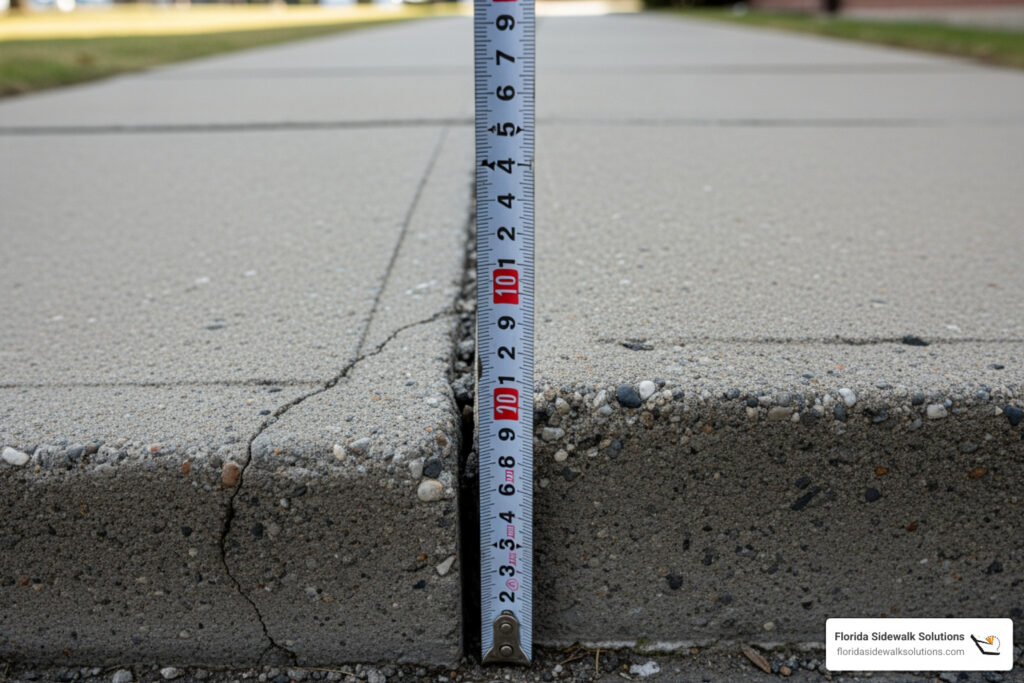
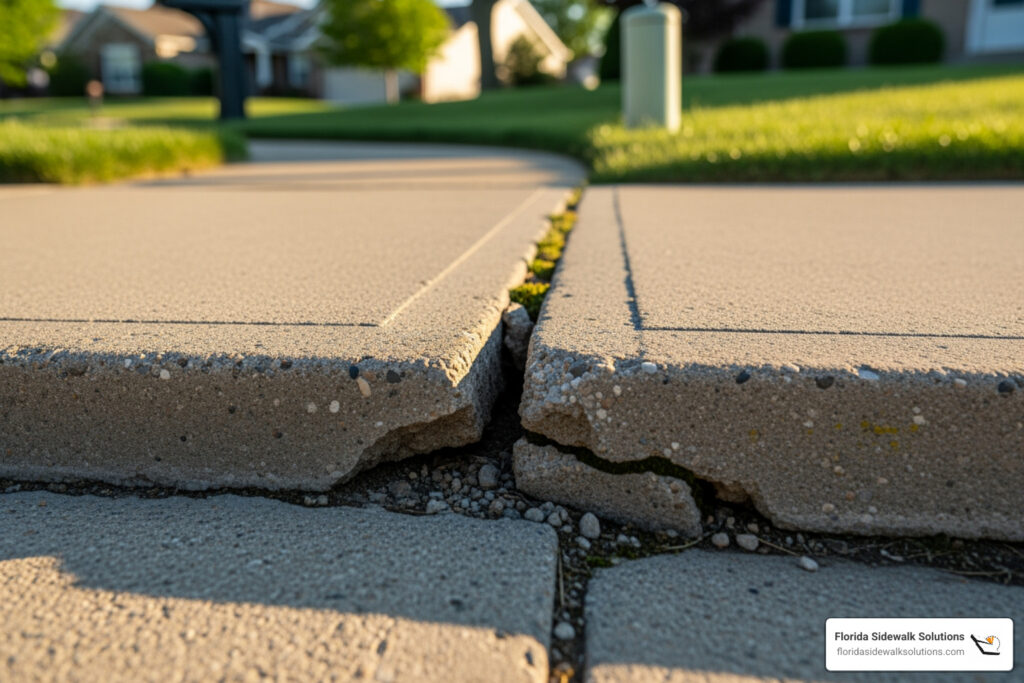
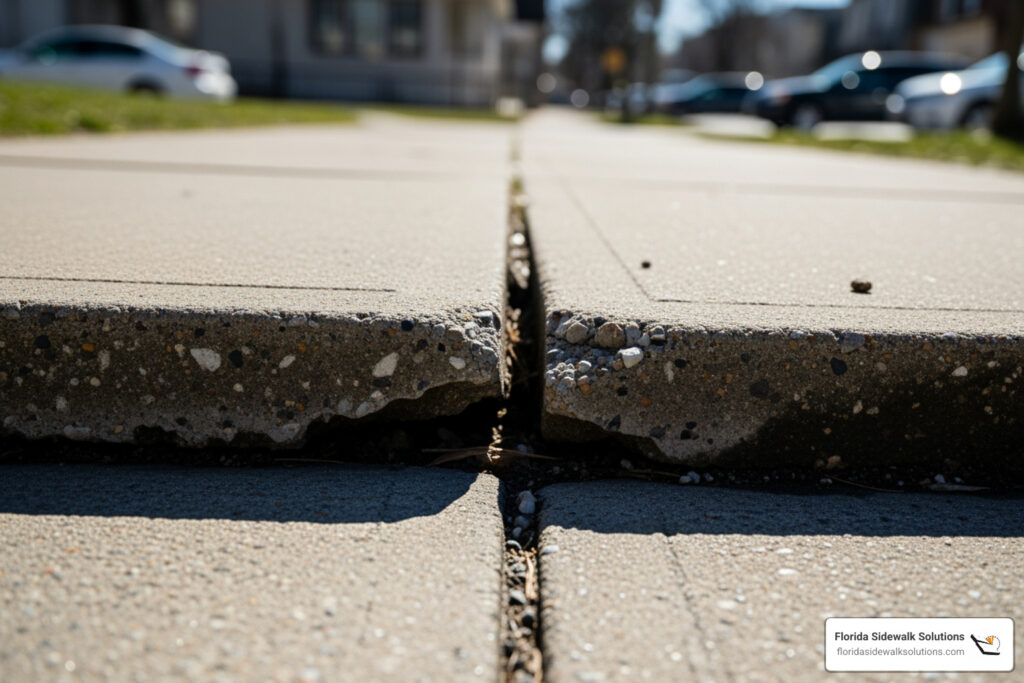
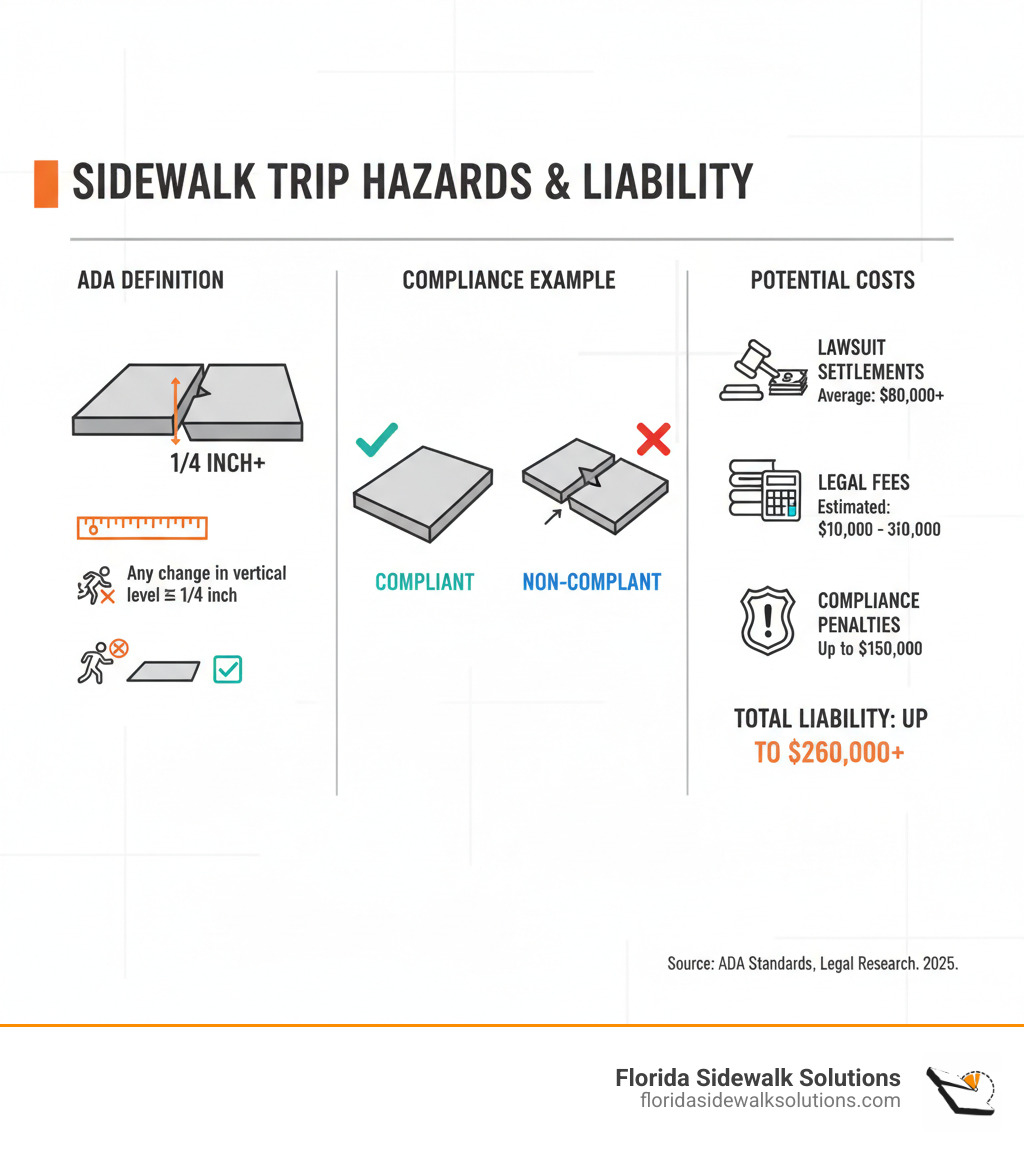
A raised sidewalk slab might seem minor, but under the Americans with Disabilities Act (ADA), any level change over 1/4 inch is a trip hazard. This small difference creates significant liability for municipalities and property managers.
Traditional sidewalk repair costs between $726 and $2,485 on average, or $5 to $15 per square foot. However, the cheapest option isn’t always the most cost-effective.
Grinding weakens concrete and often fails to achieve proper levelness. Full replacement is expensive, disruptive, and takes weeks to cure. Meanwhile, unresolved trip hazards expose you to lawsuits.
Florida Sidewalk Solutions uses a patented precision cutting method that removes trip hazards without the drawbacks of other methods. It’s faster than replacement, more effective than grinding, and ensures ADA compliance—all while keeping budgets in check and sidewalks open.
Change #1: Proactively Identify Hazards, Not Just Cosmetic Flaws
A common mistake in Concrete Sidewalk Repair is focusing on cosmetic flaws over safety. A hairline crack is an eyesore, but a 1/4-inch lip between slabs is a legal liability.
When we work with clients in Davie, Fort Lauderdale, Miami, and Coral Springs, our first step is to identify true trip hazards, not just cosmetic issues.
What Are the Signs That a Concrete Sidewalk Needs Repair?
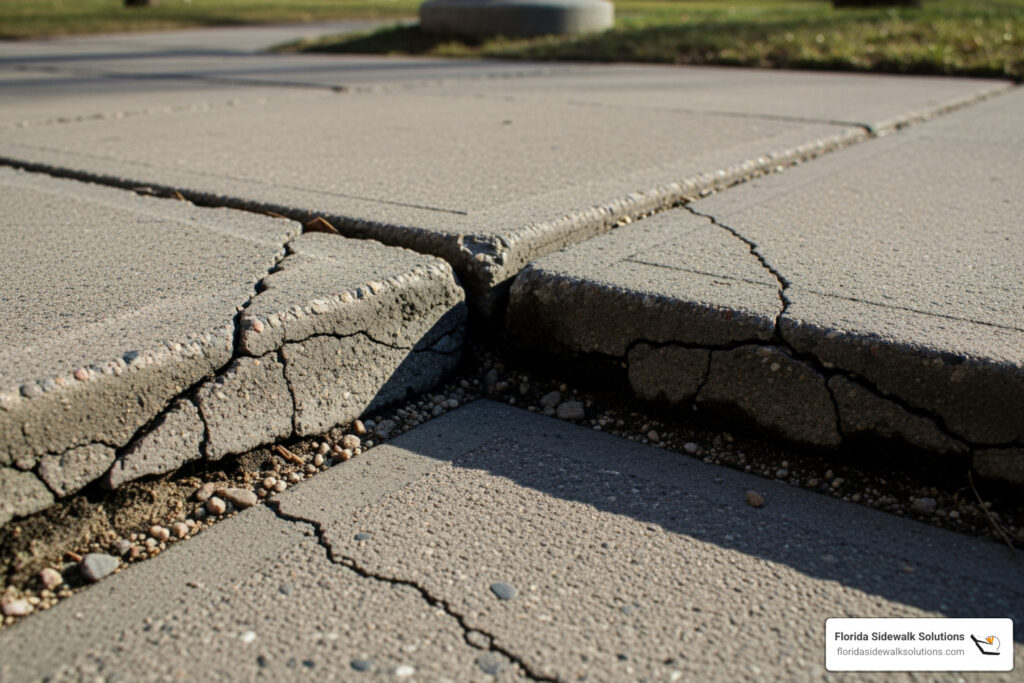
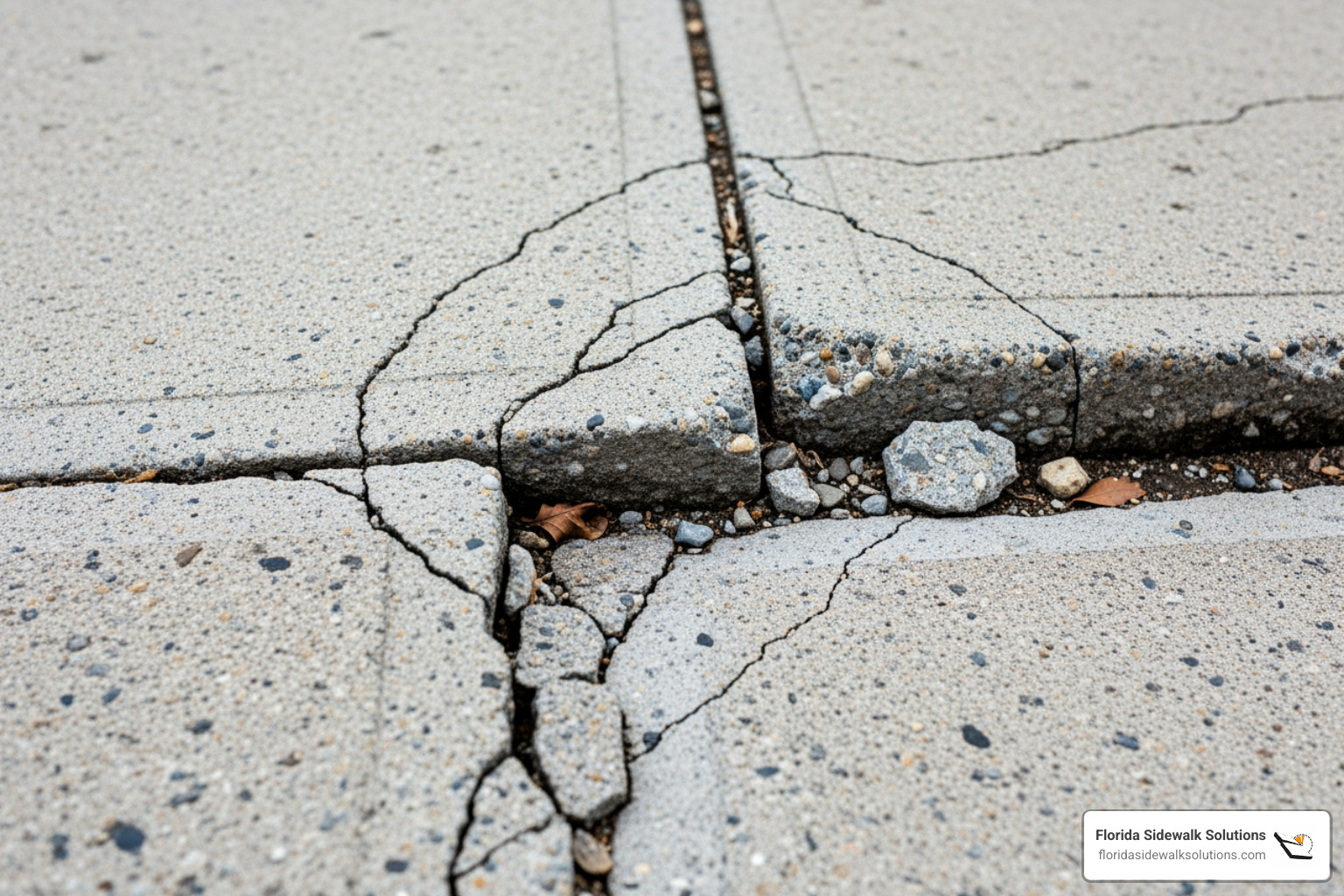
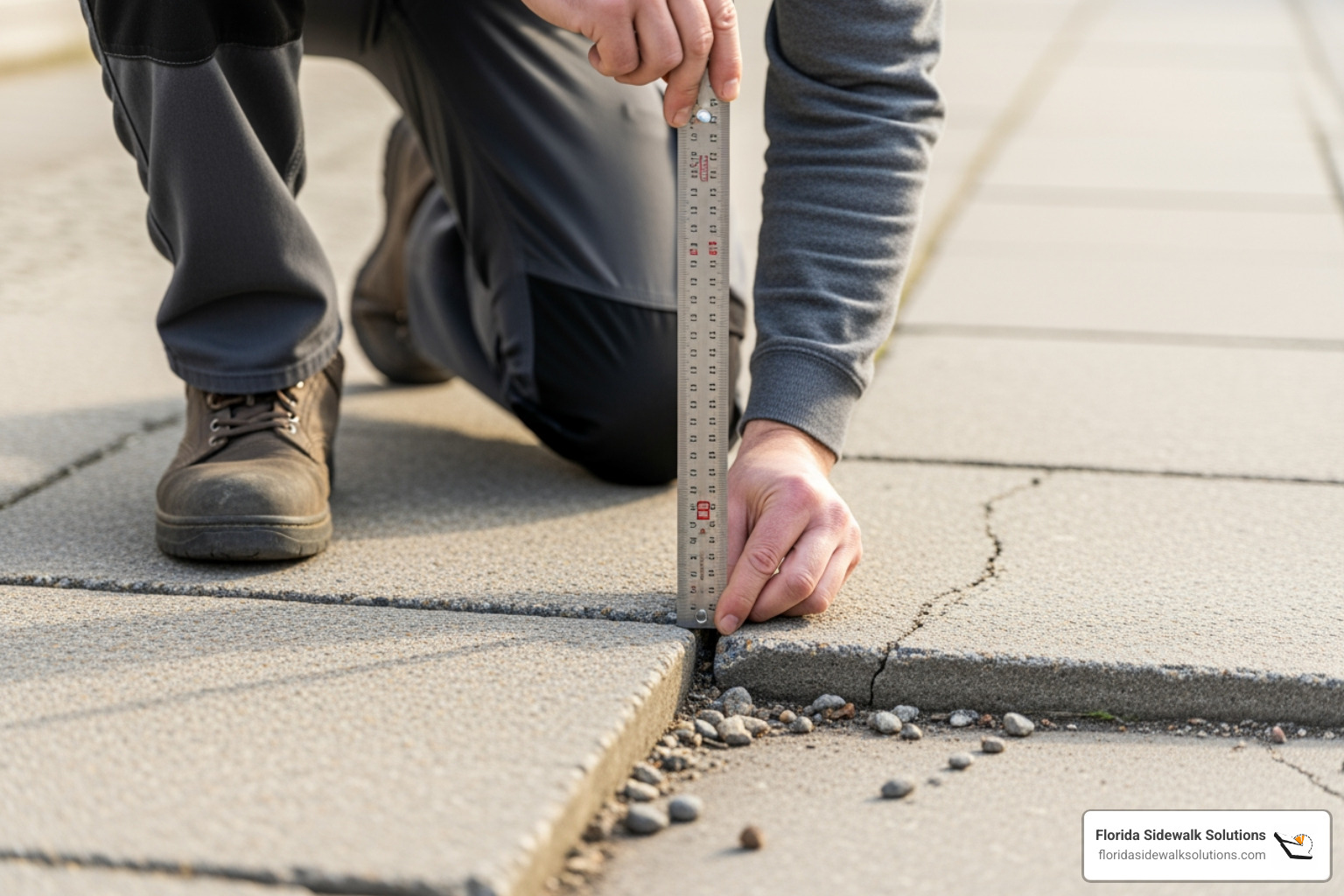
The most obvious sign is uneven slabs. If the height difference is over 1/4 inch, it’s a legal liability. Other signs include:
- Sunken concrete that creates puddles
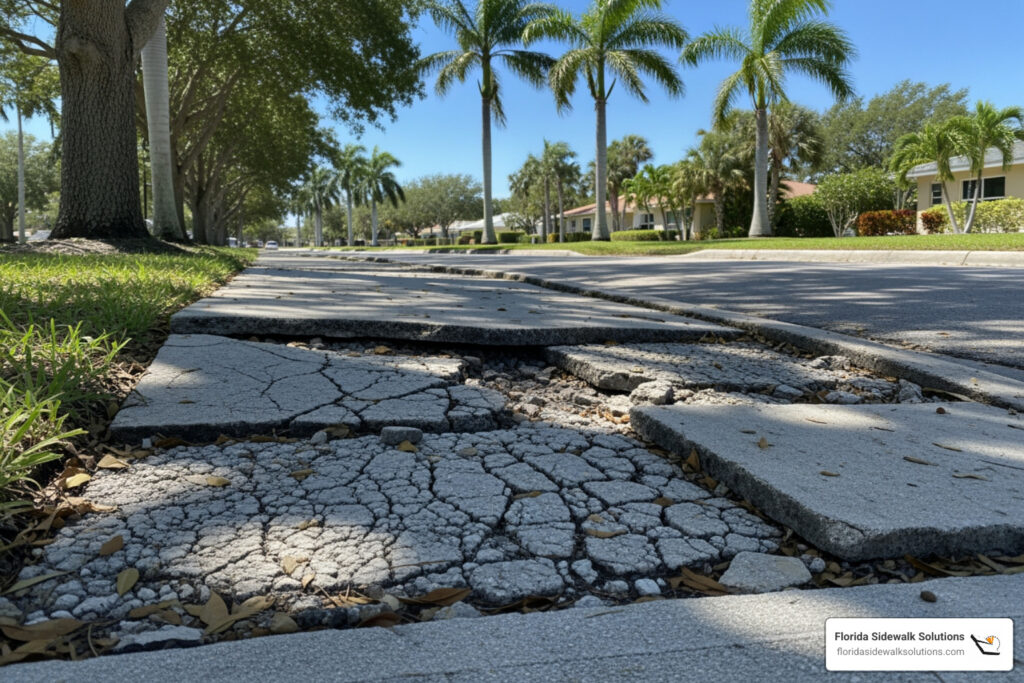
- Lifting or heaving from tree roots
- Spalling, where the surface crumbles, weakening the structure
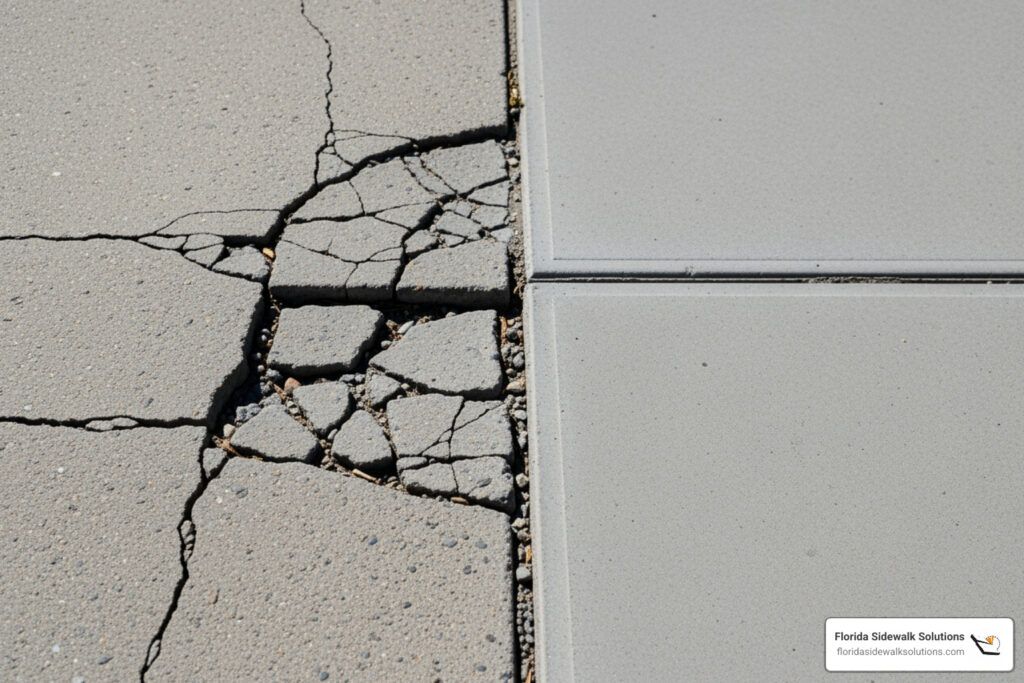
- Deep cracks that can catch shoe tips
- Water pooling after rain, indicating an uneven surface
What Are the Common Causes of Sidewalk Damage?
In Florida, common causes of sidewalk damage include:
- Tree roots pushing slabs upward
- Soil erosion and settlement from heavy rainfall, which undermines the concrete’s foundation
- Temperature fluctuations that cause expansion and contraction, widening cracks
- Poor installation, such as a weak base or inadequate drainage
- Heavy traffic from vehicles or constant foot traffic, which accelerates wear
The Critical Importance of ADA Compliance
The Americans with Disabilities Act (ADA) defines a trip hazard as any vertical change in level over 1/4 inch. This is federal law, not a suggestion. For property owners in Boca Raton, West Palm Beach, Fort Myers, and throughout Florida, this is critical, as you are typically responsible for maintaining adjacent sidewalks. That quarter-inch difference is the line between compliance and liability.
Ignoring these hazards increases the risk of injury and lawsuits. The cost of proactive Concrete Sidewalk Repair is always less than the cost of legal fees and settlements.
The good news? Once you know what to look for, identifying trip hazards becomes straightforward. Measure regularly, act quickly, and choose repair methods that eliminate the hazard rather than just hiding it.
Change #2: Choose the Right Repair Method for Trip Hazards
Not all sidewalk repairs are equal. For a trip hazard, your choice of repair method determines whether you get a lasting solution or a recurring problem. Many property managers try ‘quick fixes’ only to face the same hazard again. Let’s review what truly works for Concrete Sidewalk Repair.
| Method | Effectiveness (Trip Hazard Removal) | Cost (Relative) | Durability | ADA Compliance | Downtime (Pedestrian Access) |
|---|---|---|---|---|---|
| Florida Sidewalk Solutions Precision Cutting | Excellent (smooth, uniform finish) | Moderate | Long-term (maintains concrete integrity) | Fully Compliant | Immediate |
| Traditional Grinding | Fair (often leaves residual hazard) | Low | Short-term (weakens concrete, exposes pores) | Often Non-Compliant | Immediate |
| Full Replacement | Excellent | High | Long-term (if properly installed) | Fully Compliant | Days to Weeks |
| Patching | Poor (not for leveling trip hazards) | Very Low | Short-term (poor bonding, prone to failure) | Non-Compliant | 24+ hours |
| Concrete Leveling (Mudjacking/Polyjacking) | Good | Moderate-High | Long-term (addresses voids, but not surface flaws) | Can be Compliant | Same day |
Florida Sidewalk Solutions Precision Cutting: The Smart Choice for Trip Hazards
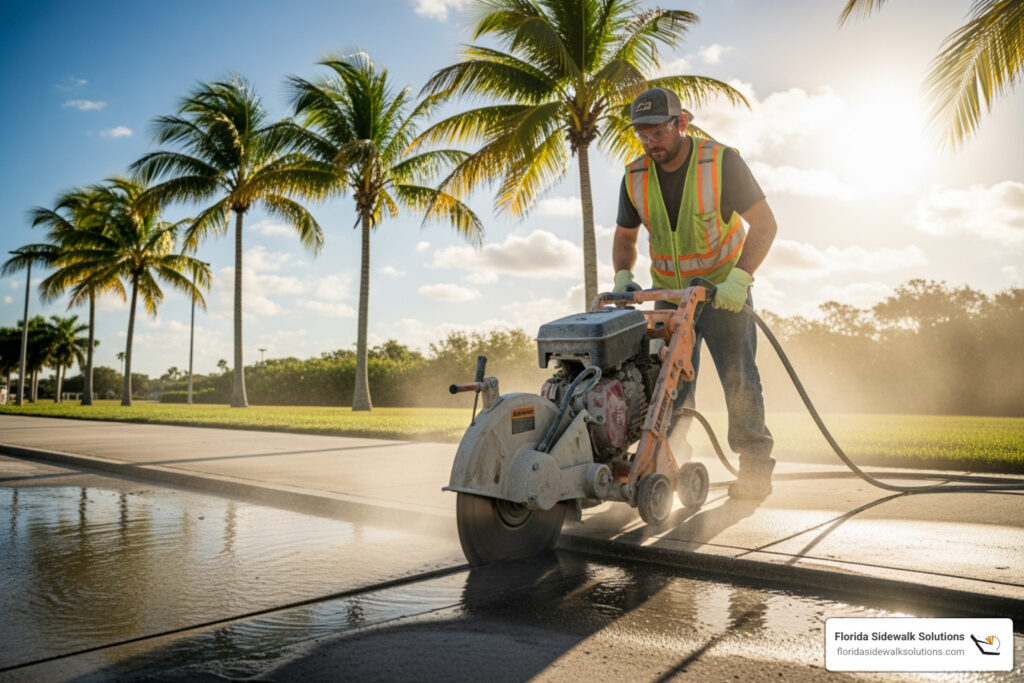
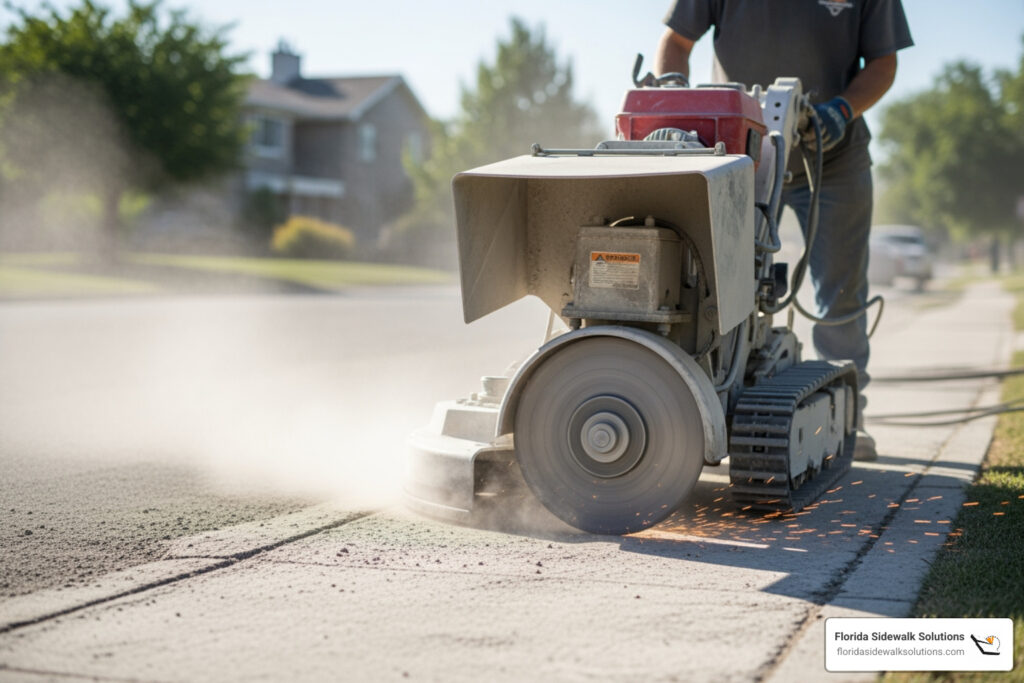
Our patented precision cutting method makes surgical cuts to remove the trip hazard completely while keeping your existing concrete intact. We create a smooth, uniform finish that transitions naturally between sections, leaving a clean, safe, and fully ADA-compliant walkway.
Our cutting method saves 40-60% compared to full replacement, which can cost $130 to $380 for a single slab before demolition and disposal fees. This allows you to fix more hazards within your budget—a significant advantage for municipalities.
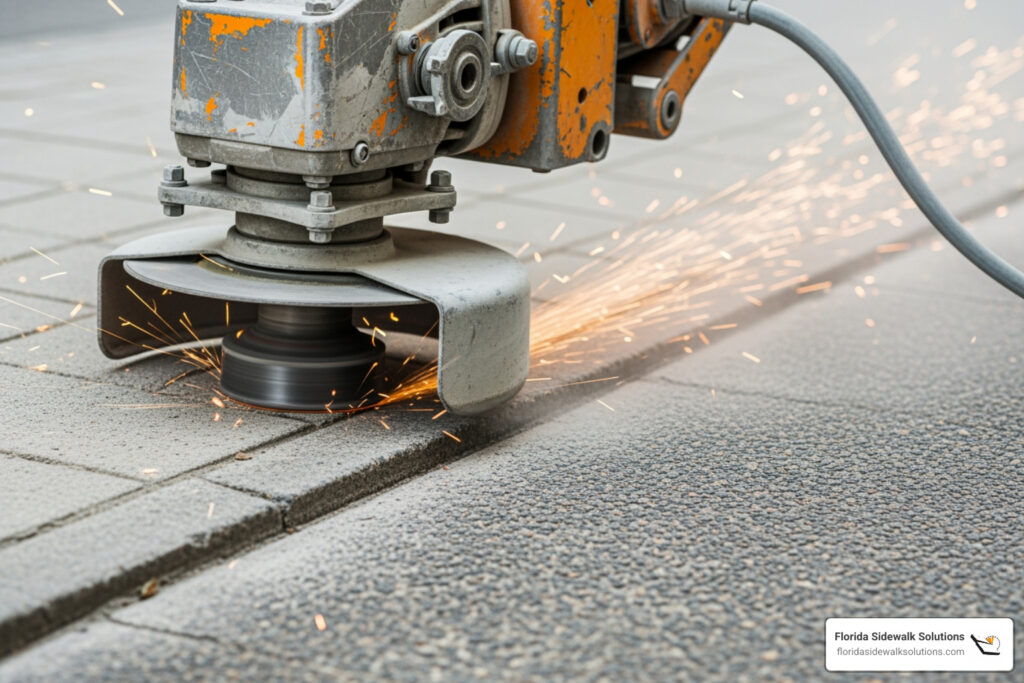
Unlike traditional grinding, which weakens concrete by removing the surface layer, our cutting method maintains the slab’s structural integrity.
A key benefit is zero downtime. Pedestrians can use the sidewalk the moment we finish. There’s no waiting for concrete to cure and no barricades, which is invaluable in busy Florida areas like Miami, Fort Lauderdale, and West Palm Beach.
Our patented technology allows us to make these precise cuts efficiently and effectively. It’s specialized equipment designed specifically for trip hazard removal.
Traditional Methods: Why They Fall Short for Trip Hazards
Traditional grinding is a cheap, short-term fix. It often can’t reach the edges of a slab, and the ground surface deteriorates quickly. It trades a current trip hazard for future deterioration.
Patching compounds are for cosmetic cracks, not for leveling uneven slabs. They bond poorly and fail quickly, offering no solution for trip hazards.
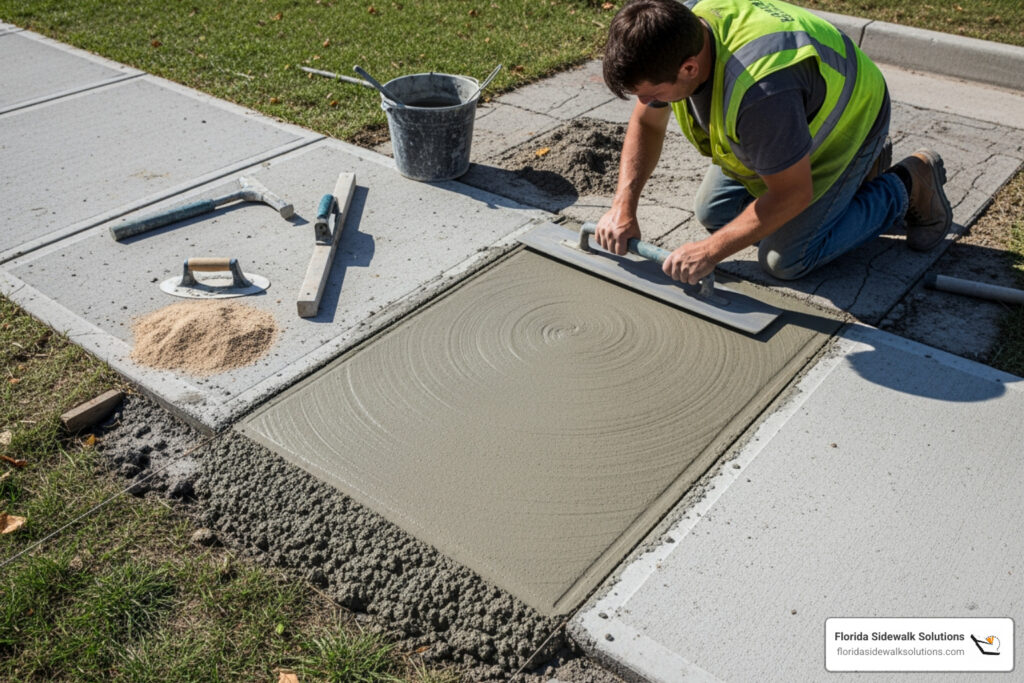
Full replacement is a durable but expensive and disruptive solution. It requires shutting down the sidewalk for weeks as the new concrete cures and is often overkill for a simple trip hazard.
Concrete leveling (mudjacking/polyjacking) lifts sunken slabs by filling voids underneath. It addresses the slab’s foundation, not the surface-level trip hazard at the joint.
For Concrete Sidewalk Repair focused on removing trip hazards, precision cutting offers the right balance of effectiveness, affordability, and speed. It’s the smartest choice for keeping Florida’s walkways safe and compliant.
The True Cost of Concrete Sidewalk Trip Hazard Repair
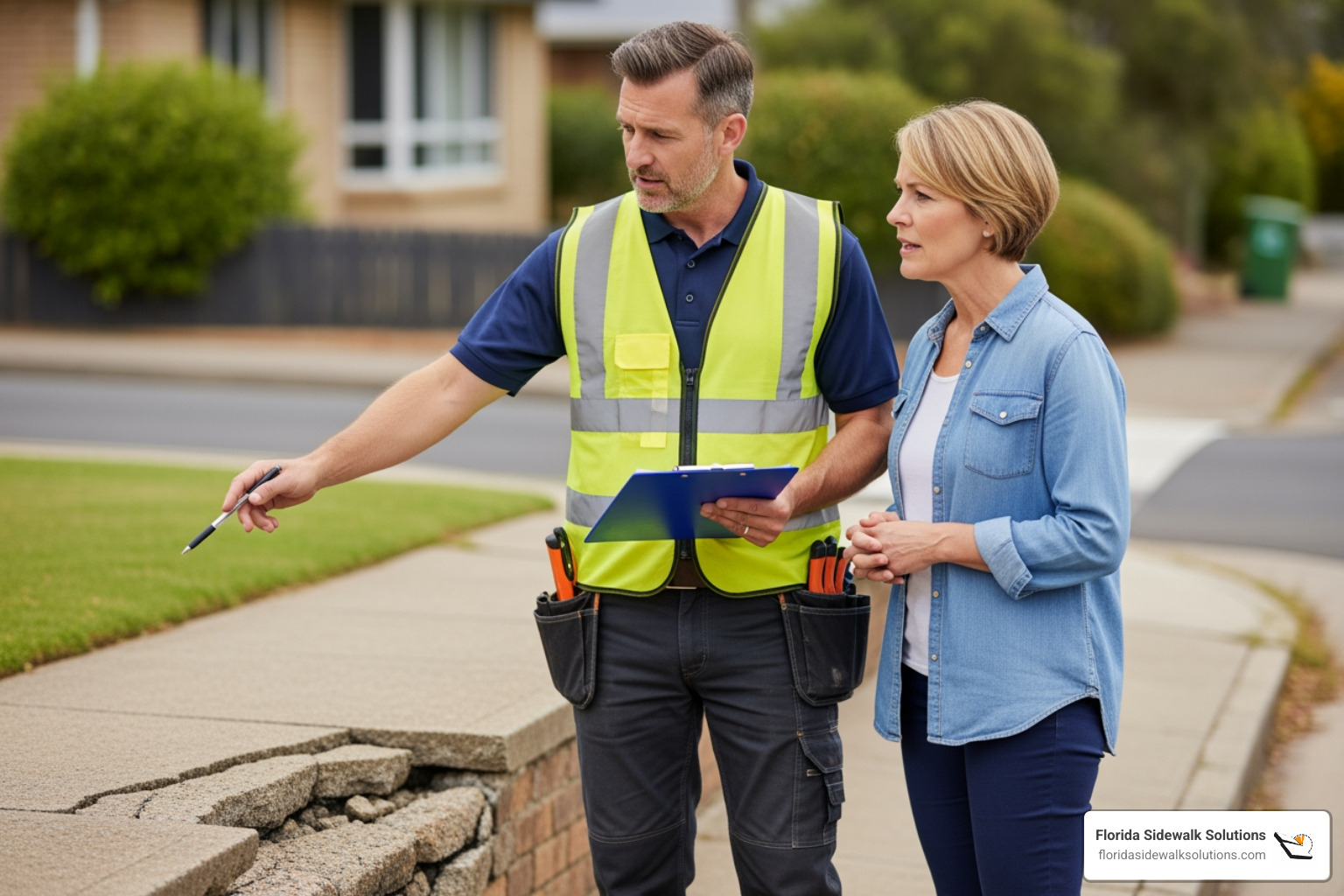
Understanding the true cost of concrete sidewalk repair means looking beyond the initial quote to the full financial picture, including hidden expenses.
Average Repair Costs: What the Numbers Say
Most concrete sidewalk repair projects cost between $726 and $2,485, or $5 to $15 per square foot. These numbers can be deceiving. A cheap grinding job may need to be redone, while a costly replacement is often overkill for a simple trip hazard.
Traditional grinding is inexpensive but weakens the concrete and often fails to meet ADA standards, making it a poor long-term investment.
Full replacement is the most expensive option. A single 5×5-foot slab can cost $130 to $380, not including demolition and disposal.
Our precision cutting method is more affordable than replacement and provides a permanent solution, making it a cost-effective choice.
Hidden Costs That Add Up
The initial quote for replacement is just the start. Be sure to factor in:
- Demolition fees ($2 to $6 per sq. ft.)
- Disposal costs (up to $230 per ton)
- Permit fees ($50 to $200, depending on the municipality)
- Downtime and disruption, which can inconvenience residents and customers for weeks.
When to Replace Concrete vs. Repair It
The key question is whether to repair or replace. For trip hazards, replacement is rarely needed unless the concrete is crumbling or structurally compromised. If the slab is solid but uneven, a targeted repair is more logical. Replacement is for widespread damage or when the concrete’s integrity is lost.
Our precision cutting is designed for situations where the concrete is sound but a trip hazard exists. We remove the hazard permanently, ensure ADA compliance, and save you 40-60% compared to replacement, without the associated demolition, disposal, or downtime costs.
That’s what we mean by cost-effective concrete sidewalk repair—not the cheapest option today, but the smartest investment for tomorrow.
DIY Fixes for Minor Issues vs. Professional Trip Hazard Removal
When you notice sidewalk damage, you might wonder if you can fix it yourself. For minor cosmetic issues, a DIY approach can work. However, there’s a major difference between patching a small crack and removing a trip hazard. Understanding this distinction is key to safety and liability protection.
DIY Concrete Sidewalk Repair for Minor Flaws
Minor flaws are cosmetic issues like hairline cracks or small surface imperfections that don’t create an uneven surface. For these, a DIY fix is possible. You’ll need supplies like concrete caulk or patching compounds, a wire brush, and safety gear.
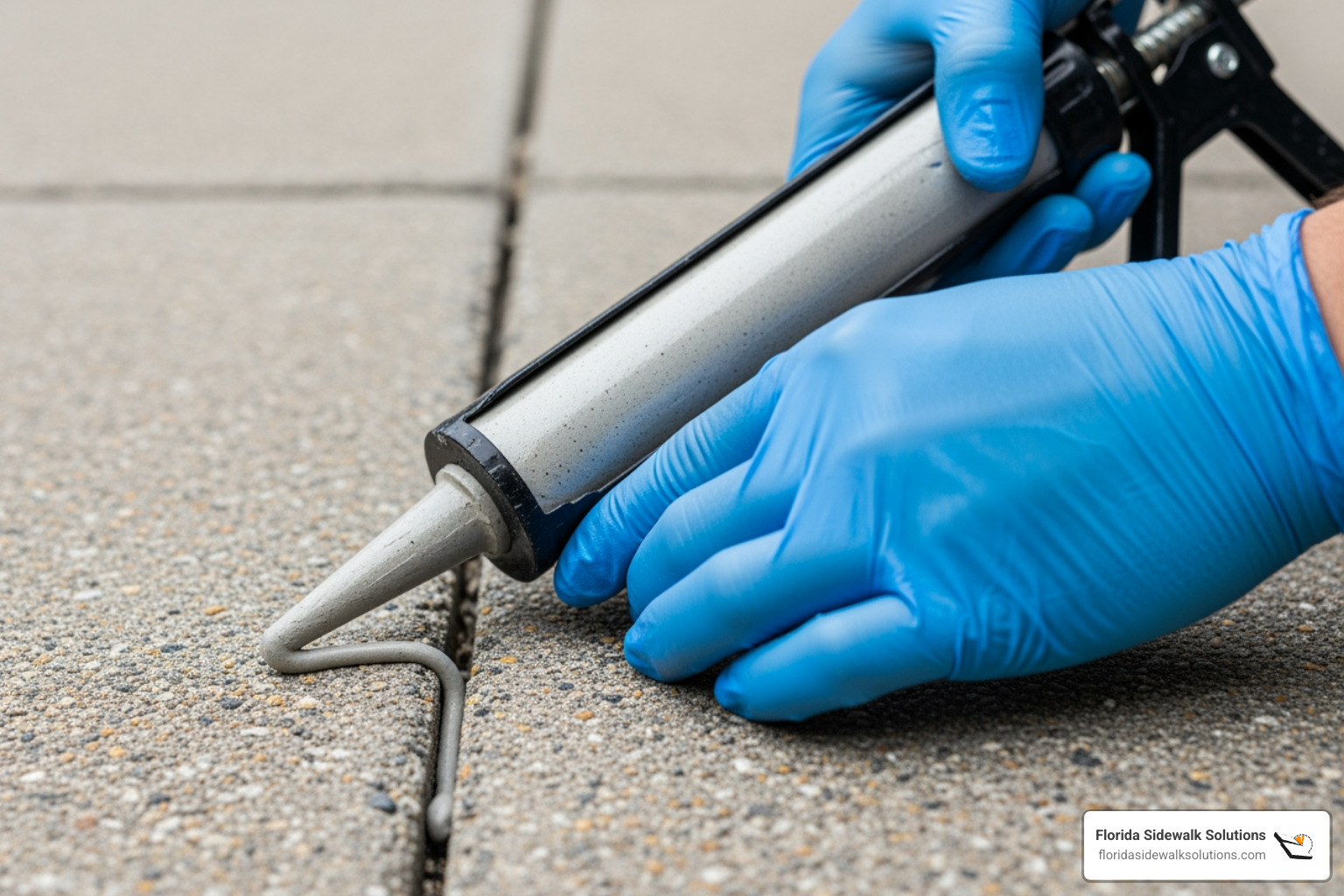
The process, detailed in resources like Simple Home Repairs: Cracks in Concrete Sidewalks, involves cleaning the area, applying the patch, and letting it cure. However, these methods are purely cosmetic. They cannot level uneven slabs or eliminate a trip hazard as defined by the ADA.
Why Professional Concrete Sidewalk Trip Hazard Repair is Essential
A trip hazard—a 1/4-inch or greater change in level—cannot be fixed with a patch kit. It requires professional intervention for several reasons:
- Specialized Equipment: Our patented cutting technology is designed to create a perfectly level, ADA-compliant transition. DIY tools lack this precision and can damage the concrete.
- Liability: As a property owner in Florida, you are responsible for keeping sidewalks safe. A professional, guaranteed ADA-compliant repair protects you from liability in case of an accident. A DIY attempt does not.
- Durability: Our precision cutting is a permanent solution that removes the hazard without compromising the concrete’s integrity, unlike temporary patches.
- No Downtime: We work efficiently, and the sidewalk is ready for immediate use. There is no waiting for concrete to cure, which is a major benefit for property managers in busy areas like Fort Lauderdale and Miami.
The bottom line? If you have a small cosmetic crack, try a DIY approach. But if you’re dealing with an uneven sidewalk that creates a trip hazard, professional intervention is essential for safety, compliance, and your own protection.
Frequently Asked Questions about Sidewalk Trip Hazard Repair
We hear the same concerns from property managers and homeowners all across Florida when they’re dealing with uneven sidewalks. Let’s walk through the questions that come up most often about Concrete Sidewalk Repair for trip hazards.
Who is responsible for sidewalk repairs: the homeowner or the city?
This varies by municipality, but in most Florida cities like Miami, Fort Lauderdale, and West Palm Beach, the adjacent property owner is responsible for sidewalk maintenance. This is usually detailed in local ordinances.
If a city issues a notice to repair, you typically have 30 days to act before facing fines or having the city bill you for the work. While there are exceptions, such as damage from city-owned trees, the property owner is usually liable.
To be certain, check your local ordinances and HOA bylaws. Regardless of who is responsible for the repair, you could face liability if someone is injured on the sidewalk in front of your property, making proactive repair a smart financial decision. For a general example of municipal rules, you can reference resources like Sidewalk Repair | Public Works, but always verify your local regulations.
How long can I expect a sidewalk trip hazard repair to last?
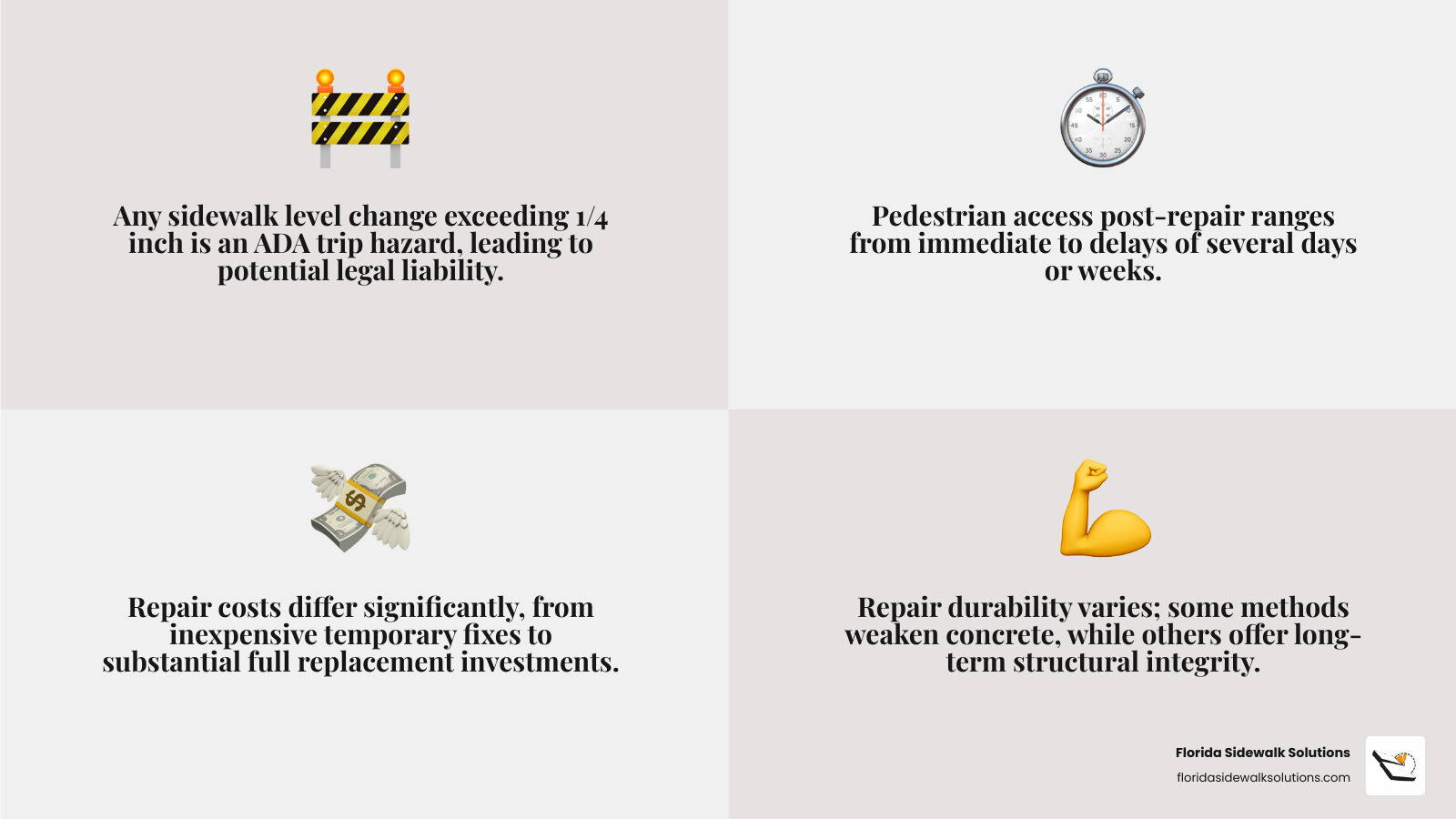
The longevity of a repair depends entirely on the method:
- Patching: A temporary fix that often fails within a few months to a couple of years. It is not suitable for leveling trip hazards.
- Grinding: A short-term solution. The ground surface is weakened and deteriorates faster than the original concrete.
- Full Replacement: Can last 20-30 years or more but is the most expensive and disruptive option.
- Precision Cutting: Our method provides a long-term solution. By removing the hazard without weakening the slab, the repair is designed to last for the remaining life of the concrete.
For any method to be permanent, the underlying cause of the damage (like tree roots) must also be addressed.
How long until I can walk on the repaired sidewalk?
Downtime is a major concern for property managers. The waiting period varies significantly by repair method:
- Florida Sidewalk Solutions Precision Cutting: The sidewalk is ready for pedestrian traffic immediately. There is zero downtime.
- Patching: Requires at least 24-48 hours of curing time, during which the area must be blocked off.
- Full Replacement: The sidewalk is closed for several days to weeks while the new concrete cures.
For minimizing disruption, our precision cutting method is the clear choice, especially in high-traffic areas like Coral Springs or Boca Raton.
Conclusion: A Safer Walkway is a Smart Investment
Safe walkways are essential across Florida, from Fort Lauderdale to Miami and Coral Springs. Concrete sidewalk repair for trip hazards is not just about fixing concrete; it’s about protecting people and minimizing your liability.
This guide covered three essential changes for effective sidewalk maintenance:
- Proactively identify hazards, not just cosmetic flaws. Focus on the ADA’s 1/4-inch rule to find dangerous uneven slabs before an accident occurs.
- Choose the right repair method. Avoid weak grinding or costly, disruptive replacement. Our patented precision cutting is a permanent, ADA-compliant fix that is more effective and affordable, with zero downtime.
- Rely on professional expertise for trip hazards. While DIY is fine for small cracks, the liability risk of a trip hazard demands a professional, guaranteed solution.
Proactively addressing sidewalk trip hazards saves money, protects pedestrians, and ensures ADA compliance. Florida Sidewalk Solutions specializes in this exact problem, using patented technology designed for trip hazard removal.
Our cutting method is a smarter way to handle concrete sidewalk repair—it respects your budget, timeline, and the safety of your community. Whether you manage property in Boca Raton, West Palm Beach, or Davie, we provide a swift, precise, and durable solution.
Ready to make your sidewalks safer? Learn more about our professional concrete sidewalk repair services and find how we can help you eliminate trip hazards for good.