
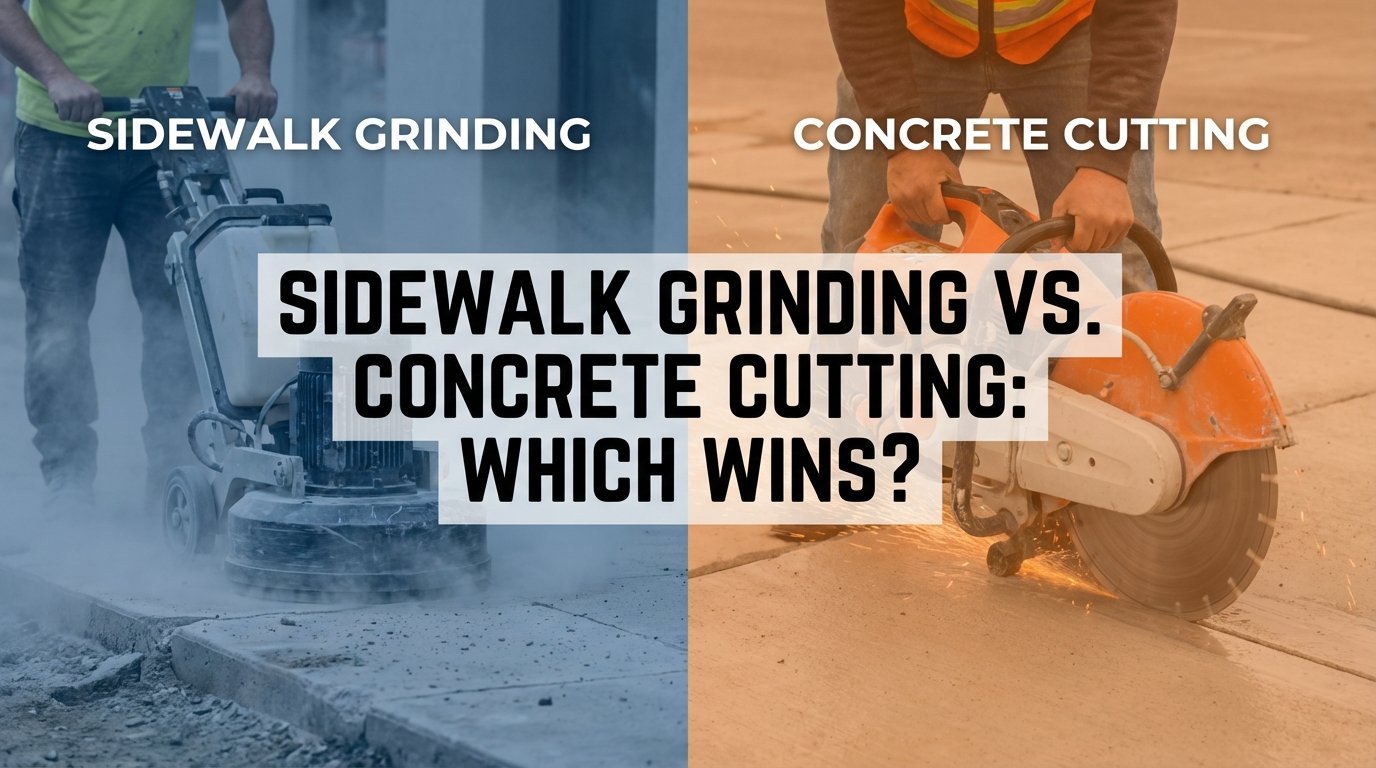
Property managers and municipal decision-makers face a critical choice when addressing sidewalk trip hazards: traditional grinding or precision concrete cutting technology. In 2026, with liability claims averaging $50,000 per trip-and-fall incident, selecting the wrong repair method can mean the difference between a lasting solution and an expensive do-over within months.
Understanding the fundamental differences between these technologies isn’t just about repair quality—it’s about protecting your budget, maintaining ADA compliance, and eliminating long-term liability exposure.
The Core Technology Difference
Sidewalk grinding and precision concrete cutting represent fundamentally different approaches to eliminating trip hazards, and the distinction matters more than most property managers realize.
How Grinding Works
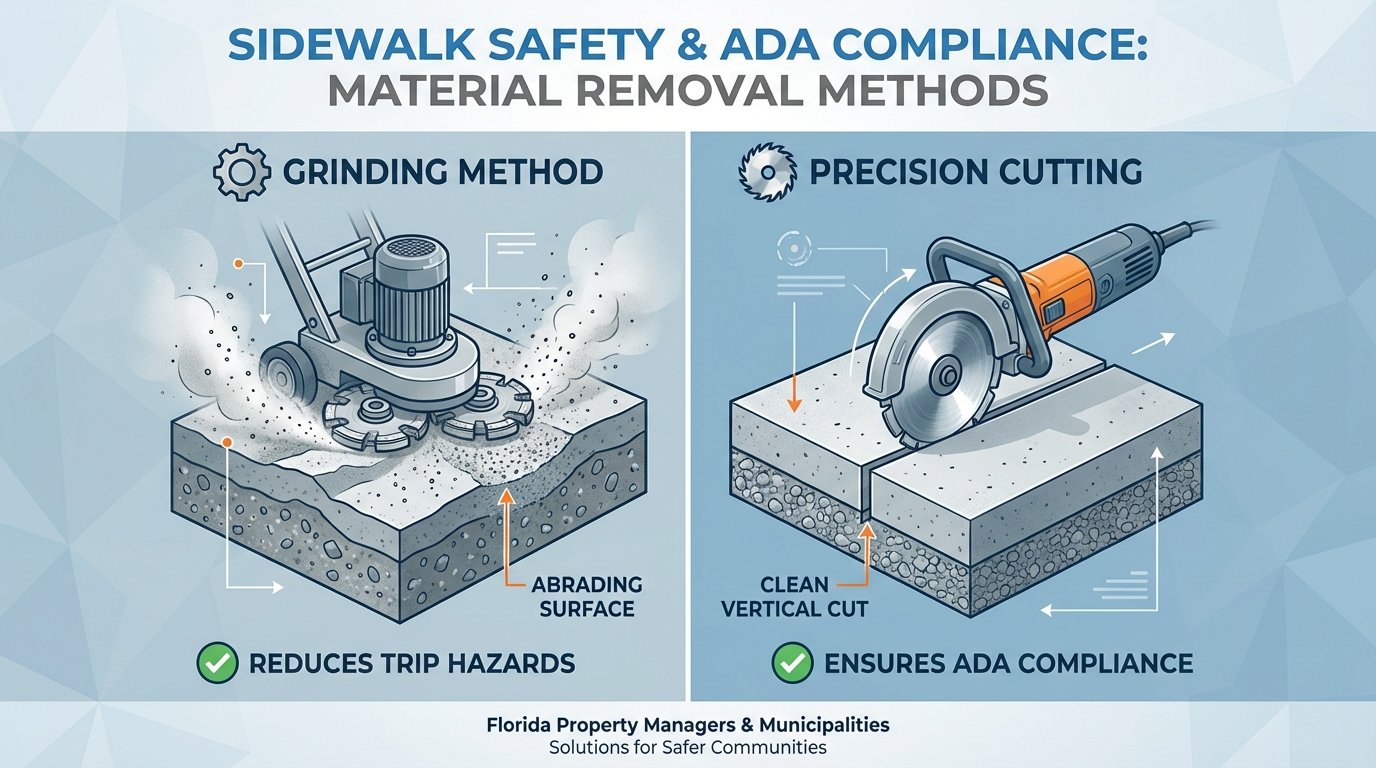
Grinding machines use rotating diamond discs to abrade the raised concrete surface, gradually wearing down the high side of a displaced slab until it’s flush with adjacent sections. Think of it as aggressive sanding—the process removes material through friction and creates a tapered transition zone between uneven slabs.
The grinding process generates massive amounts of silica dust, requires extensive cleanup, and leaves a visibly altered surface texture. Most importantly, grinding only addresses the symptom—it doesn’t correct the underlying structural problem causing the displacement.
Precision Concrete Cutting Technology
Advanced concrete cutting technology takes a surgical approach. Diamond-tipped saws make precise vertical cuts along the fault line where slabs have separated. The raised portion is then removed and reset at the correct elevation, or the cut creates a beveled edge that meets ADA specifications for maximum allowable height differentials.
This concrete cutting technology repair method preserves the concrete’s structural integrity, maintains uniform surface appearance, and addresses root causes like soil settlement or tree root intrusion. The result is a trip hazard removal service that actually solves the problem rather than masking it.
Performance Comparison: Real-World Results
When evaluating concrete cutting vs grinding, performance metrics tell a compelling story that goes beyond initial impressions.
Longevity and Durability
Ground concrete surfaces typically show significant wear within 12-24 months. The abraded surface loses the protective hardened layer that develops on concrete over time, exposing softer aggregate beneath. In high-traffic areas, this accelerated deterioration means you’re addressing the same locations repeatedly.
Precision concrete cutting sidewalks maintain their integrity for years because the process preserves the concrete’s original surface. Florida properties using cutting technology report functional lifespans of 5-10 years or more from a single intervention—assuming proper drainage and soil stabilization measures accompany the repair.
ADA Compliance Standards
The Americans with Disabilities Act specifies that vertical height differentials exceeding 1/4 inch on accessible routes constitute hazards requiring remediation. Between 1/4 inch and 1/2 inch, beveling at a 1:2 slope is permitted. Beyond 1/2 inch, the condition must be fully corrected.
Grinding can address minor differentials, but achieving precise ADA-compliant bevels proves difficult. The process often creates uneven transitions that fail compliance inspections. Advanced concrete cutting florida technology delivers measurable, consistent results that meet or exceed ADA specifications—critical documentation when facing liability claims or municipal citations.
Surface Appearance and Property Value
Ground sidewalks look repaired. The textural difference between original and abraded concrete is obvious, creating a patchwork appearance that detracts from property aesthetics. For commercial properties, HOAs, and municipalities concerned with curb appeal, this visual impact matters.
Properly executed concrete cutting creates nearly invisible repairs. The cuts follow natural control joints or create discrete separations that blend with existing concrete patterns. Decision-makers consistently report that this sidewalk grinding alternative maintains property presentation while solving safety issues.
Cost Analysis: Initial Investment vs. Total Ownership
Budget-conscious property managers must evaluate total cost of ownership, not just initial estimates.
Upfront Costs
Sidewalk grinding palm beach providers typically charge $3-7 per linear foot depending on severity. For a 100-foot section with multiple trip hazards, expect $500-900. Precision cutting services range from $5-12 per linear foot, or $700-1,500 for the same section.
At first glance, grinding appears more cost effective sidewalk repair. But this calculation ignores critical factors that reverse the equation quickly.
Replacement Frequency
Ground surfaces require re-treatment every 1-3 years as wear exposes new trip hazards and the underlying displacement issues persist. Over a five-year period, you’re paying for grinding 2-3 times—$1,000-2,700 for that same 100-foot section.
Precision cutting typically requires one intervention during the same timeframe. The five-year cost remains $700-1,500—a 30-60% savings despite higher initial investment.
Hidden Costs of Grinding
Grinding operations create substantial secondary expenses:
- Extended Labor: Grinding takes 2-3 times longer than cutting for equivalent linear footage
- Site Cleanup: Dust containment and removal add 1-2 hours per job
- Tenant/Resident Disruption: Longer timelines mean extended access restrictions
- Accelerated Deterioration: Weakened surfaces require more frequent full replacement
For sidewalk leveling florida projects spanning hundreds of feet, these factors compound quickly. Municipal public works directors managing miles of sidewalk find that cutting technology reduces total program costs by 40-70% compared to grinding-focused approaches.
Environmental and Safety Considerations
Modern property management increasingly accounts for environmental impact and worker safety—areas where technology choice makes significant differences.
Silica Dust Exposure
Grinding generates respirable crystalline silica dust, a known carcinogen linked to silicosis, lung cancer, and chronic respiratory diseases. OSHA regulations require extensive dust control measures, respiratory protection, and exposure monitoring when grinding concrete.
While cutting also produces silica dust, advanced systems incorporate water suppression that captures 95%+ of particulates at the source. The difference in airborne contamination is substantial—both for workers and nearby occupants.
Material Waste and Disposal
Grinding converts solid concrete into dust and slurry requiring disposal as construction waste. Large projects generate hundreds of pounds of material destined for landfills.
Precision cutting produces minimal waste—only the small amount of material removed by the saw kerf. Many operations recycle cut sections as aggregate base material. For properties pursuing LEED certification or sustainability goals, this concrete cutting trip hazard removal approach aligns with waste reduction objectives.
Situational Applications: When to Use Each Method
Despite cutting technology’s advantages, specific situations favor different approaches.
Grinding Makes Sense When:
- Addressing purely cosmetic concerns with minimal elevation change (under 1/8 inch)
- Smoothing surface spalling or minor deterioration
- Budget constraints absolutely prohibit proper repair and temporary mitigation is required
- Preparing surfaces for overlay applications
Precision Cutting is Optimal For:
- ADA compliance requirements on accessible routes
- Trip hazards exceeding 1/4 inch vertical displacement
- High-traffic commercial and municipal applications
- Properties where aesthetics and longevity justify proper investment
- Situations where liability exposure demands documented compliance
Property managers should conduct trip hazard assessments with qualified contractors who offer both technologies. Beware of providers who only offer grinding—their recommendations reflect their capabilities, not necessarily your best interests.
Legal and Liability Implications
The repair method you select creates a documented trail that matters significantly in litigation.
Personal injury attorneys routinely investigate property maintenance records following trip-and-fall incidents. Evidence that property managers selected inadequate repair methods despite superior alternatives being available strengthens negligence claims substantially.
Conversely, documented use of precision concrete cutting technology demonstrates reasonable care and commitment to proper hazard elimination. This record proves invaluable when defending against claims—especially when repairs meet or exceed ADA specifications with measurable verification.
Florida premises liability law requires property owners to maintain safe conditions and warn of hazards. Choosing grinding when cutting technology offers superior hazard elimination could constitute the difference between dismissed claims and six-figure settlements.
Technology Evolution and Market Trends
The concrete repair industry has evolved dramatically over the past decade. Early grinding equipment dominated because cutting technology required significant expertise and produced inconsistent results with first-generation equipment.
Modern precision cutting systems changed this equation. Computer-controlled depth settings, laser-guided alignment, and purpose-built diamond tooling now deliver consistent results with minimal operator skill variation. The technology gap that once favored grinding has reversed.
Market adoption reflects this shift. Municipal contracts increasingly specify cutting technology for trip hazard remediation, recognizing the total cost advantages. Property management firms overseeing large portfolios have shifted specifications toward cutting-based solutions after analyzing repair frequency data across their holdings.
Florida-Specific Considerations
Florida’s unique environmental conditions influence repair method selection in ways that favor cutting technology.
The state’s sandy soils, high water tables, and aggressive tree root systems create ongoing settlement and heaving issues. Grinding addresses surface symptoms while underground forces continue displacing concrete. Within months, new trip hazards emerge at previously treated locations.
Precision cutting allows contractors to address root causes during repair. Sections can be lifted, soil compacted or replaced, and drainage improved before resetting concrete. This comprehensive approach—impossible with grinding—explains why experienced Florida contractors overwhelmingly prefer cutting technology for lasting repairs.
Making the Right Choice for Your Property
When evaluating proposals for trip hazard removal service, consider these decision factors:
- Total Cost of Ownership: Calculate 5-year expenses including repeat treatments
- Liability Exposure: Assess risk tolerance and legal compliance requirements
- Property Type: High-traffic commercial properties justify premium solutions
- Aesthetic Standards: HOAs and visible commercial properties benefit from cutting’s clean results
- Disruption Tolerance: Faster cutting processes minimize impact on operations
Request detailed specifications from contractors, including warranty terms, expected service life, and compliance documentation. Providers confident in their precision concrete cutting technology will guarantee their work—often for years rather than months.
Partner with Proven Expertise
The technology choice matters, but so does contractor experience. Precision concrete cutting requires specialized equipment, trained technicians, and nuanced understanding of concrete behavior under Florida conditions.
Florida Sidewalk Solutions brings two decades of experience applying patented Precision Concrete Cutting technology to eliminate trip hazards across commercial, municipal, and residential properties. Our approach delivers ADA-compliant results at 70-90% below replacement costs, with repairs lasting years rather than months.
Property managers throughout Florida trust our cost effective sidewalk repair solutions because we address root causes, not just surface symptoms. Whether you’re managing an HOA community, municipal sidewalk network, or commercial property portfolio, our proven technology provides the lasting protection your budget and liability exposure demand.
Contact Florida Sidewalk Solutions today for a comprehensive trip hazard assessment and detailed proposal comparing all repair options for your specific situation. Let’s eliminate your sidewalk liability with solutions that actually last.