
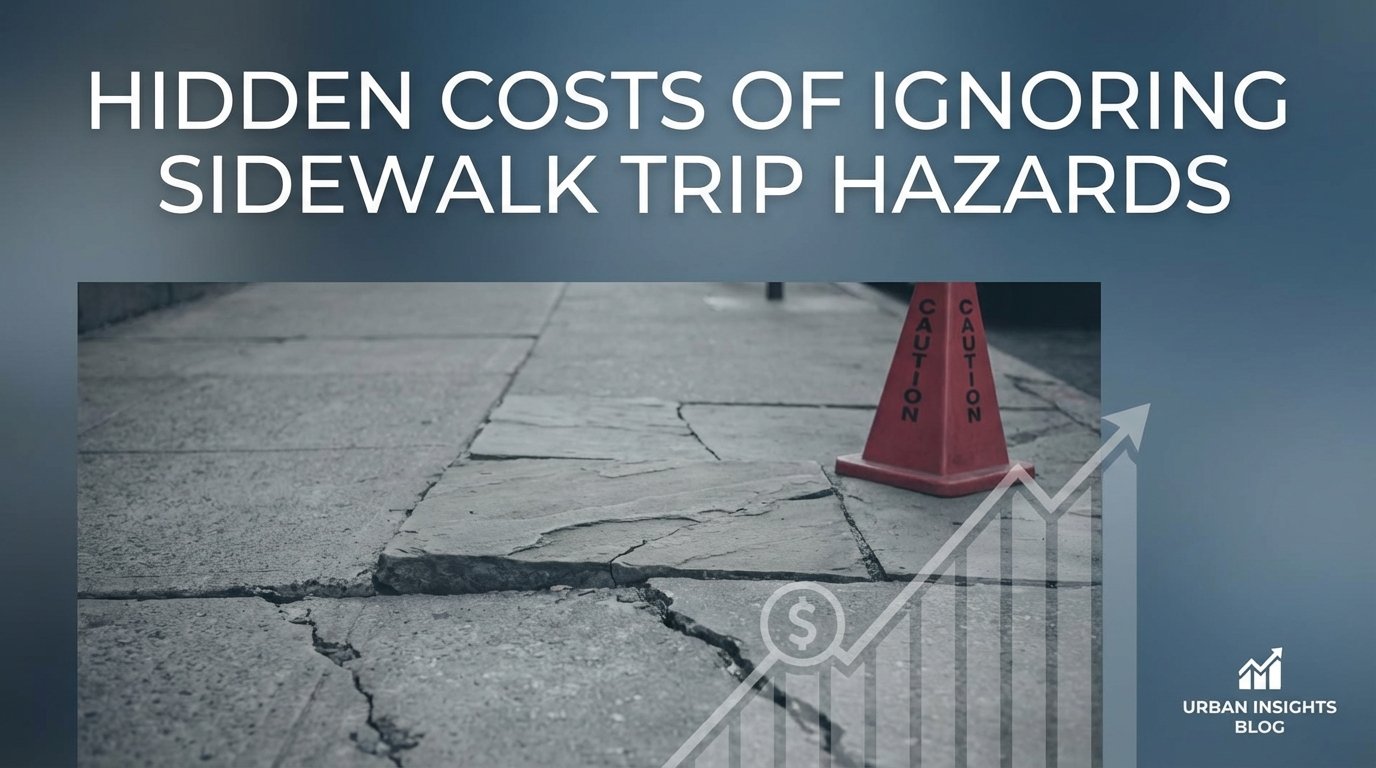
A single trip-and-fall lawsuit in Florida now averages $120,000 in settlement costs, according to 2026 insurance industry data—and that figure doesn’t include legal fees, increased premiums, or reputational damage. Yet thousands of property managers, HOA boards, and municipal decision-makers continue postponing sidewalk repairs, viewing them as discretionary maintenance rather than urgent liability prevention.
The financial reality is sobering: ignoring sidewalk trip hazards doesn’t save money—it multiplies costs exponentially. This comprehensive analysis reveals the true price of postponed sidewalk maintenance and why 2026’s legal landscape makes proactive repair more critical than ever.
The Escalating Legal Costs of Sidewalk Trip Hazards
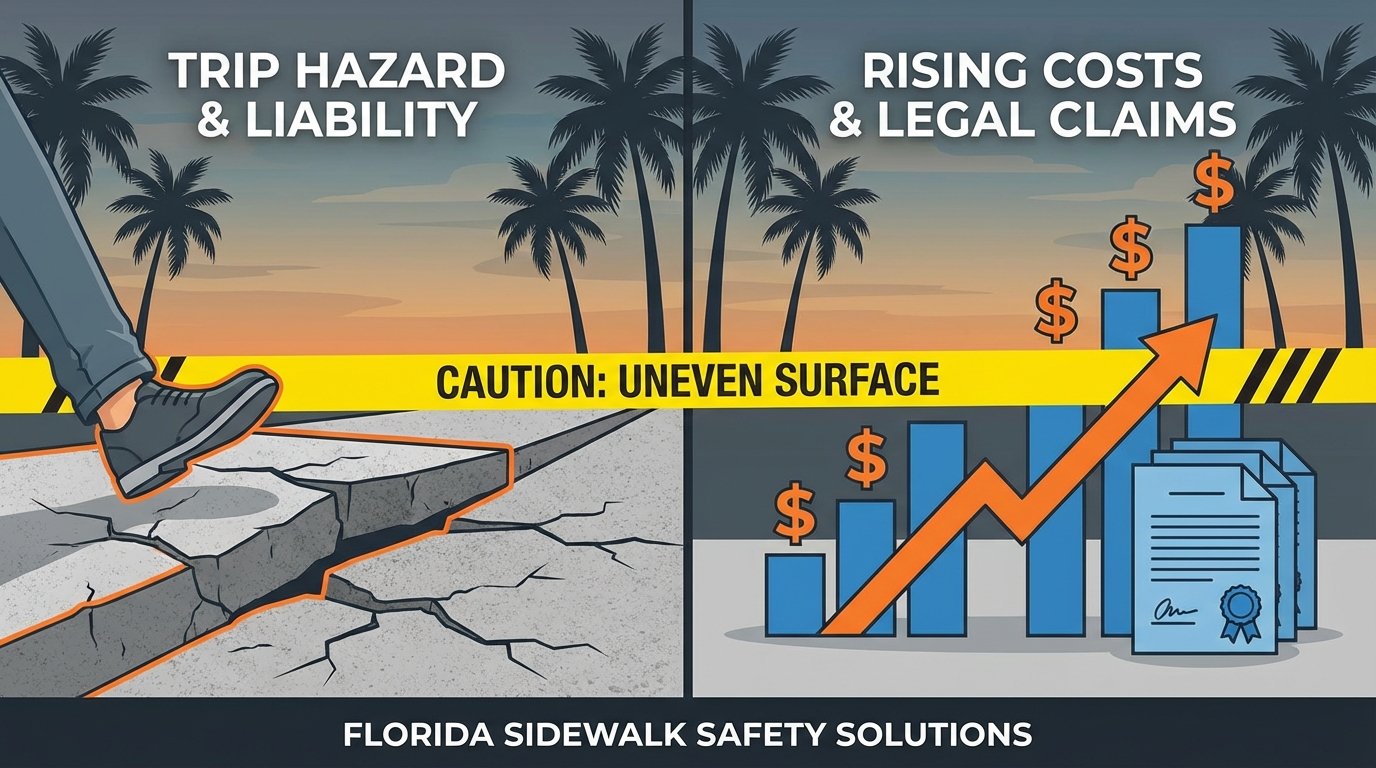
Property owner sidewalk liability has intensified dramatically in Florida over the past three years. Courts increasingly favor plaintiffs in premises liability cases, particularly when documented evidence shows property owners knew about hazards but failed to remediate them.
Direct Lawsuit Expenses
When a trip-and-fall incident occurs on your property, immediate costs begin accumulating:
- Legal defense costs: $30,000-$75,000 even before settlement discussions begin
- Settlement payments: $80,000-$250,000 for cases involving serious injuries
- Court judgments: $500,000+ for catastrophic injuries involving elderly victims or permanent disabilities
- Expert witness fees: $10,000-$25,000 for engineering and medical testimony
HOA sidewalk liability Florida cases have become particularly expensive. A 2025 Broward County case resulted in a $1.2 million judgment against a homeowners association that had documented complaints about raised sidewalk panels for over two years but took no corrective action.
The Documentation Trap
Every maintenance request, resident complaint, or inspection report creates a paper trail. When lawsuits occur, these documents become evidence of negligence. Property managers who acknowledge trip hazards in emails or meeting minutes but fail to repair them face significantly higher settlement demands.
Florida’s legal standard requires property owners to maintain sidewalks in “reasonably safe condition.” Once you’re aware of a defect—through any form of documentation—the clock starts ticking on your duty to remediate.
Insurance Premium Increases and Coverage Denials
Trip hazard insurance claims trigger consequences extending far beyond individual incident costs. Insurance carriers in 2026 employ sophisticated risk assessment algorithms that flag properties with sidewalk-related claims.
Premium Escalation Patterns
A single trip-and-fall claim typically increases liability insurance premiums by 25-40% at renewal. For a property paying $15,000 annually, that’s an additional $3,750-$6,000 per year—costs that continue for 3-5 years minimum.
Multiple claims or a single catastrophic incident can make properties essentially uninsurable through standard carriers, forcing owners into high-risk pools where premiums cost 200-300% more than conventional policies.
Coverage Gaps and Exclusions
Insurance policies increasingly include sidewalk maintenance exclusions. Carriers now conduct sidewalk inspections before policy issuance, documenting existing hazards and excluding coverage for any incidents related to pre-existing, unrepaired defects.
This creates a catch-22: properties with deferred sidewalk maintenance can’t obtain affordable coverage, yet lack the insurance proceeds to fund comprehensive repairs.
ADA Compliance and Federal Penalties
The Americans with Disabilities Act establishes specific sidewalk requirements, and 2026 enforcement has intensified significantly. Vertical displacements exceeding 1/2 inch create ADA violations, exposing property owners to federal complaints and Department of Justice investigations.
ADA penalties now reach $75,000 for first violations and $150,000 for subsequent violations. Commercial properties and any entities receiving federal funding face particularly aggressive enforcement.
Beyond financial penalties, ADA lawsuits require comprehensive remediation of all accessibility barriers across entire properties—not just the specific hazard that triggered the complaint. A single trip hazard complaint can force property-wide sidewalk audits and mandatory repair timelines.
Hidden Operational Costs
Trip hazard-related expenses extend well beyond legal and insurance categories into day-to-day operational impacts that steadily drain budgets.
Emergency Response and Incident Management
Each trip-and-fall incident requires immediate response:
- Staff time documenting incidents and filing reports
- Emergency medical coordination and facility access for responders
- Incident investigation and photography
- Communication with insurance carriers and legal counsel
- Witness interviews and statement collection
Property managers report spending 15-25 hours managing each incident—time diverted from productive maintenance and management activities.
Temporary Hazard Mitigation
Marking known hazards with paint or temporary warning signs creates ongoing labor costs while simultaneously documenting your awareness of dangerous conditions. These stopgap measures provide minimal liability protection while advertising your negligence to potential plaintiffs.
Property Value Depreciation
Deteriorated sidewalks reduce property values and complicate sales transactions. Prospective buyers conduct sidewalk inspections, demanding repair credits or price reductions that typically exceed actual repair costs by 40-60%.
Commercial properties with documented sidewalk deficiencies face tenant acquisition challenges and may require lease concessions to attract quality occupants.
Municipality-Specific Enforcement in Palm Beach and Broward Counties
Trip hazard repair Palm Beach County and sidewalk trip hazard Broward County regulations have become increasingly stringent. Municipal code enforcement now conducts proactive sidewalk inspections rather than waiting for complaints.
Both counties implemented accelerated violation procedures in 2025, allowing cities to issue immediate repair orders with 30-day compliance deadlines. Non-compliance triggers daily fines starting at $250 and escalating to $1,000 per day after 90 days.
Municipalities also record repair liens against properties, which accrue interest and must be satisfied before property transfers. These liens often include administrative fees and inspection costs that double the original citation amount.
The Cost-Effective Alternative: Precision Cutting Technology
The financial case for proactive sidewalk repair becomes overwhelming when compared against litigation, insurance increases, and regulatory penalties. However, traditional replacement methods create their own cost barriers, with complete sidewalk replacement running $8-$15 per square foot.
This is where cost effective sidewalk repair through precision cutting technology transforms the financial equation. The patented cutting method removes the raised portion of uneven concrete slabs, eliminating trip hazards at 70-90% less cost than replacement.
Immediate Cost Advantages
Precision cutting addresses a typical 100-square-foot problem area for $800-$1,200, compared to $1,600-$3,000 for replacement. The process requires no demolition, produces minimal waste, and completes in hours rather than days.
Properties avoid the extensive collateral costs associated with replacement: landscape restoration, irrigation system repairs, dumpster rental, extended project timelines, and resident disruption.
Long-Term Financial Protection
Addressing trip hazards before incidents occur provides multiple financial benefits:
- Lawsuit prevention: Eliminating hazards before someone falls avoids $120,000+ incident costs
- Insurance stability: Proactive maintenance prevents premium increases and maintains coverage eligibility
- ADA compliance: Reducing vertical displacements below 1/2 inch eliminates federal violation exposure
- Municipal compliance: Documented repairs prevent code enforcement actions and daily fines
- Property value preservation: Well-maintained sidewalks support property values and marketability
Trip and Fall Lawsuit Prevention: A Proactive Strategy
Effective trip and fall lawsuit prevention requires systematic approaches rather than reactive responses to individual complaints.
Annual Sidewalk Audits
Professional sidewalk inspections identify all defects exceeding safety thresholds, creating comprehensive remediation plans with prioritized timelines. Documentation of inspection findings and repair schedules demonstrates due diligence in premises liability cases.
Prioritized Repair Protocols
High-traffic areas, accessibility routes, and locations with documented complaints require immediate attention. Properties can phase repairs strategically, addressing the most critical hazards first while budgeting for complete system maintenance.
Maintenance Documentation Systems
Detailed records of inspections, repairs, and maintenance schedules provide legal protection by demonstrating reasonable care and systematic hazard management. Digital documentation systems with photographic evidence create defensible maintenance histories.
Why Florida Property Owners Choose Precision Cutting
Florida Sidewalk Solutions brings over 20 years of Florida-specific experience with the proven Precision Concrete Cutting technology. This specialized expertise addresses the unique challenges of Florida’s soil conditions, weather patterns, and regulatory environment.
The precision cutting method delivers superior results compared to grinding alternatives. While grinding creates sloped transitions that still present tripping risks and rough surfaces that deteriorate quickly, cutting produces clean, precise edges with level surfaces that meet both ADA standards and municipal codes.
The environmental advantages matter increasingly to HOAs and municipalities focused on sustainability goals. Precision cutting eliminates demolition waste, avoids carbon-intensive concrete production, and preserves existing infrastructure investments.
Taking Action: The Financial Imperative
Every day of deferred sidewalk maintenance increases liability exposure. The question isn’t whether to repair trip hazards, but whether to address them proactively at controlled costs or reactively after lawsuits multiply expenses tenfold.
Property managers and HOA boards balancing competing budget priorities should recognize that sidewalk trip hazard liability Florida exposure represents one of the most significant and preventable financial risks in their portfolios.
The mathematics are straightforward: investing $3,000-$5,000 in comprehensive trip hazard repair today prevents potential $150,000+ lawsuit expenses tomorrow, while simultaneously reducing insurance costs, maintaining property values, and ensuring regulatory compliance.
Florida Sidewalk Solutions provides free property assessments that identify all trip hazards and deliver detailed cost estimates for precision cutting repairs. These assessments include ADA compliance evaluations and municipal code reviews, giving decision-makers complete information for informed budgeting.
Don’t wait for an injury, lawsuit, or code enforcement action to force reactive repairs at the worst possible time. Contact Florida Sidewalk Solutions today for your comprehensive sidewalk assessment and discover how precision cutting technology delivers safe, compliant sidewalks at a fraction of replacement costs—protecting your budget, your residents, and your liability exposure for years to come.