
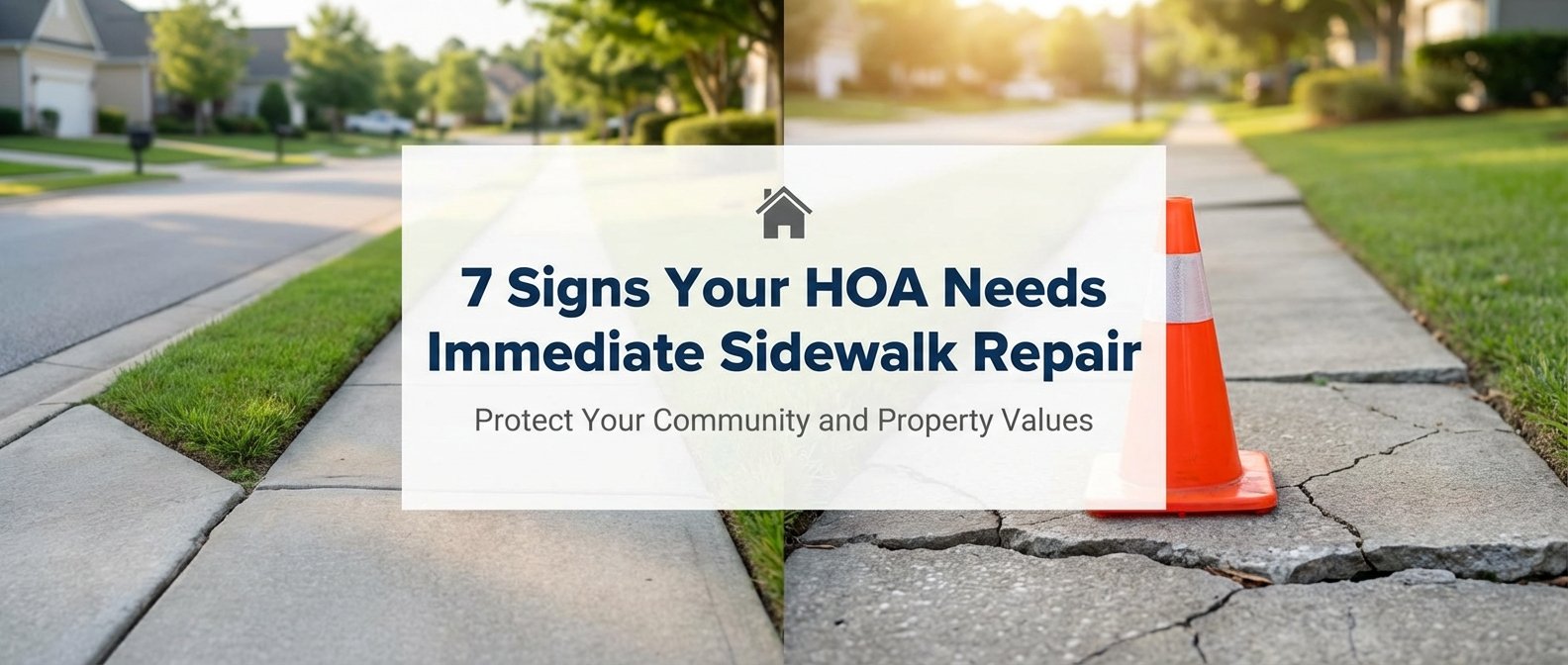
Sidewalk maintenance often falls to the bottom of an HOA’s priority list—until someone trips, falls, and files a lawsuit. As an HOA board member or property manager, recognizing the warning signs that demand immediate sidewalk repair can save your community thousands of dollars in liability claims while protecting residents from preventable injuries. Understanding when to act isn’t just about aesthetics; it’s about legal compliance, financial responsibility, and duty of care.
The consequences of ignoring sidewalk hazards extend far beyond cosmetic concerns. A single trip-and-fall lawsuit can cost an HOA between $50,000 and $300,000 when factoring in medical expenses, legal fees, and settlement costs. Meanwhile, ADA non-compliance can trigger federal lawsuits and ongoing penalties. Fortunately, identifying problems early allows you to address them proactively with cost-effective solutions like precision concrete cutting rather than expensive emergency replacements.
Sign #1: Visible Vertical Displacement of 1/4 Inch or Greater
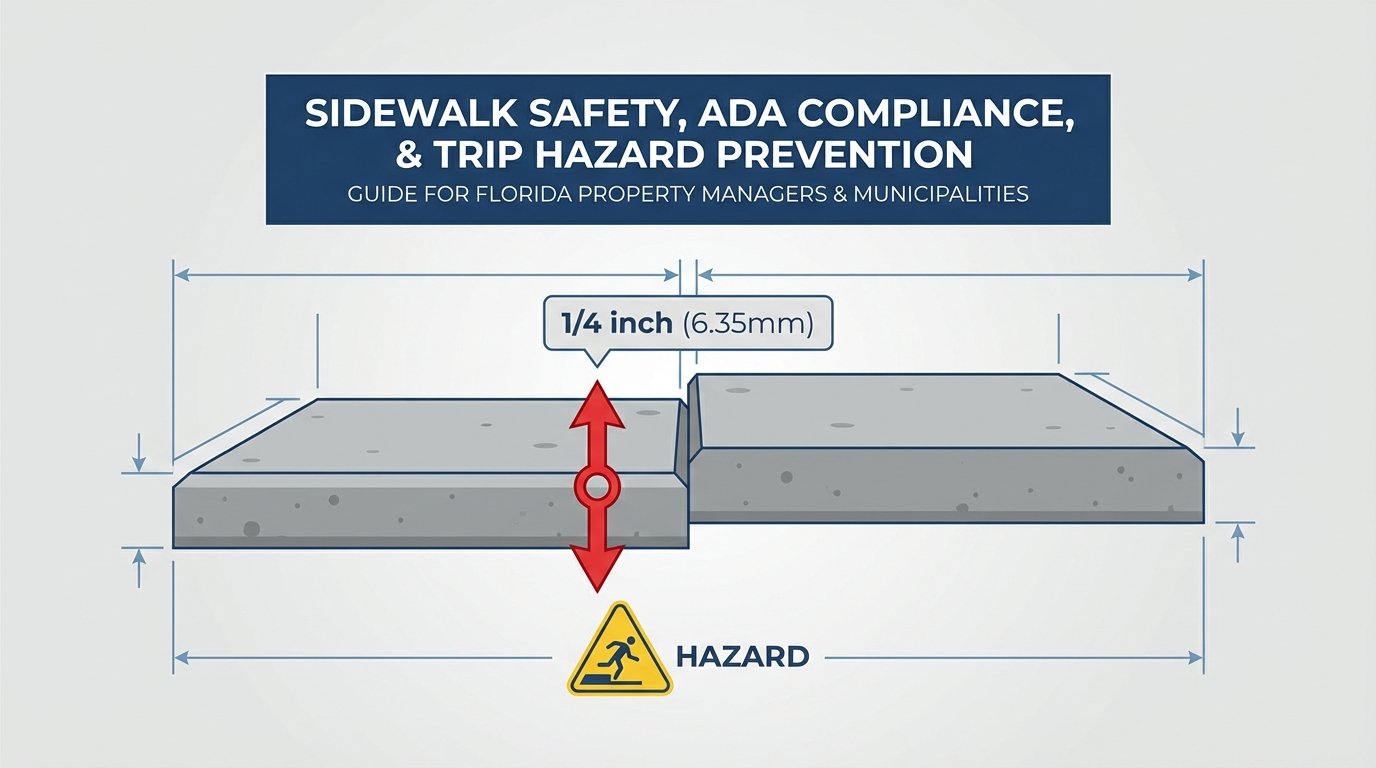
The most critical warning sign is vertical displacement between adjacent concrete slabs. According to the Americans with Disabilities Act (ADA), any vertical separation of 1/4 inch (6.35mm) or more constitutes a trip hazard that must be corrected. This isn’t a suggestion—it’s a federal requirement that applies to all public accommodations and common areas within HOA communities.
Walk your community’s sidewalks with a measuring tool or even a quarter coin (which is approximately 1/16 inch shy of the threshold). If you can slide the quarter under a raised edge with room to spare, you likely have an ADA violation requiring immediate attention. These raised edges typically result from tree root growth, soil settlement, or ground freeze-thaw cycles that shift concrete slabs unevenly.
Traditional solutions like complete sidewalk replacement can cost $8-12 per square foot in Florida. However, modern trip hazard repair using precision cutting technology addresses these violations at 70-90% less cost by cutting down the raised portion rather than demolishing and replacing entire sections. This method creates ADA compliant sidewalks quickly, often completing projects in hours rather than days.
Sign #2: Recent Trip-and-Fall Incidents or Near-Misses
Any reported fall or near-miss incident should trigger immediate sidewalk inspection. Even if no injury occurred, these events signal existing hazards that expose your HOA to significant liability. Document every incident report, photograph the location, and assess whether the hazard meets the threshold for immediate repair.
Florida premises liability law holds property owners—including HOAs—responsible for maintaining safe conditions in common areas. Courts have repeatedly ruled that HOAs have a duty to regularly inspect, identify, and repair known hazards within a reasonable timeframe. Once you have documented knowledge of a specific hazard, failing to address it promptly dramatically increases liability exposure.
Consider this scenario: An elderly resident trips on a raised sidewalk slab, fractures a hip, and requires surgery. The resident’s attorney discovers that the HOA received previous complaints about that exact location but delayed repairs due to budget concerns. This documented negligence transforms a potential defended claim into a settlement negotiation where your HOA has minimal leverage.
Sign #3: Tree Roots Causing Surface Disruption
Florida’s lush landscape creates beautiful communities, but mature tree roots are among the leading causes of sidewalk damage throughout the state. When tree roots grow beneath concrete sidewalks, they exert tremendous upward pressure that cracks and lifts slabs, creating dangerous trip hazards.
You’ll recognize root-related damage by:
- Cracks radiating from trees toward sidewalk edges
- Gradual upward tilting of slabs nearest to tree trunks
- Visible root exposure along sidewalk edges
- Seasonal worsening during Florida’s wet months when roots expand
The traditional approach of removing trees and replacing sidewalks is both expensive and environmentally undesirable. Modern sidewalk trip hazard removal Florida techniques preserve mature trees while eliminating hazards. Precision cutting removes the raised portion of affected slabs without disturbing root systems, maintaining your community’s aesthetic appeal while achieving safety compliance.
Sign #4: Cracking, Spalling, or Surface Deterioration
Significant cracking or spalling (surface flaking and pitting) indicates concrete deterioration that will progressively worsen. While minor hairline cracks may be cosmetic, larger cracks—especially those wider than 1/4 inch or creating height differentials—require attention.
Several factors accelerate concrete deterioration in Florida:
- Moisture infiltration from frequent rainfall expanding and contracting within concrete
- Saltwater exposure in coastal communities causing rebar corrosion
- Heavy traffic and use patterns in high-activity areas
- Poor initial installation or inadequate base preparation
Spalling particularly deserves attention because it creates uneven walking surfaces that pose tripping risks and worsen rapidly once started. When surface concrete flakes away, it exposes interior layers to moisture and accelerates deterioration.
For HOAs managing multiple sidewalk issues, prioritize sections based on traffic volume and vulnerability of users. High-traffic areas near mailboxes, pools, and clubhouses demand immediate attention, as do sections frequently used by elderly residents or families with young children.
Sign #5: Standing Water or Drainage Problems
Sidewalk sections that consistently collect standing water after rain signal underlying problems. Proper sidewalk installation includes slight grading to direct water away from walking surfaces. When you observe puddles that persist for hours after rainfall, the concrete has likely settled unevenly or was improperly graded during installation.
Standing water creates multiple problems:
- Slip hazards from wet, algae-covered surfaces
- Accelerated concrete deterioration from constant moisture exposure
- Mosquito breeding grounds (a significant concern in Florida)
- Ice formation during rare freezing events in North Florida
Additionally, water pooling alongside sidewalk edges often indicates soil erosion beneath slabs. As water washes away supporting soil, it creates voids that lead to settlement and eventual cracking. Addressing drainage issues promptly prevents minor problems from escalating into major structural failures requiring complete replacement.
Sign #6: Complaint Letters or Board Meeting Concerns
When residents take time to formally complain about sidewalk conditions—whether through emails, letters, or comments during board meetings—treat these communications as official notice of potential hazards. From a liability perspective, documented resident complaints establish that your HOA had specific knowledge of dangerous conditions.
Implement a system for tracking and responding to maintenance complaints:
- Log all sidewalk-related complaints with dates, locations, and photographs
- Conduct inspections within 48-72 hours of receiving complaints
- Document your findings and remediation timeline
- Communicate response plans back to concerned residents
This documentation serves dual purposes. It demonstrates your HOA’s commitment to responsive maintenance and creates a paper trail showing reasonable care and timely action—critical defenses if litigation occurs. Conversely, ignoring documented complaints or delaying action without justification significantly weakens your legal position.
Sign #7: Upcoming Property Inspections or Sales Activity
If your community faces upcoming inspections, refinancing requirements, or increased property sales activity, sidewalk conditions deserve immediate attention. Prospective buyers, their inspectors, and mortgage companies increasingly scrutinize ADA compliance and deferred maintenance issues.
Visible sidewalk hazards impact your community in several ways:
- Failed municipal code compliance inspections delaying project approvals
- Decreased property values when buyers perceive poor maintenance
- Difficulty securing favorable insurance rates with documented hazards
- Required repair disclosures during property transactions
Proactively addressing HOA sidewalk repair needs before inspections or sales periods protects property values and prevents last-minute emergency repairs at premium costs. Budget-conscious HOAs should view preventive maintenance as an investment in property values rather than merely an expense.
Choosing the Right Repair Solution
Once you’ve identified that your HOA needs immediate sidewalk repair, selecting the appropriate method determines both cost-effectiveness and long-term results. Three primary approaches exist: complete replacement, grinding, and precision cutting.
Complete replacement involves removing damaged sections, re-preparing the base, and pouring new concrete. While sometimes necessary for severely damaged areas, replacement costs $8-12 per square foot, requires 3-7 days of cure time before use, and creates significant disruption to residents. The process generates substantial waste requiring disposal and leaves patched areas that rarely match surrounding concrete in color or texture.
Grinding uses abrasive wheels to gradually wear down raised edges until they’re level with adjacent slabs. While less expensive than replacement at $3-5 per linear foot, grinding creates sloped transitions that may not meet ADA standards for cross-slope and running slope. The process is dusty, time-consuming, and produces a roughened surface texture that differs noticeably from surrounding concrete.
Precision concrete cutting offers the optimal balance of cost, speed, and quality for most HOA applications. This patented technology uses specialized saws to make precise cuts that remove raised portions while maintaining the original surface finish. The process costs 70-90% less than replacement, completes quickly with minimal disruption, generates no concrete waste requiring disposal, and creates clean, professional results that blend seamlessly with existing sidewalks.
For Florida HOAs specifically, precision cutting addresses the unique challenges of root-related damage without requiring tree removal, works effectively on the various concrete types common in Florida construction, and handles the high-volume sidewalk repairs often needed in larger communities efficiently.
Taking Action: Next Steps for Your HOA
Recognizing these seven warning signs is only valuable if followed by decisive action. Start with a comprehensive sidewalk assessment of your entire community. Document conditions with photographs, measurements, and location notes. Prioritize repairs based on severity, traffic volume, and user vulnerability.
Present findings to your HOA board with cost estimates for different repair approaches. Emphasize that proactive maintenance costs significantly less than reactive emergency repairs or lawsuit settlements. If budget constraints exist, develop a phased repair plan that addresses the most critical hazards immediately while scheduling lower-priority sections for future budget cycles.
Partner with experienced professionals who understand both the technical requirements of ADA compliance and the practical needs of HOA communities. Solutions that minimize resident disruption, complete quickly, and deliver professional results justify their value through reduced complaints and liability exposure.
Protect Your Community with Professional Sidewalk Repair
Your HOA’s sidewalks represent more than concrete pathways—they’re a fundamental safety infrastructure that protects residents and shields your community from devastating liability. The seven signs outlined above serve as clear indicators that immediate action is necessary to maintain safe, compliant, and welcoming common areas.
Florida Sidewalk Solutions has spent over two decades helping HOAs, property managers, and municipalities throughout Florida address sidewalk safety challenges with proven precision cutting technology. Our approach eliminates trip hazards quickly and cost-effectively while maintaining the aesthetic quality your residents expect.
Don’t wait for a lawsuit to force action on sidewalk safety. Contact Florida Sidewalk Solutions today for a comprehensive assessment of your community’s sidewalks and a detailed proposal showing how precision cutting can solve your trip hazard problems at a fraction of replacement costs. Protect your residents, preserve your budget, and ensure your HOA maintains the safe, attractive environment your community deserves.